BAKU, Azerbaijan, May 19. The development of
connectivity must go hand in hand with inclusive development, the
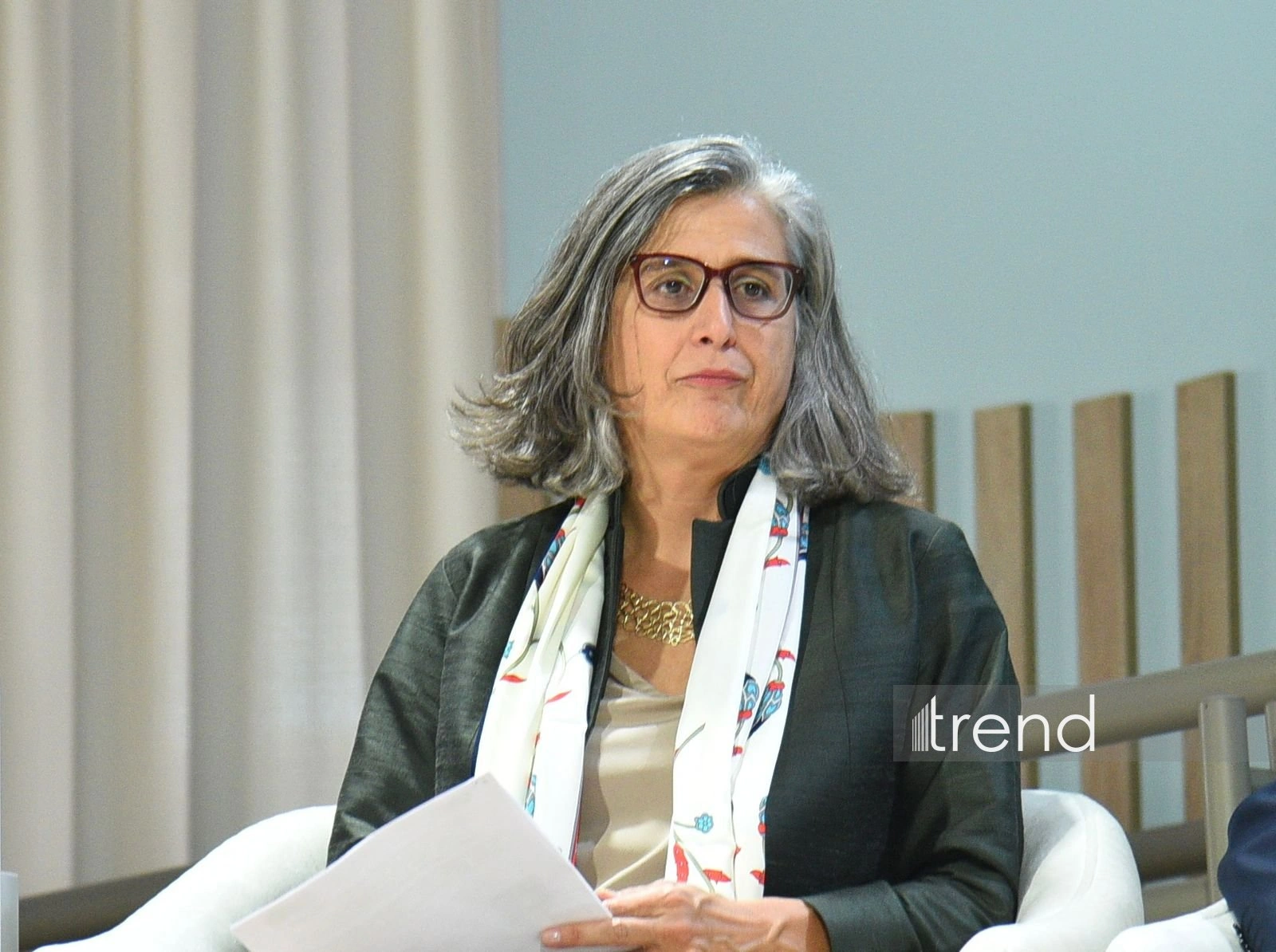
Executive Director of the United Nations Human Settlements Program
(UN-Habitat) Anacláudia Rossbach said, Trend reports.
Speaking at a panel titled “Cities at the Center of Connectivity:
Urban Reconstruction and Regional Cooperation,” Anacláudia Rossbach
noted that despite the rapid expansion of opportunities for
interaction in the modern world, the problem of inequality remains
relevant.
She noted that the world is now more connected than ever before:
intercontinental routes are measured in days, data is transmitted
in milliseconds, and new transport corridors, energy networks, and
digital infrastructure are transforming entire regions. However,
approximately 2.8 billion people lack safe and adequate living
conditions, and millions have been forced to flee their homes due
to conflict and climate change.
“The world is more connected than ever before, but at the same
time, it is more unequal than necessary. Without inclusivity and a
broad socio-economic vision, connectivity turns into a massive
infrastructure from which only a few benefit,” she emphasized.
According to a UN-Habitat official, multimodal corridors not
only accelerate the movement of people and goods but also reshape
the economic geography of entire regions.
She noted that strategic corridors connecting Africa and Europe,
as well as Asia, are among the most important infrastructure
projects of our time. Increased comprehensive investment along the
Middle Corridor, connecting China, Central Asia, the Caspian
region, Azerbaijan, and Europe, creates new opportunities for
cities located along this route in terms of economic
diversification.
Rossbach added that this process promotes the development of
environmentally friendly industries, advanced logistics services,
agricultural processing, and digital businesses, while transforming
second-tier cities from mere transit hubs into economic
entities.
Meanwhile, the third day of the 13th session of the World Urban
Forum (WUF13) is underway in Baku.
On the first day, a ministerial meeting dedicated to the New
Urban Agenda, a roundtable of ministers, assemblies of women and
civil society, business sessions, and discussions on urban
well-being were held. A ceremony for raising the flags of the
United Nations and Azerbaijan also took place within the framework
of the forum.
The second day of the forum drew attention with the first-ever
Leaders Summit. High-level discussions on the global housing
crisis, urbanization policy, and urban resilience were held that
day. At the same time, the Mexico City pavilion was inaugurated
within the framework of WUF13. The pavilion was presented as an
important platform for expanding cooperation with the Latin
American region and preparing for WUF14.
WUF13, which has attracted more than 40,000 registered
participants from 182 countries, will continue until May 22. Held
under the theme “Housing the world: Safe and resilient cities and
communities,” the forum brings together governments, international
organizations, experts, and representatives of civil society to
strengthen global cooperation in the field of sustainable urban
development.