BAKU, Azerbaijan, May 19. No single
organization can solve the global housing crisis on its own, the
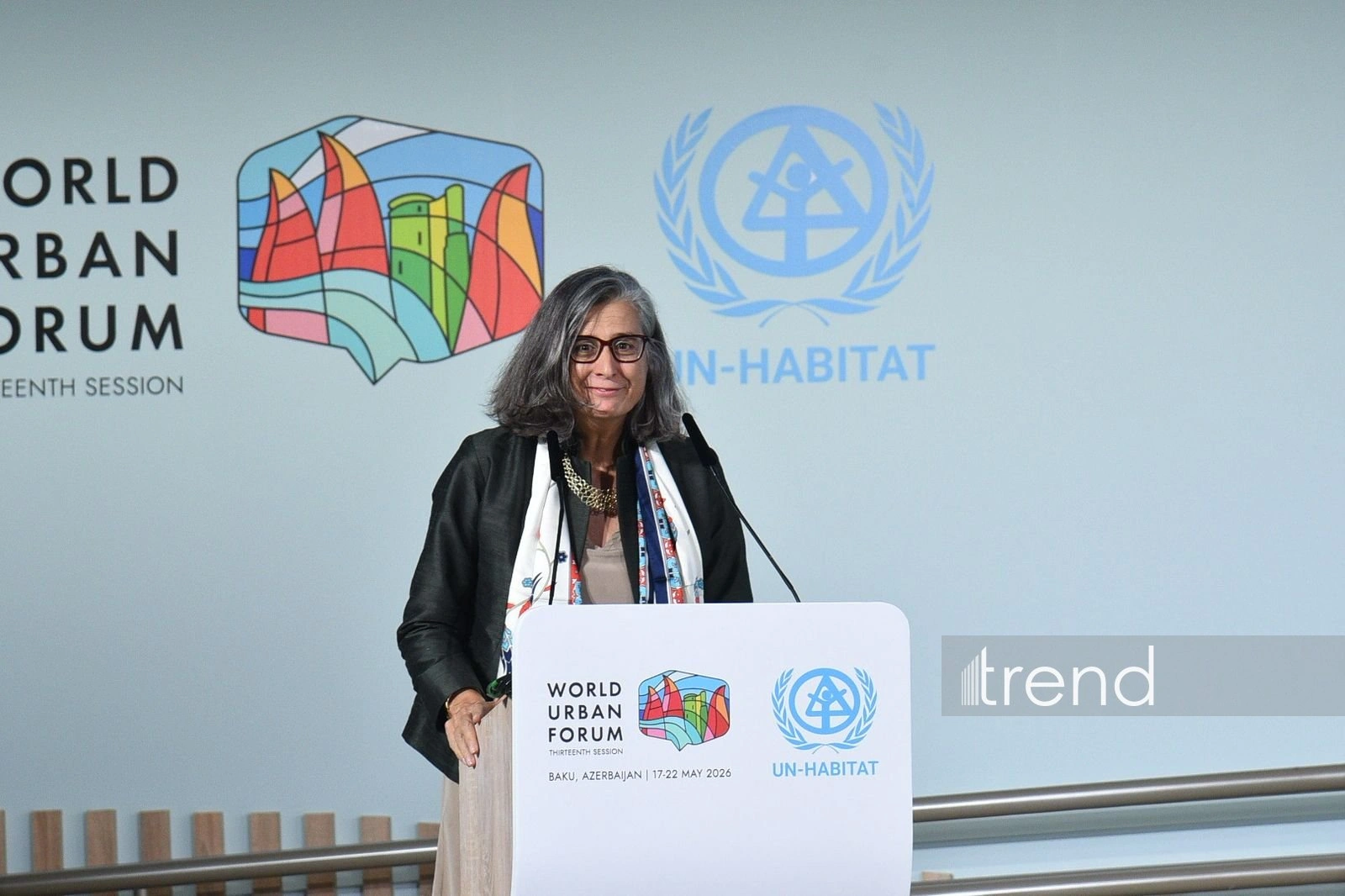
Executive Director of the United Nations Human Settlements Program
(UN-Habitat) Anacláudia Rossbach said, Trend reports.
She made the statement during the NGO Forum on “Global
Partnership and Decision-Making” as part of WUF13.
According to her, the current period is strategically important
for UN-Habitat, as the organization has begun implementing its new
strategic plan for 2026–2029.
“This is the first year of implementing our new strategic plan,
which has a very clear focus on ensuring housing for all, expanding
access to land and basic services, transforming informal
settlements, and supporting vulnerable areas,” Rossbach said.
She noted that 50 years after the creation of UN-Habitat and ten
years after the adoption of the New Urban Agenda, the international
community has come to realize that simply building housing is not
enough.
“Today, we understand that it is not enough to simply build
houses. We need to build systems that actually work. We need to
create communities, cities, social cohesion, and a social
contract,” UN-Habitat’s Executive Director emphasized.
“There is no single entity that could fully carry out this task
and bring together all the necessary knowledge, experience, and
diverse perspectives. We have different pieces of a single large
mosaic that need to be put together,” she said.
Rossbach emphasized the importance of collaboration at the local
and national levels, as well as the need for various sectors of
society to participate in the development of urban and housing
policies.
“We must collaborate at the city level, ensure public
participation in urban planning, and establish sustainable
participation mechanisms involving various sectors. At the same
time, the local level must work in tandem with the national level,
and civil society, academia, public organizations, and the private
sector must participate in the development of housing and urban
policies,” she added.
Meanwhile, the third day of the 13th session of the World Urban
Forum (WUF13) is underway in Baku.
On the first day, a ministerial meeting dedicated to the New
Urban Agenda, a roundtable of ministers, assemblies of women and
civil society, business sessions, and discussions on urban
well-being were held. A ceremony for raising the flags of the
United Nations and Azerbaijan also took place within the framework
of the forum.
The second day of the forum drew attention with the first-ever
Leaders Summit. High-level discussions on the global housing
crisis, urbanization policy, and urban resilience were held that
day. At the same time, the Mexico City pavilion was inaugurated
within the framework of WUF13. The pavilion was presented as an
important platform for expanding cooperation with the Latin
American region and preparing for WUF14.
WUF13, which has attracted more than 40,000 registered
participants from 182 countries, will continue until May 22. Held
under the theme “Housing the world: Safe and resilient cities and
communities,” the forum brings together governments, international
organizations, experts, and representatives of civil society to
strengthen global cooperation in the field of sustainable urban
development.