BAKU, Azerbaijan, May 19. Azerbaijan continues
to promote its multimodal connectivity agenda as an integral part
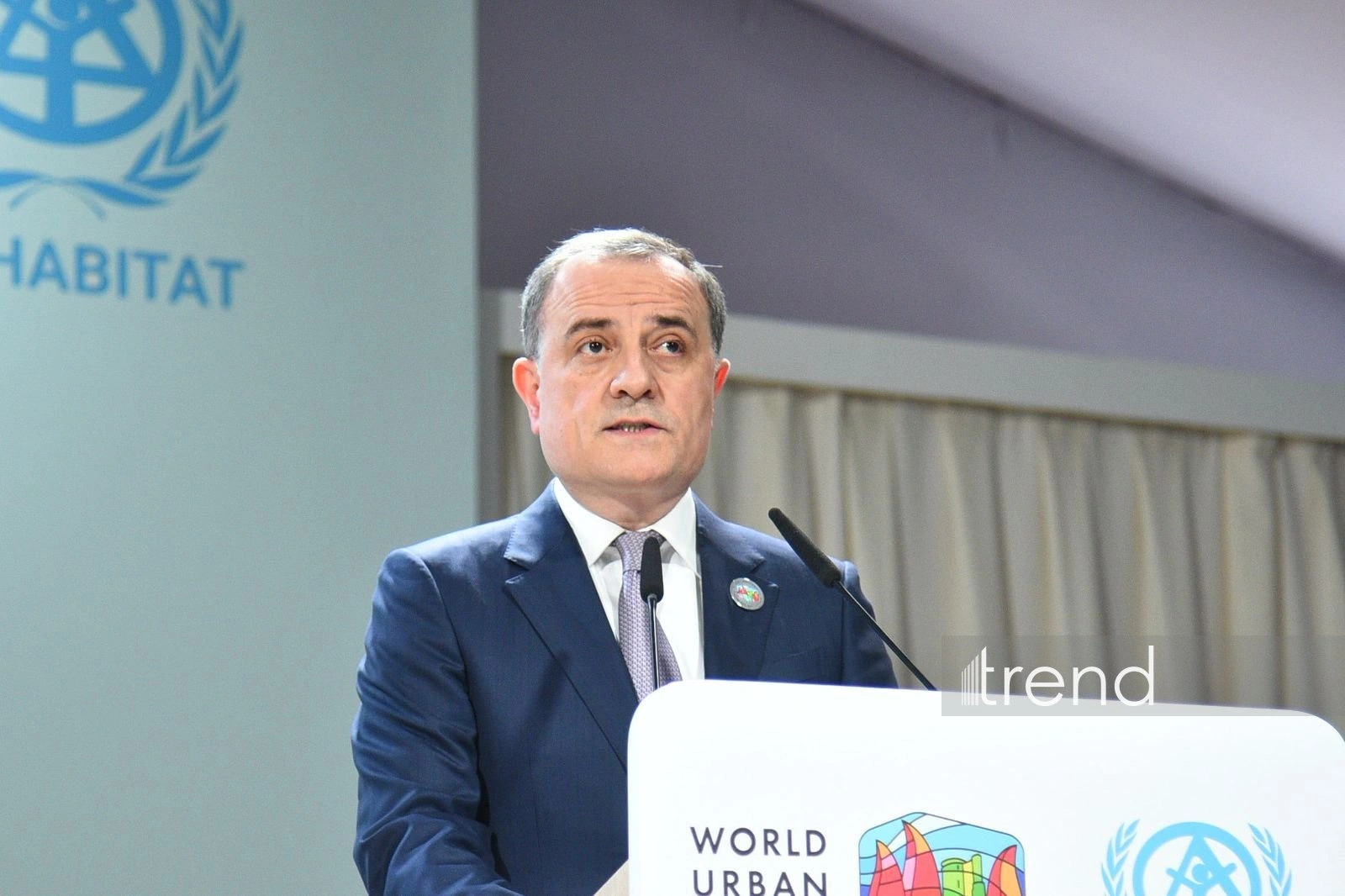
of its post-conflict development strategy, Foreign Minister Jeyhun
Bayramov said during an event held within the framework of the 13th
session of the World Urban Forum (WUF13) in Baku, Trend reports.
Speaking at a panel titled “Cities at the Center of
Connectivity: Urban Reconstruction and Regional Cooperation,”
Bayramov said addressing obstacles to the safe return of displaced
populations requires more than rebuilding physical
infrastructure.
“The key issue is creating conditions for long-term peace and
cooperation,” he said.
Bayramov noted that new transport corridors, railways, highways,
energy infrastructure and digital networks are integrating
reconstruction areas into broader regional and international
economic systems.
“These investments not only increase mobility, trade,
investment, tourism and employment, but also strengthen regional
interdependence and long-term stability,” he said.
According to the minister, the impact of these projects extends
beyond Azerbaijan’s borders by enhancing connectivity between Asia
and Europe and contributing to broader regional economic
cooperation.
Bayramov said Azerbaijan, as one of the key participants in the
Trans-Caspian Middle Corridor and the North-South Corridor, is
consistently advancing its multimodal connectivity agenda as a core
element of its post-conflict strategy.
The minister also recalled that the Washington Declaration
adopted in August 2025 laid the foundation for a new connectivity
route called the Trump Route for International Peace and Prosperity
(TRIPP).
According to Bayramov, the project will provide uninterrupted
multimodal connectivity between mainland Azerbaijan and the
Nakhchivan exclave while creating a new strategic route linking
Asia and Europe.
He said the corridor will include railways, highways, energy
pipelines, electricity transmission lines and fiber-optic
cables.
Bayramov added that the Horadiz-Aghband railway and Türkiye’s
new Kars-Igdir railway line will complement the Zangezur Corridor,
further strengthening transport links between Asia and Europe.
WUF13 is being held in Baku from May 17 to 22 under cooperation
between the United Nations Human Settlements Programme (UN-Habitat)
and the Azerbaijani government.
The forum brings together governments, experts, communities and
international partners to discuss housing, sustainable urban
development and other major global urban challenges under the theme
“Housing for All: Safe and Sustainable Cities and Human
Settlements.”
The third day of the 13th session of the World Urban Forum
(WUF13) is underway in Baku.
On the first day, a ministerial meeting dedicated to the New
Urban Agenda, a roundtable of ministers, assemblies of women and
civil society, business sessions, and discussions on urban
well-being were held. A ceremony for raising the flags of the
United Nations and Azerbaijan also took place within the framework
of the forum.
The second day of the forum drew attention with the first-ever
Leaders Summit. High-level discussions on the global housing
crisis, urbanization policy, and urban resilience were held that
day. At the same time, the Mexico City pavilion was inaugurated
within the framework of WUF13. The pavilion was presented as an
important platform for expanding cooperation with the Latin
American region and preparing for WUF14.
WUF13, which has attracted more than 40,000 registered
participants from 182 countries, will continue until May 22. Held
under the theme “Housing the world: Safe and resilient cities and
communities,” the forum brings together governments, international
organizations, experts, and representatives of civil society to
strengthen global cooperation in the field of sustainable urban
development.