BAKU, Azerbaijan, May 19. The future of
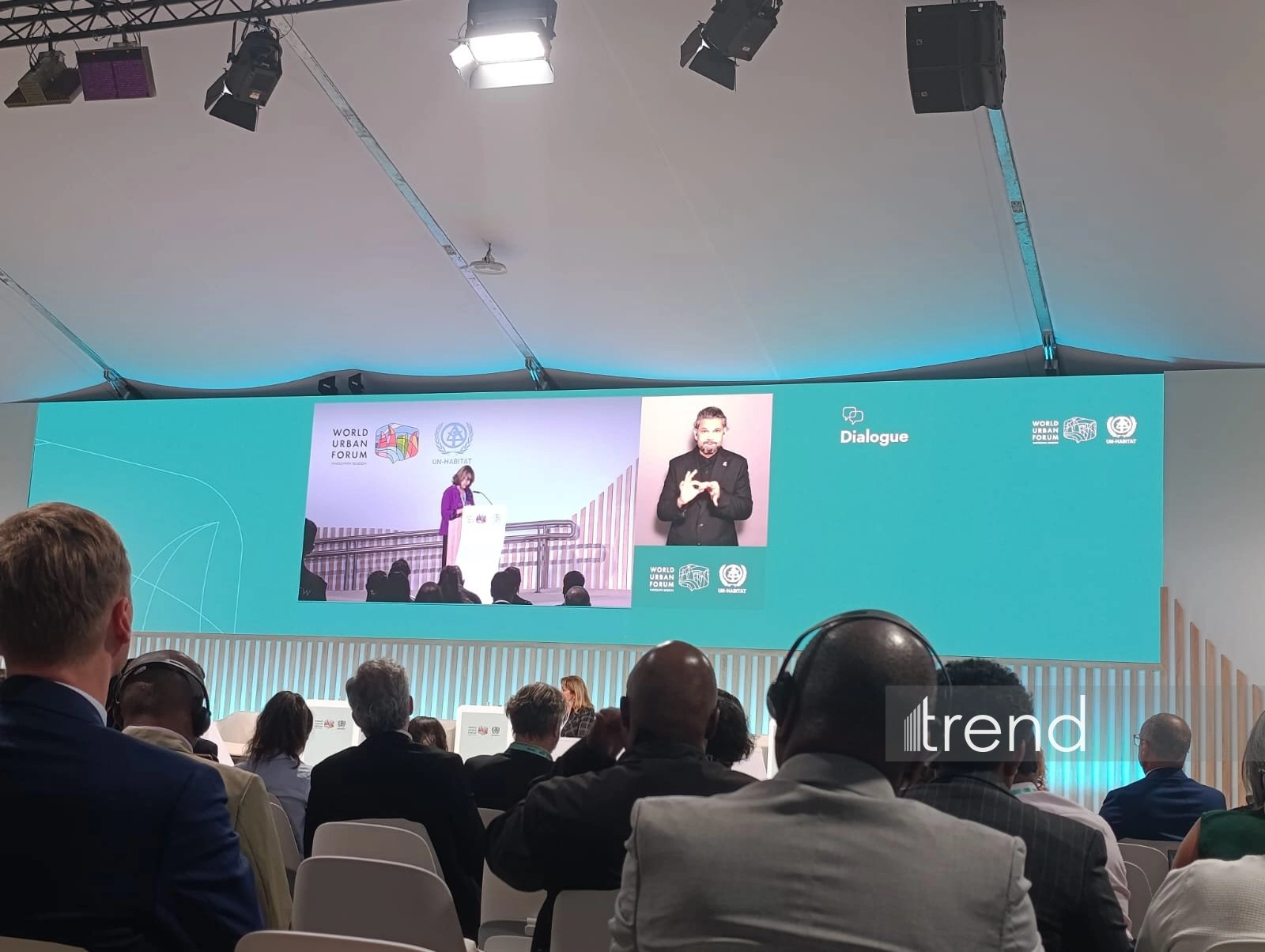
democracy in the housing agenda is under threat, Secretary General
of United Cities and Local Governments (UCLG), Emilia Saiz, said
during a dialogue entitled "The Global Housing Crisis: What's the
Plan?" held at the 13th session of the World Urban Forum (WUF13),
Trend reports.
According to her, the housing crisis is no longer a problem
solely of the Global North or the Global South, but has become a
structural challenge to both development and democracy.
"The future of democracy is at stake in the housing agenda
because we are no longer talking only about upgrading slums or
informal settlements as a problem. We are also talking about people
who have jobs but still face housing difficulties. This is not a
new problem, but today it is becoming increasingly visible, and its
scale is rapidly growing," she said.
Saiz noted that the municipal community recognizes the need to
review existing approaches to housing policy.
"We continue to build social housing in the wrong places. And we
continue to do so with the participation of many institutions
represented in this room today. This must change," she
emphasized.
According to her, many countries continue to evict people who
have built their own housing in informal areas.
"People are evicted either because services cannot be provided
in these areas, or because land values have risen, and land is
viewed solely as a source of income. In many parts of the world,
both land and housing are perceived as commodities," said the UCLG
Secretary General.
She underscored that local and regional authorities are an
integral part of both the problem and its solution.
"We need to change approaches. We must encourage national
governments to develop new strategies, engage communities in
defining how they want to live, and take into account indigenous
knowledge," Saiz said.
According to her, in the face of climate change and increasing
migration, it is especially important to jointly shape the living
environment and approaches to housing.
"In a changing world, where climate change and population
displacement are altering demographics, it is crucial to jointly
create housing and the urban environment, protect people from
displacement, and provide essential services," she added.
The third day of the 13th session of the World Urban Forum
(WUF13) is underway in Baku.
On the first day, a ministerial meeting dedicated to the New
Urban Agenda, a roundtable of ministers, assemblies of women and
civil society, business sessions, and discussions on urban
well-being were held. A ceremony for raising the flags of the
United Nations and Azerbaijan also took place within the framework
of the forum.
The second day of the forum drew attention with the first-ever
Leaders Summit. High-level discussions on the global housing
crisis, urbanization policy, and urban resilience were held that
day. At the same time, the Mexico City pavilion was inaugurated
within the framework of WUF13. The pavilion was presented as an
important platform for expanding cooperation with the Latin
American region and preparing for WUF14.
WUF13, which has attracted more than 40,000 registered
participants from 182 countries, will continue until May 22. Held
under the theme “Housing the world: Safe and resilient cities and
communities,” the forum brings together governments, international
organizations, experts, and representatives of civil society to
strengthen global cooperation in the field of sustainable urban
development.