BAKU, Azerbaijan, May 19. Expanding access to
adequate housing goes far beyond building new units, Executive
Director of the United Nations Human Settlements Program
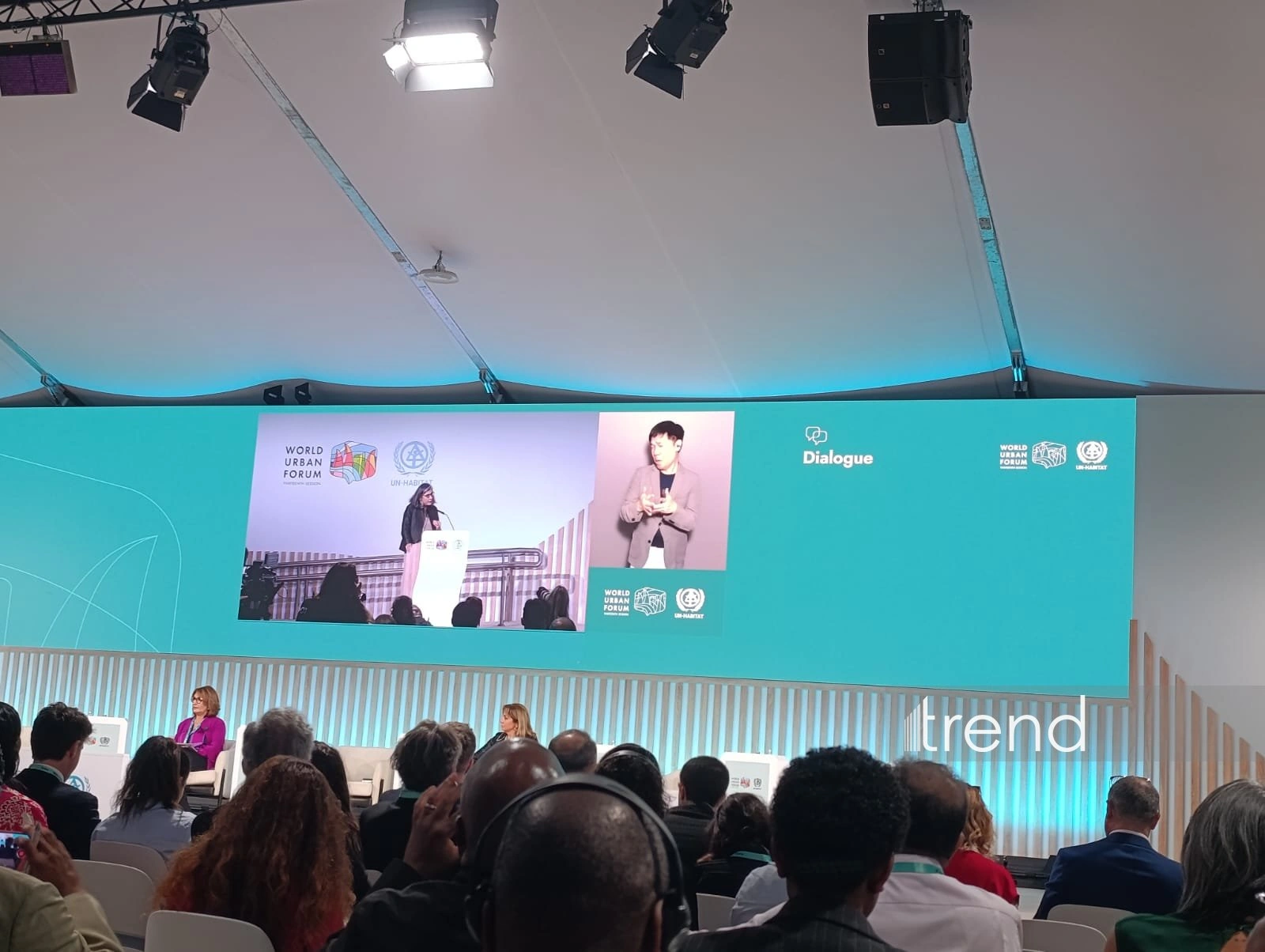
(UN-Habitat), Anacláudia Rossbach, said during a dialogue on the
topic "The Global Housing Crisis: What's the Plan?" at the 13th
session of the World Urban Forum (WUF13), Trend reports.
"Of course, we need to build housing. We still need to expand
the housing stock to reduce the existing deficit, especially in
fast-growing cities in the Global South, where housing is still
insufficient. But we already have buildings and opportunities to
reuse the urban environment and expand housing supply for
low-income groups.
All around us, we see empty buildings and spaces that are
underutilized, and we must pay attention to this," she said.
Rossbach noted that there are numerous examples at the project,
city, and even national level where investment in informal
settlements has been considered a strategic economic development
policy.
"This is how many people have been able to access cities, and
informal settlements have become a gateway to urban life and an
opportunity to access the opportunities that cities offer," she
said.
Rossbach also noted that at this level, there is a whole range
of businesses—small and medium-sized enterprises—whose potential
can be harnessed.
"Around the world, there are numerous examples of unauthorized
housing, community-driven housing, and phased housing construction.
Recently, more and more countries are investing in phased housing
as an alternative.
Flexible solutions can accommodate the needs and expectations of
young people, the elderly, displaced persons, various income
groups, people with disabilities, and many others," she
emphasized.
The third day of the 13th session of the World Urban Forum
(WUF13) is underway in Baku.
On the first day, a ministerial meeting dedicated to the New
Urban Agenda, a roundtable of ministers, assemblies of women and
civil society, business sessions, and discussions on urban
well-being were held. A ceremony for raising the flags of the
United Nations and Azerbaijan also took place within the framework
of the forum.
The second day of the forum drew attention with the first-ever
Leaders Summit. High-level discussions on the global housing
crisis, urbanization policy, and urban resilience were held that
day. At the same time, the Mexico City pavilion was inaugurated
within the framework of WUF13. The pavilion was presented as an
important platform for expanding cooperation with the Latin
American region and preparing for WUF14.
WUF13, which has attracted more than 40,000 registered
participants from 182 countries, will continue until May 22. Held
under the theme “Housing the world: Safe and resilient cities and
communities,” the forum brings together governments, international
organizations, experts, and representatives of civil society to
strengthen global cooperation in the field of sustainable urban
development.