Azerbaijan and Georgia have formalised the completion of major modernisation works on the Baku–Tbilisi–Kars (BTK) railway and launched a new joint venture to manage the strategic freight corridor, in a move aimed at strengthening the Middle Corridor’s role in Eurasian trade.
According to Azerbaijan Railways, the Protocol of the 41st meeting of the Coordination Council for the rehabilitation, reconstruction and construction of the Marabda–Kartsakhi railway section was signed with the participation of Azerbaijan’s President Ilham Aliyev and Georgian Prime Minister Irakli Kobakhidze.
The agreement was concluded between Azerbaijan’s Transport and Digital Development Minister Rashad Nabiyev and Georgia’s Minister of Economy and Sustainable Development Mariam Kvrivishvili.
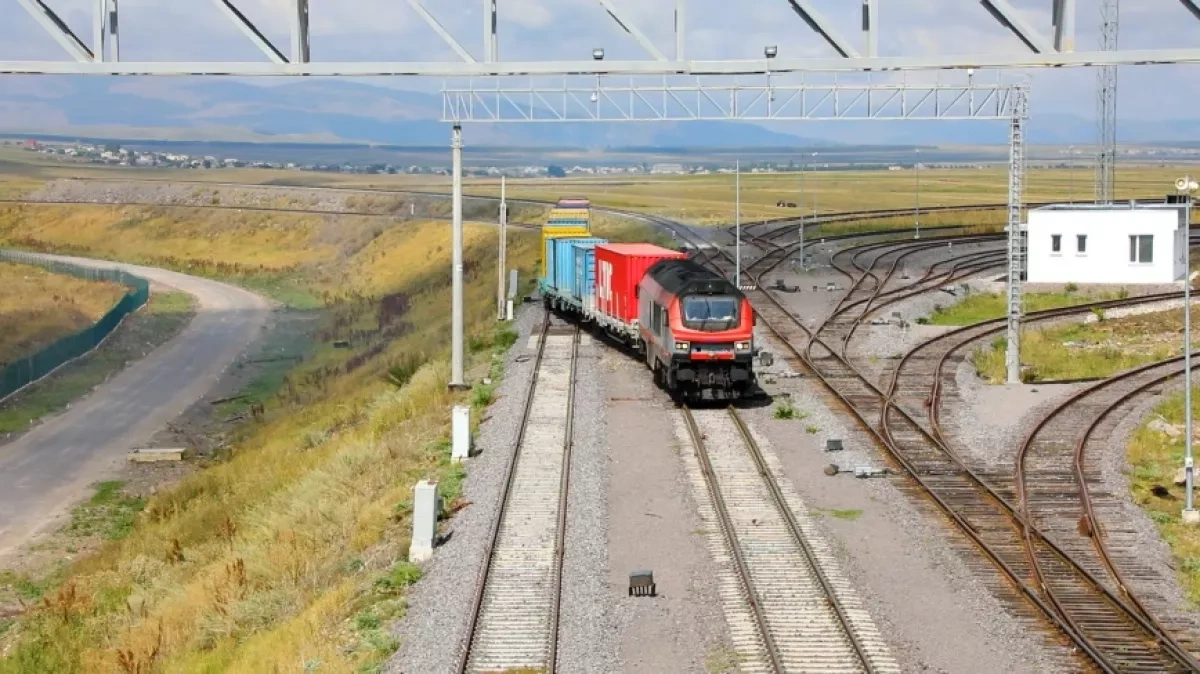
The signing effectively confirms the completion and final acceptance of extensive modernisation works carried out along the Georgian section of the BTK line, a key artery linking Azerbaijan, Georgia and Türkiye.
As part of the upgrade, Azerbaijan Railways CJSC and Georgian counterparts also established the joint venture “BTKI Railways” LLC, designed to ensure coordinated and efficient management of the corridor’s operations.
The 2024 modernisation programme covered the 184-kilometre Georgian segment of the railway and included works across 13 stations, 55 bridges, eight traction substations, and more than 300 buildings and engineering structures. The project also involved the construction of 30.3 kilometres of new track and rehabilitation of 153.1 kilometres of existing line, carried out in difficult mountainous terrain reaching altitudes of up to 2,400 metres.
Following the upgrades, the BTK line’s annual freight capacity has increased from 1 million tonnes to 5 million tonnes, significantly enhancing its role as a core component of the Middle Corridor, a key overland trade route linking China and Central Asia with Europe.
Officials said the modernisation will improve the efficiency and competitiveness of East–West freight flows, reinforce Azerbaijan’s position as a regional transit hub, and further integrate the BTK railway into the wider Eurasian logistics network.
By Aghakazim Guliyev