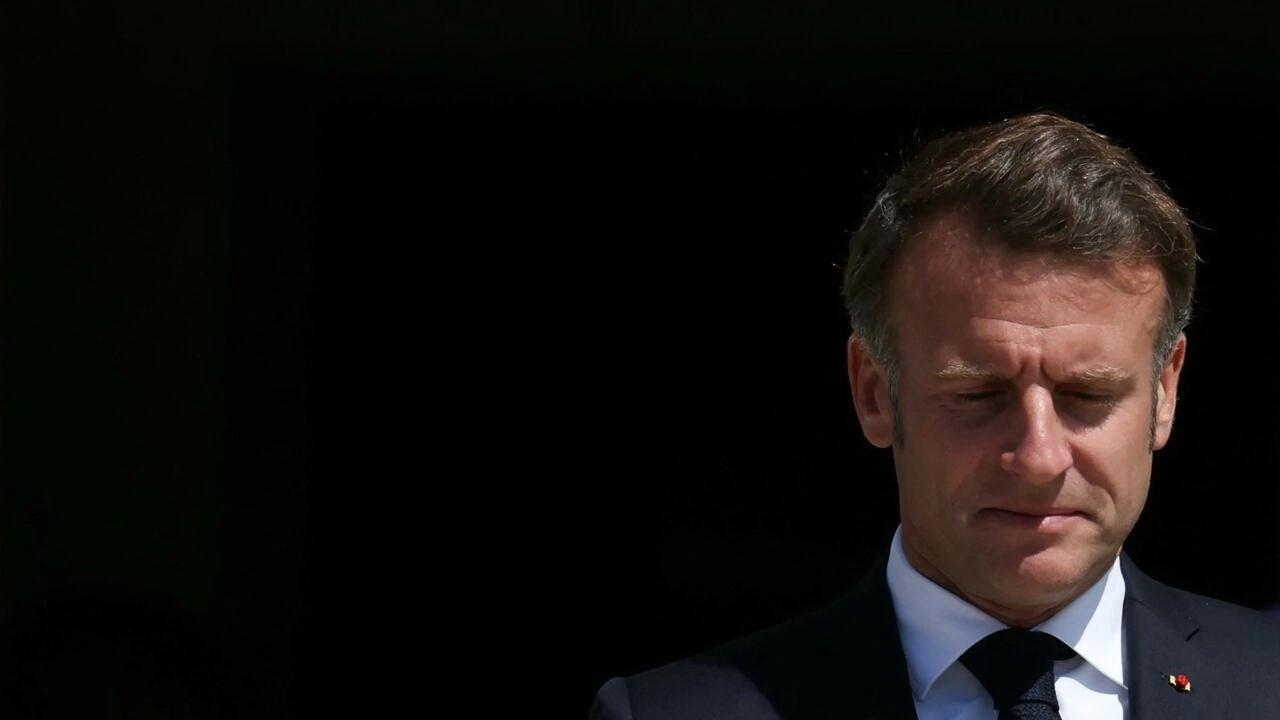
BAKU, Azerbaijan, April 14. It is essential
that the ceasefire be strictly respected by all parties and that it
include Lebanon, French President Emmanuel Macron wrote on his X
page, Trend
reports.
Meanwhile, Macron has held talks with the presidents of the
United States and Iran, urging the removal of restrictions on
maritime traffic through the Strait of Hormuz.
“It is essential, in particular, that the ceasefire be strictly
respected by all parties and that it include Lebanon. It is equally
important that the Strait of Hormuz be reopened unconditionally,
without restrictions or tolls, as soon as possible," he wrote.
Macron also announced that France and the United Kingdom will
also host a conference in Paris this Friday, bringing together by
videoconference non-belligerent countries ready to contribute,
alongside us, to a multilateral and purely defensive mission aimed
at restoring freedom of navigation in the strait when security
conditions allow.
The French President further called on U.S. President Donald
Trump and Iranian President Masoud Pezeshkian to the resumption of
the negotiations suspended in Islamabad, the clearing up of
misunderstandings, and the avoidance of any further escalation.
He also stressed the need to strictly observe the agreed
ceasefire and said it is essential, in particular, that the
ceasefire be strictly respected by all parties and that it include
Lebanon.
On February 28, the U.S. and Israel launched military operations
against Iran. Strikes were carried out against the country’s
largest cities, including Tehran. The White House justified the
attack by citing missile and nuclear threats emanating from the
Islamic Republic. As a result of the strikes on Iran, the country’s
Supreme Leader, Ayatollah Ali Khamenei, and several other key
figures in the leadership were killed. Iran’s Islamic Revolutionary
Guard Corps announced a large-scale retaliatory operation against
Israel. Iran also targeted U.S. facilities in Bahrain, Jordan,
Iraq, Qatar, Kuwait, the UAE, Oman, Saudi Arabia, and Syria with
ballistic missiles, cruise missiles, and drones.
The conflict has placed the region’s energy infrastructure and
maritime shipping under serious threat. Due to security tensions in
the Strait of Hormuz, global oil prices have surged.
Through Pakistan’s mediation, a two-week ceasefire agreement was
reached between the sides on April 7. The U.S.–Iran talks held in
Islamabad on April 11 ended without reaching an agreement.
Stay up-to-date with more news on Trend News
Agency's WhatsApp channel