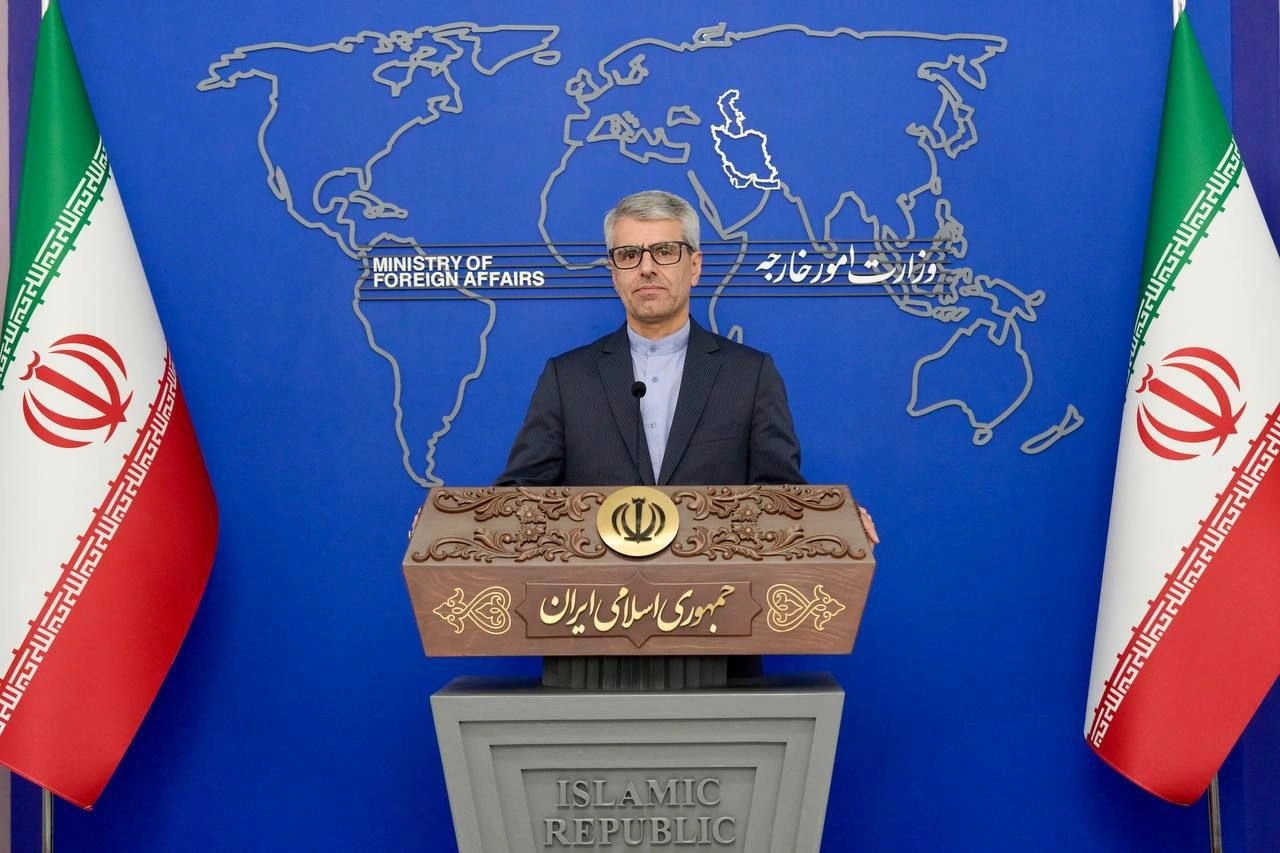
BAKU, Azerbaijan, April 10. Negotiations to end
the war depend on the U.S. sticking to its commitments to a
ceasefire on all fronts, particularly in Lebanon, Iranian Foreign
Ministry spokesperson Esmaeil Baghaei said, Trend reports.
In a statement to the local media, Baghaei strongly condemned
actions attributed to Israel in Lebanon, emphasizing that the
cessation of hostilities in Lebanon is a fundamental component of
the ceasefire agreement proposed by Pakistan.
“As explicitly stated by Pakistan’s prime minister, the United
States has committed to halting the conflict on all fronts,
including in Lebanon. Any actions or positions contrary to this
commitment, Baghaei asserted, would be perceived as a failure by
the United States to meet its obligations,” Baghaei noted.
Furthermore, Baghaei noted that Pakistan has extended an
invitation to both parties for talks in Islamabad, with
preparations for the meeting already underway. However, he stressed
that any negotiations would be contingent upon securing guarantees
that the United States will fully honor its ceasefire commitments
on all fronts.
On February 28, the U.S. and Israel launched military operations
against Iran. Strikes were carried out against the country’s
largest cities, including Tehran. The White House justified the
attack by citing missile and nuclear threats emanating from the
Islamic Republic. As a result of the strikes on Iran, the country’s
Supreme Leader, Ayatollah Ali Khamenei, and several other key
figures in the leadership were killed. Iran’s Islamic Revolutionary
Guard Corps announced a large-scale retaliatory operation against
Israel. Iran also targeted U.S. facilities in Bahrain, Jordan,
Iraq, Qatar, Kuwait, the UAE, Oman, Saudi Arabia, and Syria with
ballistic missiles, cruise missiles, and drones.
The conflict has placed the region’s energy infrastructure and
maritime shipping under serious threat. Due to security tensions in
the Strait of Hormuz, global oil prices have surged.
On April 7, the U.S. and Iran reached an agreement on a
temporary ceasefire lasting approximately two weeks, aimed at
preventing further escalation of hostilities and creating
opportunities for negotiations. According to reports, the agreement
was reached with Pakistan acting as a mediator. One of the key
points is Iran’s commitment to reopen the Strait of Hormuz to
international shipping, and the parties also agreed to cease
attacks and prepare for negotiations.
Stay up-to-date with more news on Trend News
Agency's WhatsApp channel