BAKU, Azerbaijan, March 19.
Turkmenistan has unveiled its
strategic concept for chairing
the Commonwealth of Independent
States (CIS) in 2026,
outlining an extensive agenda
for cooperation that
encompasses transport connectivity,
trade enhancement, energy
collaboration, and environmental
initiatives. This document
delineates Ashgabat's approach
to maximizing its role within
the regional organization over
the coming year.
The concept was initially presented on January 22
during a meeting of the Economic Issues Commission under the CIS
Economic Council in Moscow, and was later discussed on January 29
at a session of the Council of Permanent Plenipotentiary
Representatives. The presentation was delivered by Turkmenistan’s
Ambassador, Esen Aydogdyev.
The concept identifies five key areas of focus for the
chairmanship: strengthening peace and security based on the
principles of neutrality and diplomacy of trust; promoting economic
cooperation and transport connectivity; enhancing humanitarian and
cultural interaction; ensuring environmental sustainability; and
advancing digitalization and innovation.
A central pillar of the concept is the development of
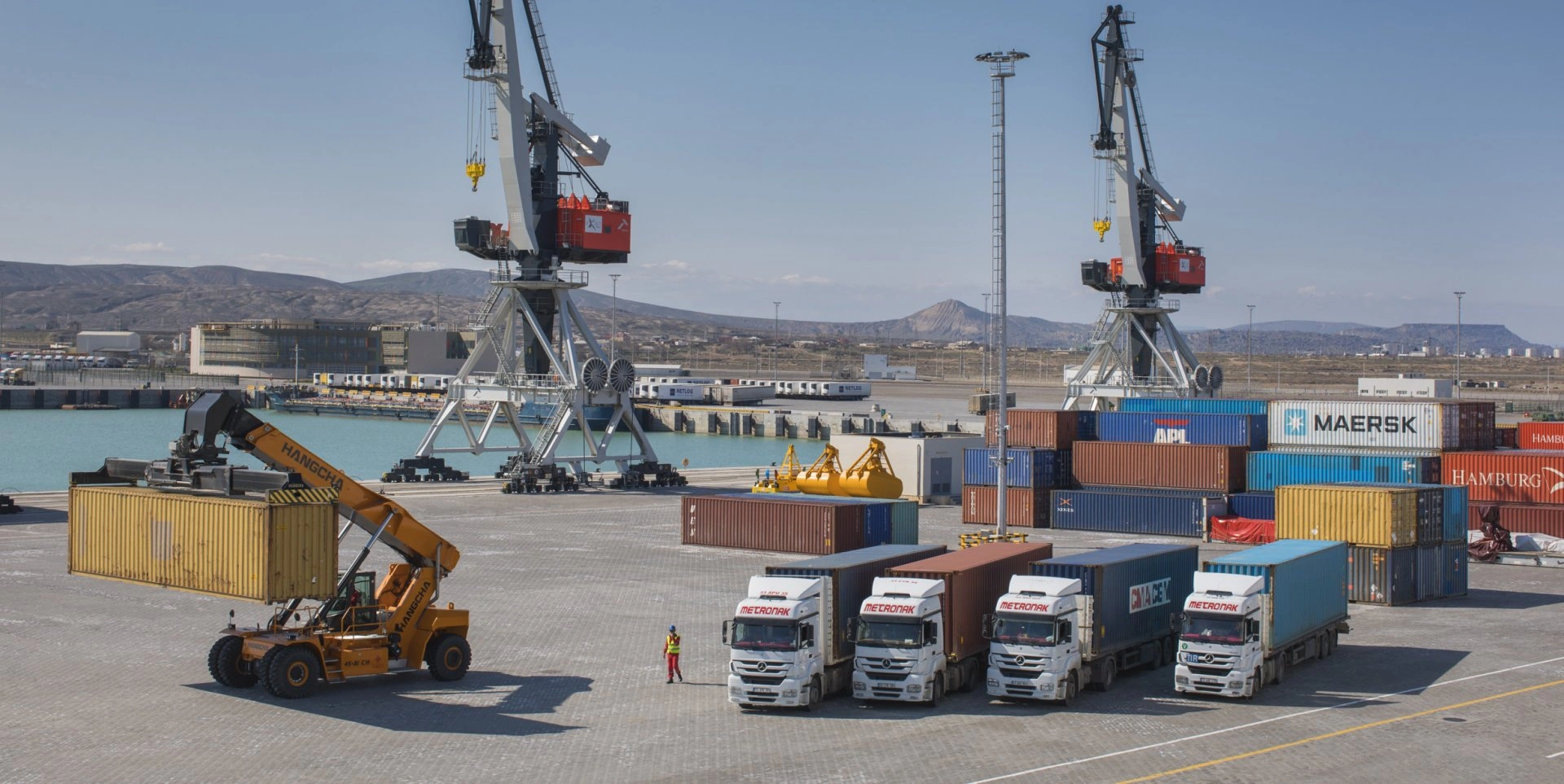
transport infrastructure and logistics. Turkmenistan intends to
facilitate closer integration of the transport systems of CIS
countries and the development of international transport corridors,
in particular, the “North-South” and “East-West” routes. Special
attention is given to the potential of the Caspian Sea as a key
transit hub connecting Central Asia, the Middle East, Europe, and
the Black Sea region.
Regional trade continues to expand steadily alongside
the development of transport corridors and production chains within
Central Asia. In 2025, Turkmenistan’s trade turnover with countries
involved in the United Nations Special Programme for the Economies
of Central Asia (SPECA), comprising Azerbaijan, Afghanistan,
Kazakhstan, Kyrgyzstan, Tajikistan, Turkmenistan, and Uzbekistan,
surpassed $2.2 billion, marking a 15% increase compared to the
previous year. As a result, the share of these countries in
Turkmenistan’s foreign trade grew to approximately 11%.
Turkmen officials have consistently underscored the
importance of enhancing cooperation within the CIS framework.
During the CIS summit in Dushanbe in October 2025, President Serdar
Berdimuhamedov emphasized that the Commonwealth plays a critical
role in fostering global stability and security.
“During our chairmanship, our goal is to
comprehensively promote cooperation and partnership among member
states to fully realize the potential of the CIS, ensure effective
development of the Commonwealth countries, and enhance the welfare
and quality of life of their populations,” he said.
Turkmen diplomats also highlight the importance of
developing infrastructure cooperation. According to Ambassador
Aydogdyev, Turkmenistan intends to focus particularly on expanding
transport, logistics, and energy cooperation, as well as more
actively leveraging the potential of the Caspian region as a link
between Eurasia, Central Asia, and the Middle East.
Strengthening cooperation in these areas could help
address several challenges faced by CIS countries. Many regional
states still rely on a limited number of external transit routes,
which increases logistics costs and makes trade vulnerable to
geopolitical factors. Developing new transport corridors could
diversify routes and enhance the resilience of regional trade.
Energy cooperation remains another important priority.
The region continues to face a need to modernize energy
infrastructure and develop joint projects, including in the field
of renewable energy.
Environmental issues are also highly relevant,
especially in the Caspian basin, where declining water levels,
pollution, and the impacts of climate change pose threats to
ecosystems and economic activities.
Existing regional projects could provide an additional
impetus for integration processes. Among them are the Middle
Corridor, linking Central Asia with Europe via the Caspian, and the
International North-South Transport Corridor, which connects
Eurasia with countries in the Middle East and South Asia.
The legal framework for many projects in the Caspian
region is provided by the Convention on the Legal Status of the
Caspian Sea, which establishes conditions for cooperation in
transport, energy, and environmental sectors among the littoral
states.
In this regard, Turkmenistan’s chairmanship of the CIS
presents an opportunity to promote infrastructure and transport
initiatives that extend beyond the confines of intra-CIS
cooperation. By focusing on the expansion of transport corridors,
enhancing Caspian logistics, and deepening energy collaboration,
Turkmenistan seeks to strengthen the region’s role as a vital
transit hub linking Europe, the Middle East, and Asia.
For Ashgabat, this period of chairmanship also offers
a chance to solidify its position within the broader regional
cooperation framework. Through advancing projects in transport,
energy, and environmental sectors, Turkmenistan aspires to
establish itself as a central node in Eurasian connectivity. The
success of this agenda within the CIS will largely depend on the
member states' collective commitment to harmonizing infrastructure
and trade policies, especially in the context of the evolving
geoeconomic landscape.