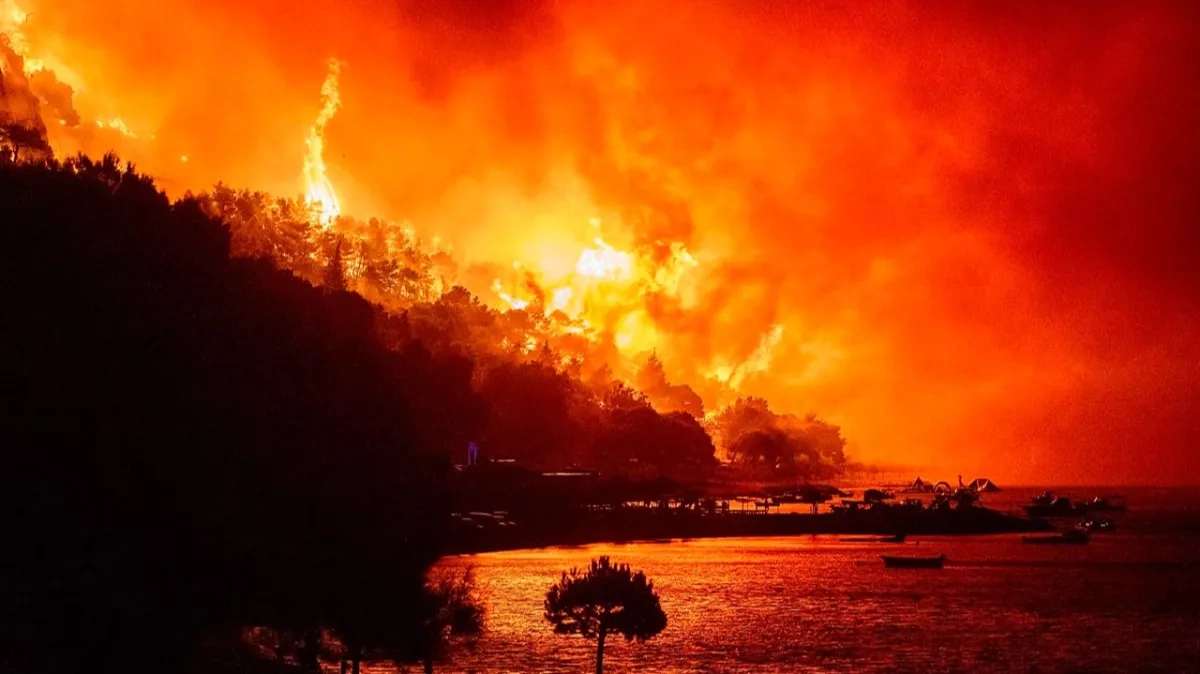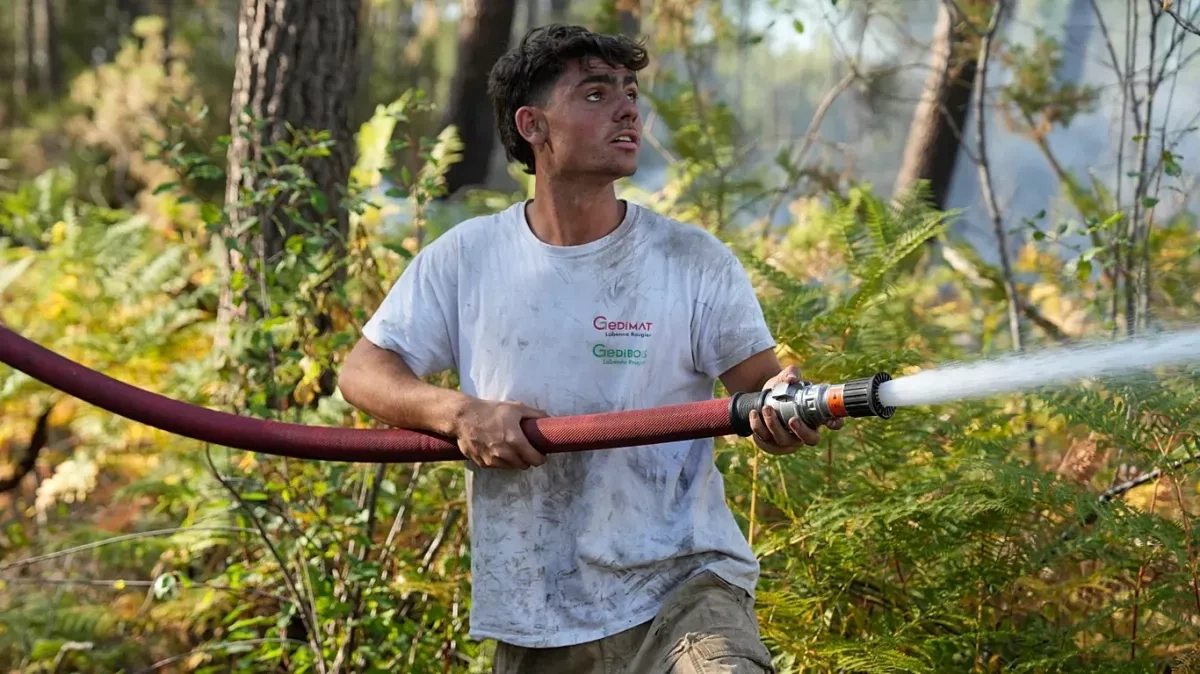
France’s largest wildfire in decades continues to disrupt economic activity, with around 40,000 businesses affected and approximately 200,000 jobs linked to companies impacted by the fires in the Gironde region.
While Spain eased evacuation measures in a wildfire-hit area near Madrid, French authorities continued battling the massive blaze on Wednesday as its economic consequences deepened, Caliber.Az reports, citing Euronews.
The Bordeaux-Gironde Chamber of Commerce and Industry (CCI) told Euronews that about 40,000 businesses had been directly or indirectly affected by the wildfire and related evacuation orders. According to CCI President Patrick Seguin, those companies account for roughly 200,000 jobs.
“We are experiencing an unprecedented situation. A mini-Covid. An economic catastrophe for our businesses, already penalised by the current economic climate,” Seguin told Euronews Business.
Separately, France’s Economy Ministry estimated that nearly 130,000 employees had been unable to work because of the fires.
The chamber has established a crisis hotline for affected businesses and says it is receiving a growing number of requests for assistance. Companies are seeking support with cash-flow shortages, loan and tax deferrals, insurance claims, social security contributions and access to France’s partial-unemployment program.
Earlier reporting by Euronews Business highlighted the initial economic damage caused by the fires, including disruptions at strategically important defence facilities that affected operations at ArianeGroup and Dassault Aviation.
Although the full financial impact has not yet been calculated, the chamber warned that tourism businesses, many of which generate up to 80% of their annual revenue during the summer season, could face severe losses.
The French government announced emergency support on Monday for companies affected by the fires in Gironde, Landes and Var. Businesses forced to suspend operations because of evacuation orders will be eligible for the state-backed partial-unemployment scheme.
Industry Minister Sébastien Martin noted that a meeting at the Economy Ministry on Thursday would provide “more precise answers” for affected businesses.
The fires have also forced adjustments to the region’s electricity network. France’s transmission system operator, RTE, made clear that its maintenance teams were working alongside emergency services to protect power infrastructure supplying homes, fire stations, evacuation centers, telecommunications networks and other critical facilities.
RTE said it had temporarily shut down several transmission lines and substations to allow firefighters to operate safely.
“In parallel, our teams are adapting the operation of the electricity network in real time, in constant coordination with Enedis, to limit the consequences of any unavailability,” the company added.
As of Wednesday afternoon, local media had reported no wildfire-related outages affecting the national transmission network. RTE’s latest official update, issued Tuesday, also confirmed there were no transmission-network disruptions at that time.
Although the wildfire had been stabilised by Wednesday afternoon, authorities remarked that it remained uncontrolled, leaving the possibility of renewed flare-ups. Nearly 42,000 hectares have burned since the blaze began, while more than 220,000 people have been evacuated. Around 60,000 residents have since been allowed to return home, though emergency services continue to respond to new flare-ups fueled by rising temperatures and stronger winds.
By Bakhtiyar Abbasov