TASHKENT, Uzbekistan, February 19. Uzbekistan
and the United States have signed an agreement to establish a
nationwide network of gas stations across the country, Trend reports via the press
service of the Uzbek president.
The agreement was formalized as part of the business agenda
during President Shavkat Mirziyoyev's official visit to Washington.
This visit resulted in the signing of multiple bilateral agreements
and the presentation of several collaborative projects between the
two nations.
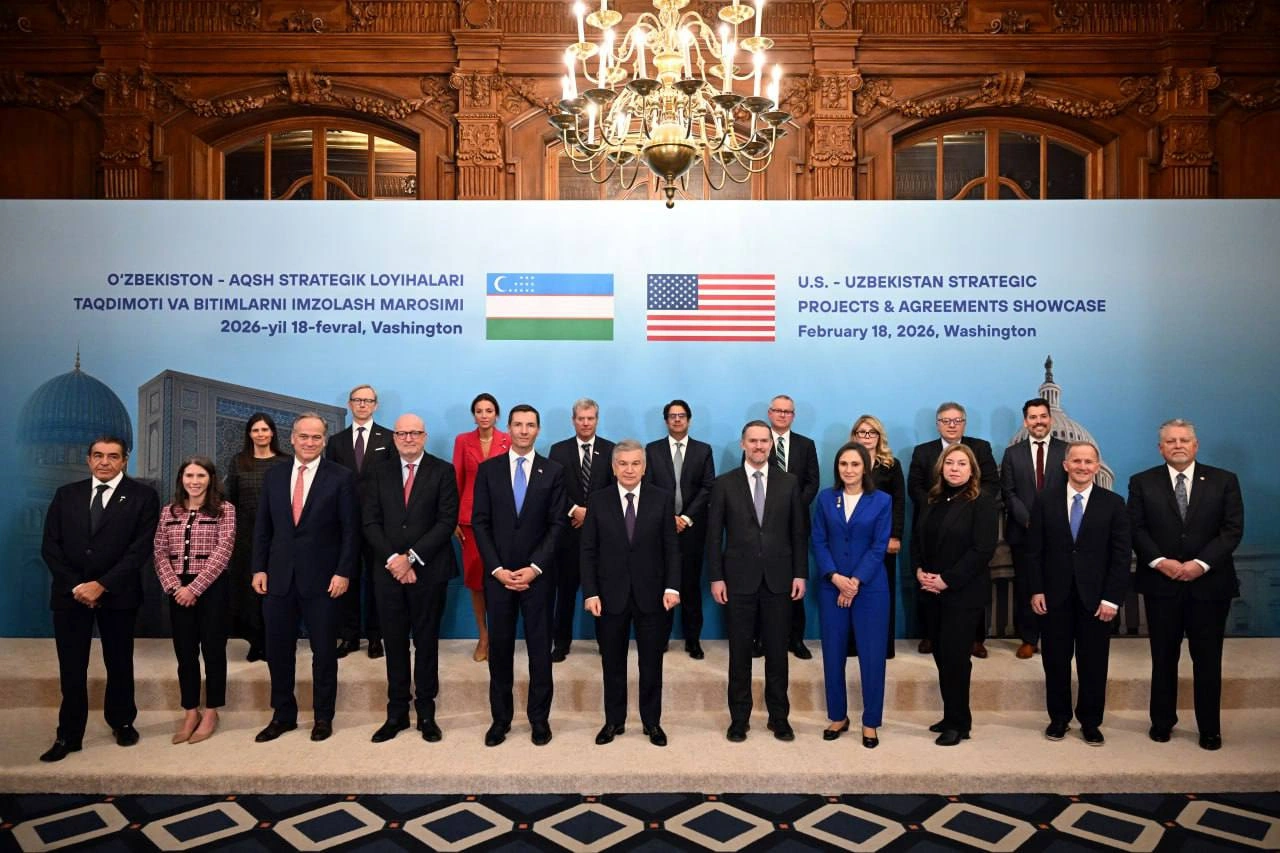
The signing ceremony was attended by a distinguished group of
U.S. government officials and key figures from prominent financial
institutions. Among those present were U.S. Trade Representative
Jamieson Greer, Special Envoy of the President Paolo Zampolli, John
Jovanovic, President and Chairman of the Export-Import Bank of the
United States (EXIM Bank), and Carolyn Lamm, Chairperson of the
American-Uzbekistan Chamber of Commerce.
Executives from some of the world’s most prominent multinational
corporations were also in attendance, including Traxys, Valmont
Industries, Gulf Oil, Aviagen Broiler Breeding Group, John Deere,
BlackRock Financial Markets Advisory, and Oppenheimer, among
others.
In a notable development, in October 2024, Uzbekistan's
state-owned Uzbekneftegaz and the U.S.-based Gulf Oil signed a $100
million memorandum of understanding. This agreement outlines the
establishment of a nationwide network of fuel stations across the
Republic of Uzbekistan. The project will be spearheaded by the
foreign investor, who plans to construct up to 100 fuel stations in
all regions of the country. The initial stations are expected to be
located along major highways as part of Uzbekistan’s broader
initiative to enhance roadside infrastructure.
Fuel for these stations will be procured through the Uzbek
Republican Commodity Exchange, adhering to established market
procedures, with a portion of the supply also sourced through
imports.
This initiative is intended not only to expand services for
motorists but also to play a significant role in the modernization
of Uzbekistan’s transportation infrastructure.