ASHGABAT, Turkmenistan, February 19.
Turkmenistan sets its focus on the formation of digital transport
corridors along the “North-South” and “West-East” directions,
Trend reports via the Turkmen MFA.
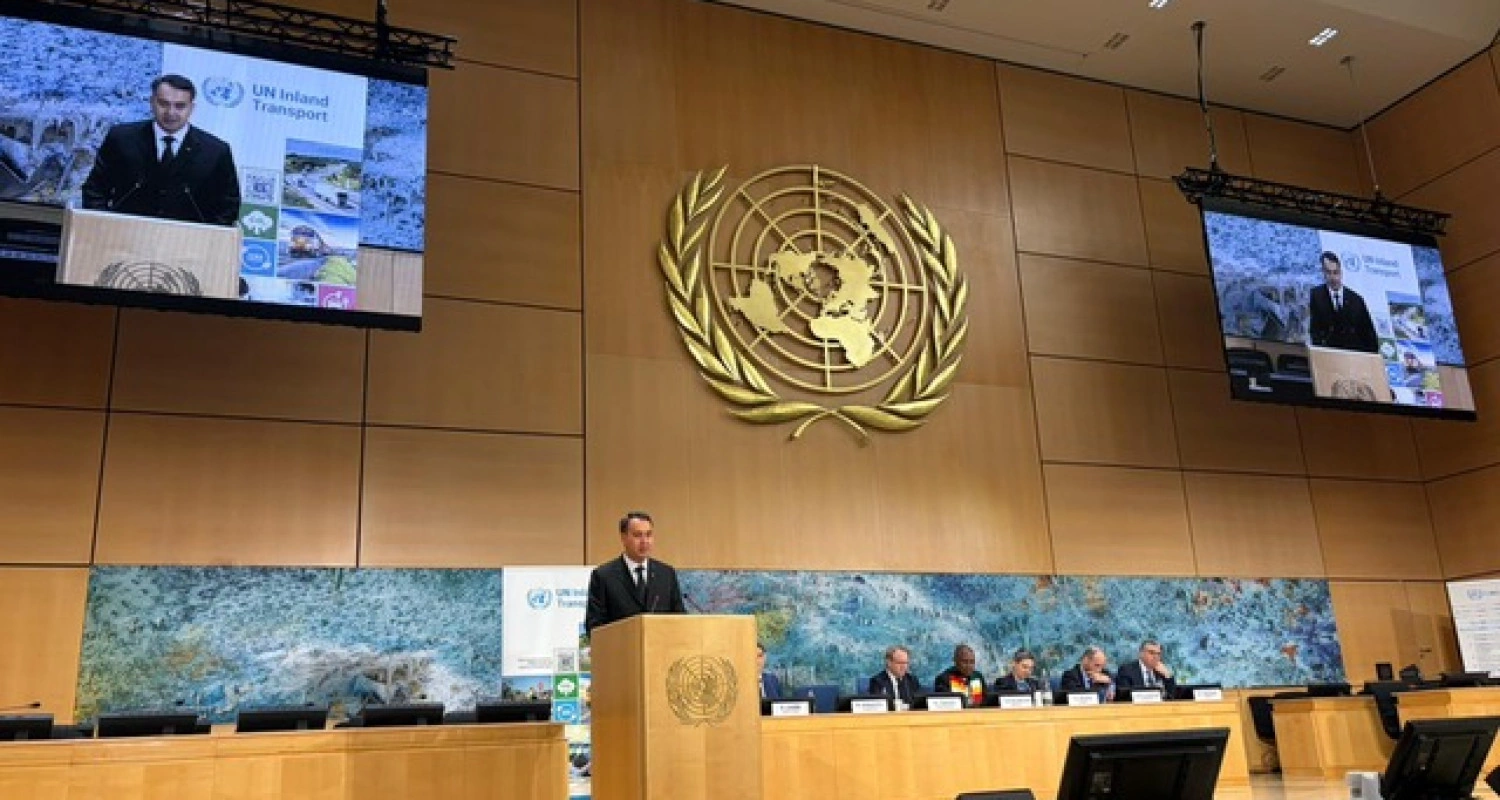
The statement was made by Deputy Chairman of the Cabinet of
Ministers of Turkmenistan Batyr Annaev in Geneva, Switzerland. The
Turkmen delegation, led by Annayev, is participating in the 88th
session of the UNECE Committee on Inland Transport (CIT). The
session brings together heads of transport ministries,
international organization leaders, transport business
representatives, and experts and runs from February 17 through
February 20.
Speaking during the high-level segment, the head of the Turkmen
delegation noted that Turkmenistan regards the digital
transformation of transport as a strategic priority of state
policy.
"Turkmenistan is currently implementing the systemic
modernization of the regulatory framework in the field of
electronic document management and the implementation of mechanisms
for interstate information exchange," he said.
The speech also highlighted practical cooperation with the
United Nations Economic Commission for Europe (UNECE) on the
digital transformation of multimodal transport, the development of
automated data exchange, and the alignment of national initiatives
with the global sustainable development agenda, including the
Turkmen-proclaimed Decade of Sustainable Transport for
2026-2035.
Turkmenistan has maintained active cooperation with the UNECE,
establishing a framework for dialogue and joint action since 1993.
The partnership focuses on sustainable development, energy,
transport and transit connectivity, and regional integration.
Turkmenistan has confirmed its commitment to UNECE mandates and
leverages the Commission as an effective platform to implement UN
global solutions at the regional level.
Key objectives include promoting sustainable energy, reducing
methane emissions, and developing resilient, safe transport
corridors across Central Asia, while translating international
agreements, such as the Third UN Conference on Landlocked
Developing Countries (LLDC3) outcomes and the Avaza Action
Programme 2024-2034, into practical regional initiatives.
In January 2026, Ashgabat hosted the high-level SPECA Week,
convened under the UN Special Programme for the Economies of
Central Asia (SPECA), which Turkmenistan chaired in 2025. The
event, held from January 20 to 23, brought together government
officials from Central Asian countries and international
organizations, including UNECE, the United Nations Economic and
Social Commission for Asia and the Pacific (ESCAP), the World Bank,
and delegates from Azerbaijan and other partners, to discuss
expanded cooperation in transport, trade, energy, and digital
development.
Stay up-to-date with more news on Trend News
Agency's WhatsApp channel