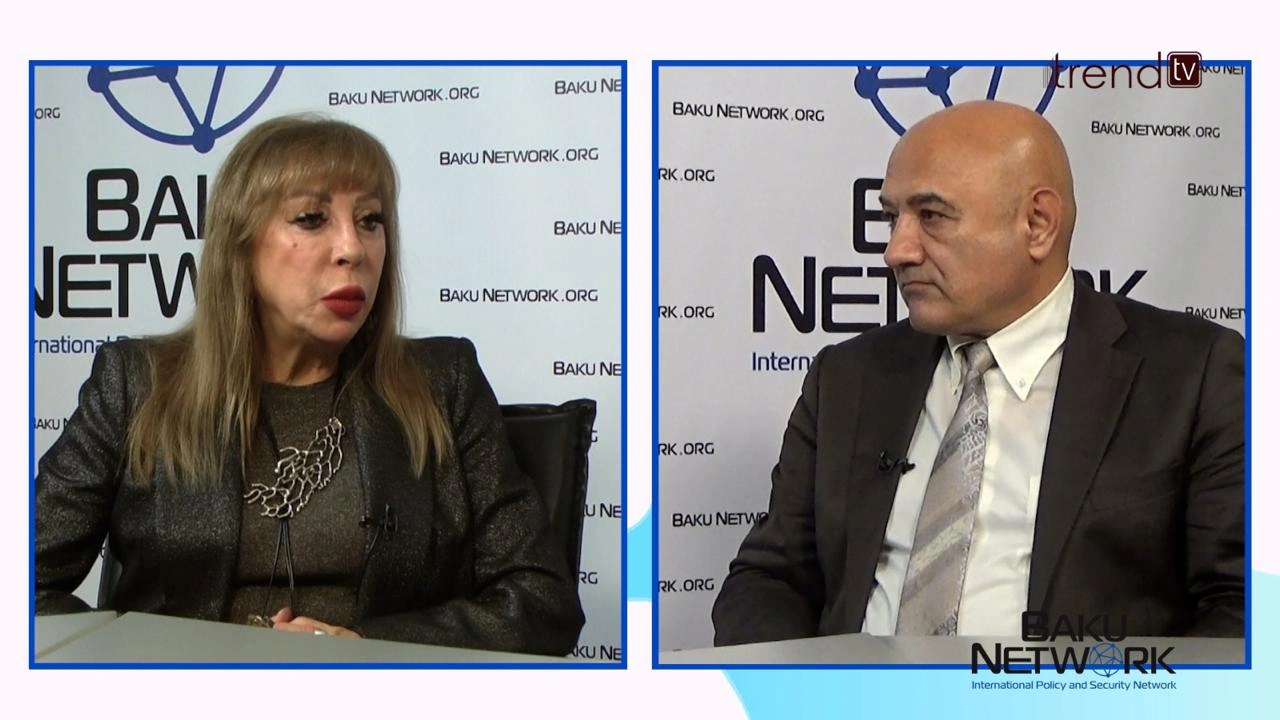
BAKU, Azerbaijan, February 17. The Baku Network
platform has released the latest episode of the analytical video
project “Dialogue with Tofig Abbasov,” Trend reports.
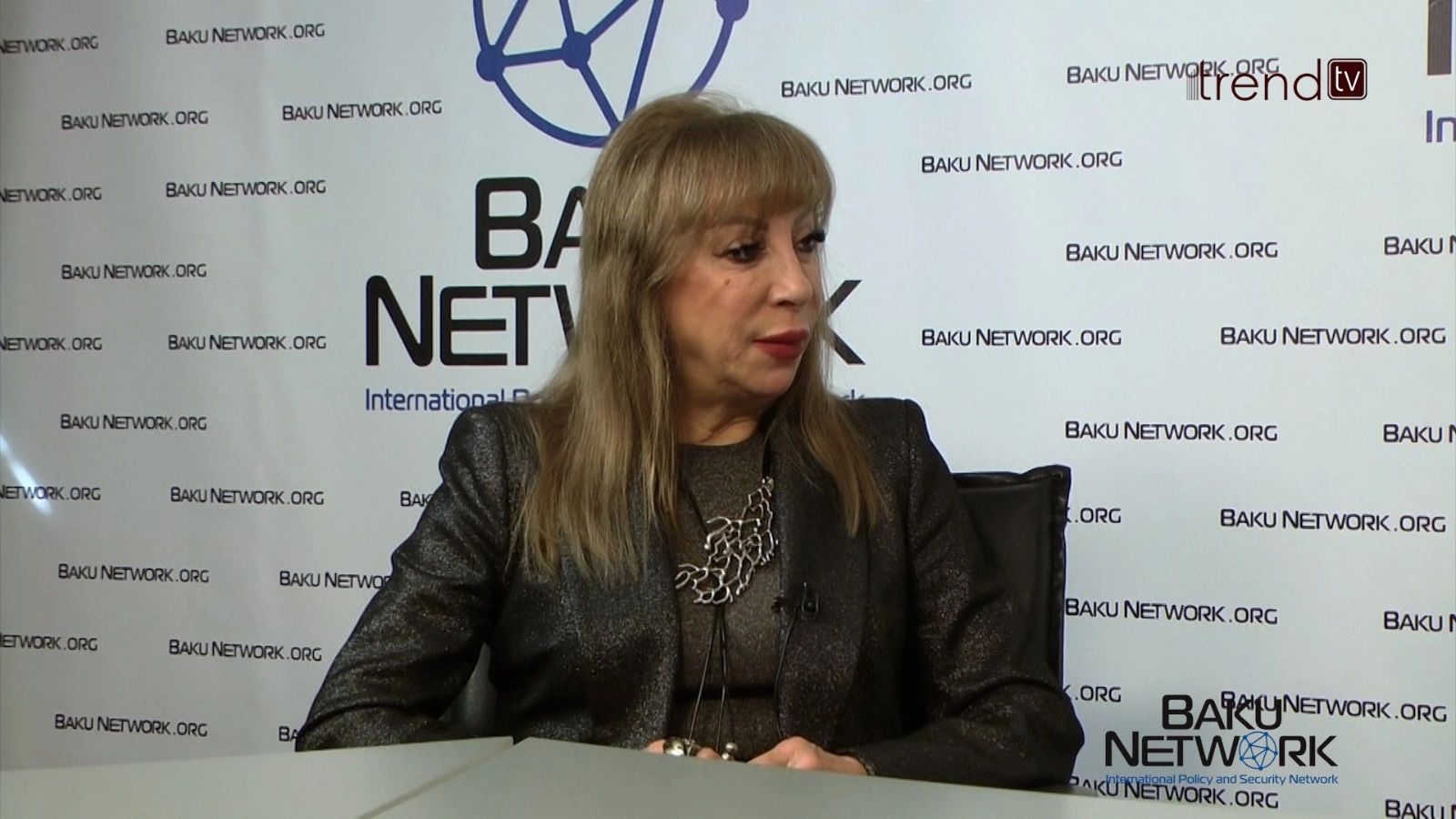
The guest of the program was Alla Bayramova, director of the
State Museum of Musical Culture of Azerbaijan, Honored Worker of
Culture, Doctor of Arts.
“Culture never rests. It works constantly, day and night. It
cannot be intermittent; it must be continuous,” said A. Bayramova,
outlining the main principle of the museum's work.
According to her, the concept of a “museum of musical culture”
was established back in the Soviet period: the institution was
created in 1967 by order of the Cabinet of Ministers.
“This did not mean that the museum immediately opened to
visitors. First, the formation of the funds began. The
prerequisites had existed for a long time. Despite the formation of
a professional school of composition in the early 20th century with
Uzeyir Hajibayov, Azerbaijan's musical culture has rich roots –
folk music, instruments, traditions,” she emphasized.
According to the director, the first exhibit was a note from
Muslim Magomayev to singer Mammad Taghi Baghirov asking him to
perform on the radio. One of the first major acquisitions was a
collection of folk instruments belonging to tar player Ahmad
Bakikhanov—23 instruments that formed the basis of the current
collection.
“We collect everything that reflects the history of our musical
culture: personal belongings, photographs, posters, documents,
recordings – from ashugs and khanendes to composers and singers,”
she said.
A. Bayramova stressed that the museum is often mistakenly
referred to as a museum of musical instruments.
“Instruments are only part of the profile. Not all people have
mugham, ashug art, a school of composition, or musical theater. We
reflect this whole complex,” she noted.
Bayramova paid special attention to the history of the tar.
“The modern Azerbaijani tar is an instrument created by Mirza
Sadikh from Shusha. He added strings, bringing their number to 11,
changed the design, and made the instrument portable. This form
spread throughout the Caucasus and Central Asia,” the museum
director emphasized.
According to her, the museum's collection includes a photograph
from the 1880s showing a woman from Yevlakh playing the tar.
“We should not respond to claims, but persistently promote our
heritage, relying on documents,” she said.
Furthermore, Bayramova cited the example of a carpet presented
to Gurban Primov in 1955 by fellow villagers from the village of
Gulabli in the Aghdam district, as well as documents confirming
that Khan Shushinsky, whose real name was Isfendiyar Javanshirov,
appears in official award documents under both names.
“The city of Shusha was called the Music Academy of the East.
The museum has two halls dedicated to Shusha musicians. We opened
them as temporary exhibitions, but left them as permanent ones,”
she noted.
Speaking about international activities, Bayramova talked about
exhibitions in Moscow dedicated to the centenary of Gara Garayev
and the 125th anniversary of Bulbul, as well as work within the
structures of the International Council of Museums.
"There is a representative of the Museum of Armenian History on
the board. We will have to work together. Culture implies
dialogue," she emphasized.
The director paid special attention to the topic of historical
coexistence.
"The archives contain many photographs and documents showing
folk musicians performing in trios or large ensembles, and often
the kemanche players were of Armenian nationality. For example,
Sasha Oganezashvili and Levon Grigoryan," she said.
According to her, Azerbaijani mugham performers also performed
at Armenian weddings.
"There are photographs showing Jabbar Garayagdioglu and his
musicians playing at the wedding of an Armenian dignitary.
Catalogues and records from various companies confirm that
Garayagdioglu, Gurban Primov, and others often performed together
with Armenian musicians. Armenians did not perform mugham; they
were not khanende, but they were often kemanche players," Bayramova
noted.
She added that during the years of occupation, these materials
were not displayed, but they are preserved in the archives as
historical evidence.
“We have recordings from the late 1920s made in Zangezur and
Western Azerbaijan. They feature performers of different
nationalities who performed Azerbaijani songs such as ”Sari Gelin“
and dances such as ‘Otuzbir’ and ”Khalabaji." This is part of the
common cultural space," she emphasized.
A. Bayramova also cited an example from foreign practice. During
a tour of an ensemble of ancient instruments in the city of
Hildesheim, she gave a lecture on Nizami.
"I was asked why a monument to Nizami was erected in Italy. I
replied: because Azerbaijan is an open country. We have monuments
to Mozart, Tesla, Shevchenko, and Pushkin. This is a reflection of
tolerance," she said.
“Jews have never been persecuted in Azerbaijan,” Bayramova
emphasized, adding that she considers this an important element of
historical memory.
In conclusion, the director noted:
“We had a lot in common in the past, and now, in principle,
nothing prevents us from restoring these relations and good
traditions. Azerbaijan has always been a multinational, open
country. At the conservatory where I studied, there were many
representatives of the Armenian nationality among the teaching
staff. Culture always unites.”