BAKU, Azerbaijan, February 12. We consider
steps taken in areas such as digitalization, data sharing, and
harmonisation of international transport documents to be strategic
elements aimed at increasing the competitiveness of the Middle
Corridor, a source at the TCDD Taşımacılık told Trend.
"Türkiye occupies a strategic position in rail transit along the
East-West axis between Asia and Europe. Particularly within the
scope of the Middle Corridor, Türkiye serves as an important
logistical bridge connecting the South Caucasus, the Caspian Sea
crossing, and Central Asia to European markets. The
Baku-Tbilisi-Kars Railway Line, the Marmaray crossing, and the
Bandırma Tekirdağ train ferry contribute to the seamless and
competitive operation of this line," the representative said.
The company emphasized that routes through Iran complement the
Middle Corridor by enhancing connections with neighboring regions
and increasing geopolitical and logistical diversity in East–West
freight transport.
"Routes through Iran play a complementary role in terms of
connections to Central Asia, South Asia, and the Middle East. The
Türkiye-Iran railway line offers an alternative route, particularly
for regional trade and transit, and is an important option for
East-West transport in terms of geopolitical and logistical
diversity," the source noted.
The source underlined that increasing freight volumes along the
Middle Corridor and related international routes remains a key
priority for 2026, with a focus on operational efficiency and
infrastructure integration.
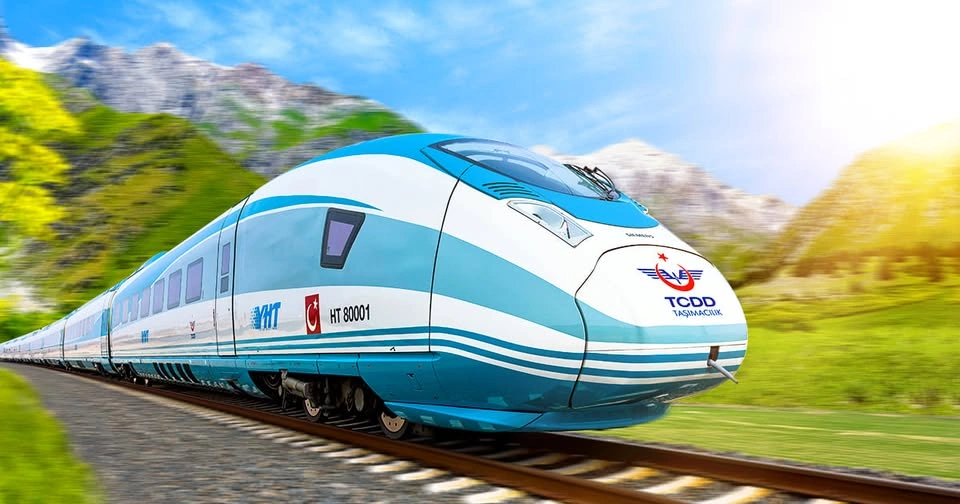
"As TCDD Taşımacılık, we adopt a multi-dimensional approach to
increase freight volumes on international railway routes,
particularly the Middle Corridor. In this context, our priority
objectives include the widespread use of block train operations,
shortening transit times, increasing operational efficiency, and
strengthening cooperation with international railway operators,"
the source said.
The company representative emphasized that the integration of
logistics centres into the railway network constitutes a central
pillar of this strategy, alongside efforts to enhance port
connectivity and strengthen coordination at border crossings.
The source further noted that parallel initiatives are underway
to more closely align logistics hubs with rail infrastructure,
reinforce linkages with ports, and improve operational coordination
at border points.
In addressing operational and regulatory challenges affecting
rail freight movements between Türkiye, Iran, and Central Asia, the
company underscored that, while such issues persist, they remain
manageable through sustained cooperation among relevant
stakeholders.
"Although there are fluctuations in demand depending on the
current state of international trade, there are no unsolvable
problems beyond routine operational issues. Train traffic is
managed through mutual communication and cooperation," the source
concluded.
The Middle Corridor is a transport and trade route passing
through several countries in the region and connecting Asia with
Europe. It serves as an alternative to the traditional Northern and
Southern Corridors.
The route begins in China and passes through Central Asian
countries such as Kazakhstan, Uzbekistan, and Turkmenistan. It then
crosses the Caspian Sea, Azerbaijan, Georgia, and Türkiye before
reaching Europe. The Middle Corridor is a land-based route that
bypasses longer maritime paths, linking eastern parts of Asia,
including China, with Europe.