BAKU, Azerbaijan, December 13. The
International Forum on Peace and Trust, held on December 12 in
Turkmenistan, became an important platform not only for discussing
global stability but also for concrete economic and energy
projects. On the sidelines of the forum, the focus was on the
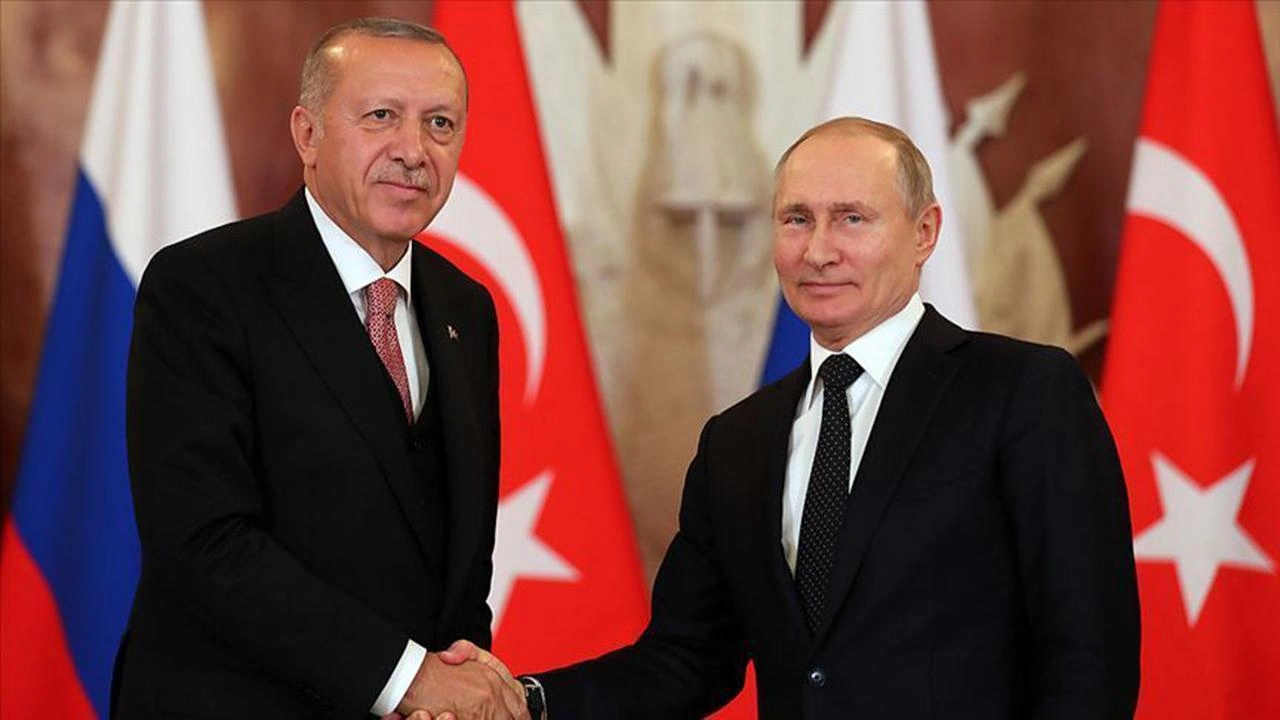
Russia-Türkiye dialogue. Turkish President Recep Tayyip Erdoğan met
with Russian President Vladimir Putin, and one of the key topics
was the Akkuyu Nuclear Power Plant – the largest joint energy
project between the two countries.
Akkuyu represents Türkiye’s first nuclear power plant and stands
as the largest bilateral investment project between Moscow and
Ankara. Located in Mersin province, the plant will feature four
VVER Generation III+ reactors. Each unit is designed to have a
gross capacity of 1,200 MW and a net capacity of 1,114 MW,
culminating in a total installed capacity of 4,800 MW. The plant’s
annual electricity production is projected to reach approximately
35 billion kWh, fulfilling up to 10 percent of Türkiye's
electricity demand.
The project has a long and detailed history. Preparatory steps
began in January 2010, with a joint statement between Russian
Deputy Prime Minister Igor Sechin and Türkiye’s Energy Minister
Taner Yildiz, marking the beginning of nuclear cooperation. In May
2010, an intergovernmental agreement was formalized, and by
December of the same year, the project company, Akkuyu Nuclear JSC,
was officially registered in Türkiye. Full-scale engineering
surveys and land allocation commenced in 2011, alongside a
specialized training program for Turkish professionals in Russian
universities. The first cohort of graduates from MEPhI and
Rosatom’s technical centers completed their studies in 2018 and
will join the plant’s operational staff.
Despite a strong start, the project faced multiple challenges
that repeatedly delayed the timeline. In 2015, amid strained
Russia-Türkiye relations, there were concerns that the project
might be frozen. Only in 2016 did the presidents of both countries
reaffirm their commitment to continue construction. In 2017,
Türkiye’s Atomic Energy Authority (TAEK) and the Energy Market
Regulatory Authority issued key licenses, but private Turkish
companies soon withdrew over commercial disagreements, causing
further delays.
External factors also affected the schedule. Sanctions against
Russia complicated equipment deliveries, including Siemens
products, requiring alternative suppliers from China. The project
also encountered financial and legal disputes, including a $56.1
million lawsuit over currency differences from an advance payment
made in 2013.
Construction has proceeded in stages. The first unit received a
construction license in April 2018, and building officially began
on April 3, 2018. By 2023, major milestones were completed: Russian
nuclear fuel was delivered, the internal containment dome was
concreted, and the turbine installation was finished. Commissioning
of the first unit started in the summer of 2025. The second unit
has been under construction since April 2020, the third since March
2021, and the fourth since July 2022. Full operation of all units
is planned by 2028.
Akkuyu holds strategic significance for Türkiye. The plant is
set to provide up to 4,800 MW of stable baseload power, reducing
Türkiye’s reliance on imported gas and oil, and offering potential
savings of up to $1.5 billion annually. Furthermore, the project
presents Türkiye with a unique opportunity to establish a domestic
nuclear industry, train skilled personnel, and expand its
industrial infrastructure.
However, the project has faced criticism. Russian experts have
raised concerns about the financial burden on Moscow, the fixed
electricity price, and the absence of full Turkish investment
participation. In Türkiye, the electricity buy-back price,
approximately $0.12 per kWh, has also sparked debate due to its
perceived high cost.
A comparison with Rosatom’s other international project, the
Kudankulam Nuclear Power Plant in India, underscores similar
challenges. Like Akkuyu, the Kudankulam project encountered delays
and significant public opposition, primarily due to safety concerns
following the Fukushima disaster, environmental risks, and
evacuation issues. Despite these hurdles, the project progressed:
the first two units began operations in 2014 and 2017, while
construction of four additional units is ongoing. This experience
demonstrates that, despite public opposition and technical
challenges, large-scale nuclear projects can ultimately be
completed successfully.
The discussions on Akkuyu at the presidential level in
Turkmenistan could have practical consequences. High-level
political support may speed up approvals, reduce administrative
barriers, and assist in resolving infrastructure and financing
issues. Adjustments to financial and commercial terms are also
possible, reducing risks and strengthening project resilience.
Akkuyu stands as a testament to the strategic partnership
between Russia and Türkiye, exemplifying how large-scale
infrastructure projects can be successfully completed despite
delays, criticism, and external challenges. For Türkiye, the plant
offers the promise of energy independence and technological
progress, while for Russia, it solidifies its presence in a crucial
regional market.