BAKU, Azerbaijan, December 13. Amid growing
cooperation among Central Asian countries, Kyrgyzstan is
prioritizing the implementation of key regional projects,
particularly in the areas of transport and energy. For a landlocked
nation, enhancing regional connectivity is seen as essential for
economic growth, lowering logistics costs, and fostering deeper
integration into both regional and international markets.
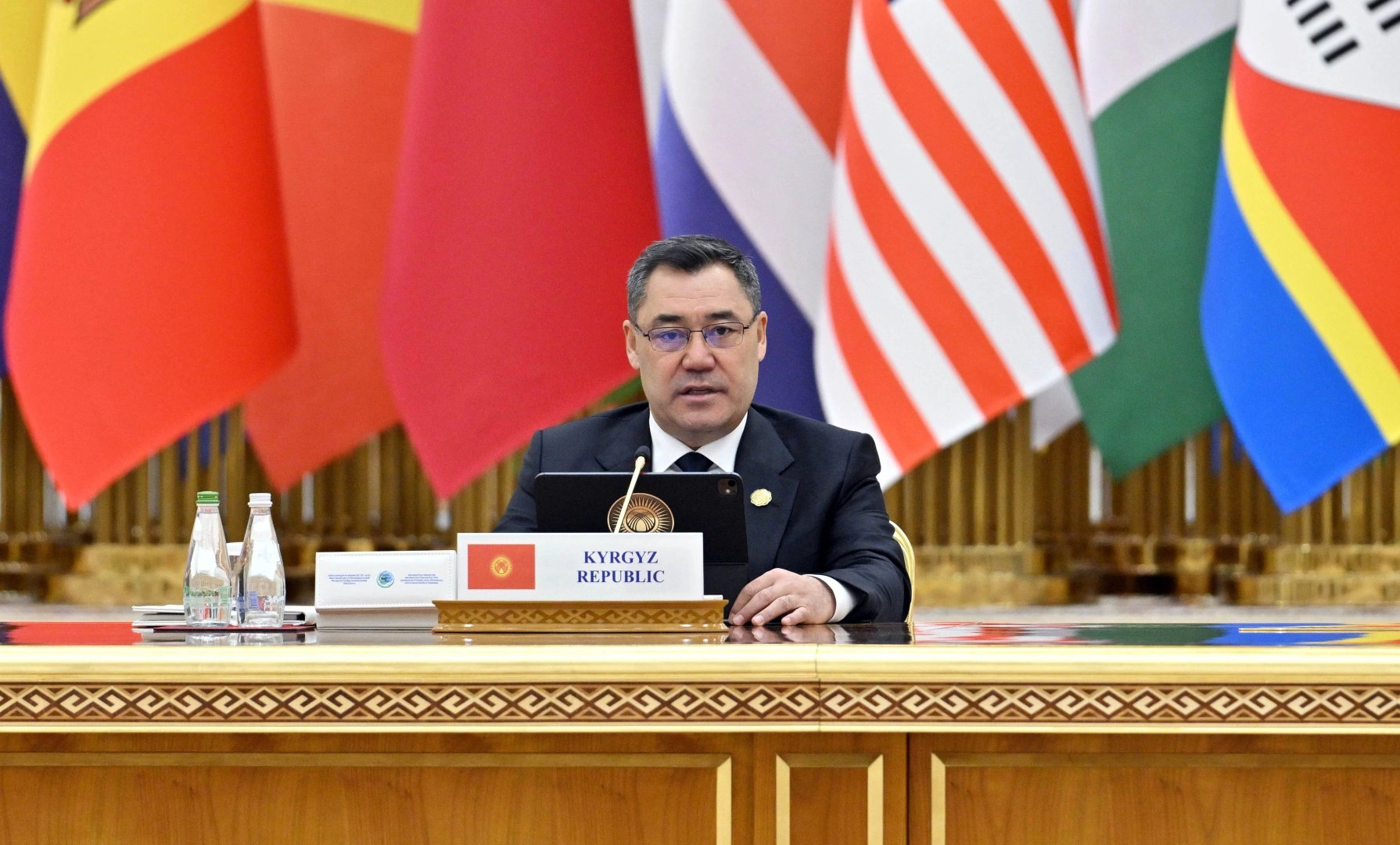
This strategic agenda was underscored at the international forum
titled “Peace and Trust: Unity of Goals for a Sustainable Future,”
held in Ashgabat to commemorate the 30th anniversary of
Turkmenistan’s permanent neutrality. While the forum primarily
focused on themes of peace, trust, and stability, it also addressed
the practical aspects of cooperation among the countries of the
region.
In his address at the forum, President Sadyr Japarov of
Kyrgyzstan emphasized the country’s commitment to expanding
practical collaboration with Ashgabat, particularly in the fields
of energy, transport, and logistics.
The head of state emphasized that Turkmenistan today plays an
important role in the development of regional transport links
through the modernization of Caspian infrastructure, the expansion
of port capacities, and participation in international logistics
initiatives.
“Turkmenistan is gradually becoming a key transport hub
connecting North and South, East and West. Kyrgyzstan is ready to
become an active part of these processes,” Japarov noted.
In this context, he underscored the particular importance of
implementing the China–Kyrgyzstan–Uzbekistan railway project, as
well as the construction of the Kambarata-1 Hydropower Plant in the
energy sector.
For Kyrgyzstan, a landlocked country, transport and logistics
have for decades remained one of the key structural constraints on
economic growth. A limited railway network and a high dependence on
transit through neighboring states have led to elevated costs,
longer delivery times, and reduced economic competitiveness.
Kamila Irgebaeva, head of the Center for Public Projects
Research at the National Institute for Strategic Studies of
Kyrgyzstan, told Trend that for a long time, the country's railway
infrastructure had only been connected to neighboring states in a
fragmented way. Most freight transportation was carried out by road
or in small volumes via existing railway lines, which objectively
limited the growth potential of foreign trade.
According to her, the construction of the
China–Kyrgyzstan–Uzbekistan railway could fundamentally change this
situation. The new route will enable cargo flows from China to pass
through Kyrgyzstan to Uzbekistan and further to other Central Asian
countries, the Caucasus, and Europe. This would help lift the
country out of transport isolation and shape a new role for it in
regional logistics.
Shortening transport distances and reducing delivery times by
7-10 days makes the route economically attractive, especially for
perishable goods and products with high added value. This creates
additional incentives for the development of industry, agriculture,
and processing sectors.
The regional importance of the project is also emphasized by
Kyrgyzstan’s partners. As Hikmatulla Rakhmetov, First Deputy
Chairman of the Board of Uzbekistan Railways, told Trend on the sidelines of the
83rd meeting of the CIS Council for Railway Transport in Baku, the
China–Kyrgyzstan–Uzbekistan railway will become an important factor
in the development of the Trans-Caspian International Transport
Route. According to him, initial cargo volumes could reach 3-4
million tons per year, with a subsequent increase to 15 million
tons, with the main freight flow directed toward Europe.
The economic effect for Kyrgyzstan extends far beyond the
transport sector. Lower logistics costs directly affect production
costs, enhance the competitiveness of domestic enterprises, and
make the country more attractive to investors. Even with moderate
utilization, revenues from transit and logistics services could
amount to hundreds of millions of dollars per year, representing a
significant contribution to the economy and the state budget.
In addition to enhancing transport infrastructure, Kyrgyzstan is
also advancing energy projects as the second strategic pillar of
regional cooperation. With the rising electricity demand, the
challenges posed by climate change, and seasonal imbalances in
Central Asia’s energy systems, ensuring a reliable and predictable
energy supply has become increasingly critical.
In this regard, the construction of the Kambarata-1 Hydropower
Plant holds particular significance. Bishkek views the project not
only as a national priority but also as a regional energy
initiative.
During his address at the forum, President Japarov emphasized
the importance of the Kambarata-1 HPP, highlighting that such
projects create new opportunities for mutually beneficial
cooperation among Central Asian nations.
With a capacity of 1,860 MW and a reservoir volume of 5.4
billion cubic meters, the Kambarata-1 HPP is expected to play a
pivotal role in regulating the flow of the Naryn River and
stabilizing the region’s energy grid. The project is seen as
crucial for enhancing the reliability of electricity supply during
the winter months and improving water resource management during
the growing season, benefits that extend beyond Kyrgyzstan to the
downstream countries.
The implementation of the Kambarata-1 HPP will allow Kyrgyzstan
to strengthen its energy security, reduce electricity shortages,
and create additional opportunities for exports within the unified
energy system of Central Asia. In the long term, the project will
also help reduce dependence on energy imports and form a
sustainable foundation for the country’s industrial
development.
The transport and energy projects promoted by Kyrgyzstan form a
complementary basis for economic development. The
China-Kyrgyzstan-Uzbekistan railway expands the country’s logistics
capabilities and transit potential, while the Kambarata-1 HPP
enhances energy resilience and creates conditions for stable
growth.
In a broader regional context, these initiatives reflect Central
Asian countries’ shift from declarative dialogue toward the
implementation of concrete projects that foster long-term
interdependence. The “Peace and Trust” forum in Ashgabat served as
a political framework to reaffirm this course, while the practical
content of the regional agenda is increasingly shaped by
infrastructure and energy solutions.
For Kyrgyzstan, participation in such projects is not an
alternative but a necessity. In the absence of access to the sea
and amid high transit dependence, the development of transport and
energy sectors is precisely what enables the country to strengthen
its position in Central Asia and gradually integrate into broader
Eurasian economic processes.