BAKU, Azerbaijan, November 3. Kazakhstan's
average annual electricity load growth is expected to reach 5.6% in
2027-2033, driven by industrial development and the connection of
new major consumers, including data centers, Chairman of the
Management Board of Kazakhstan's electricity grid operator KEGOC
Nabi Aitjanov, said, according to the company.
He made the remarks at a meeting of the Committee on Economic
Policy, Industry and Energy of the National Kurultai, where he
presented Kazakhstan's electricity sector development forecast and
outlined projects to expand the national power grid.
According to the draft electricity and capacity balance forecast
for 2027-2033, the country is expected to move from a capacity
deficit to a small surplus in 2028. The surplus could reach 2.8
gigawatts (GW) by 2029, including the required reserve, and 5.9 GW
by 2035 if the planned generation projects are implemented.
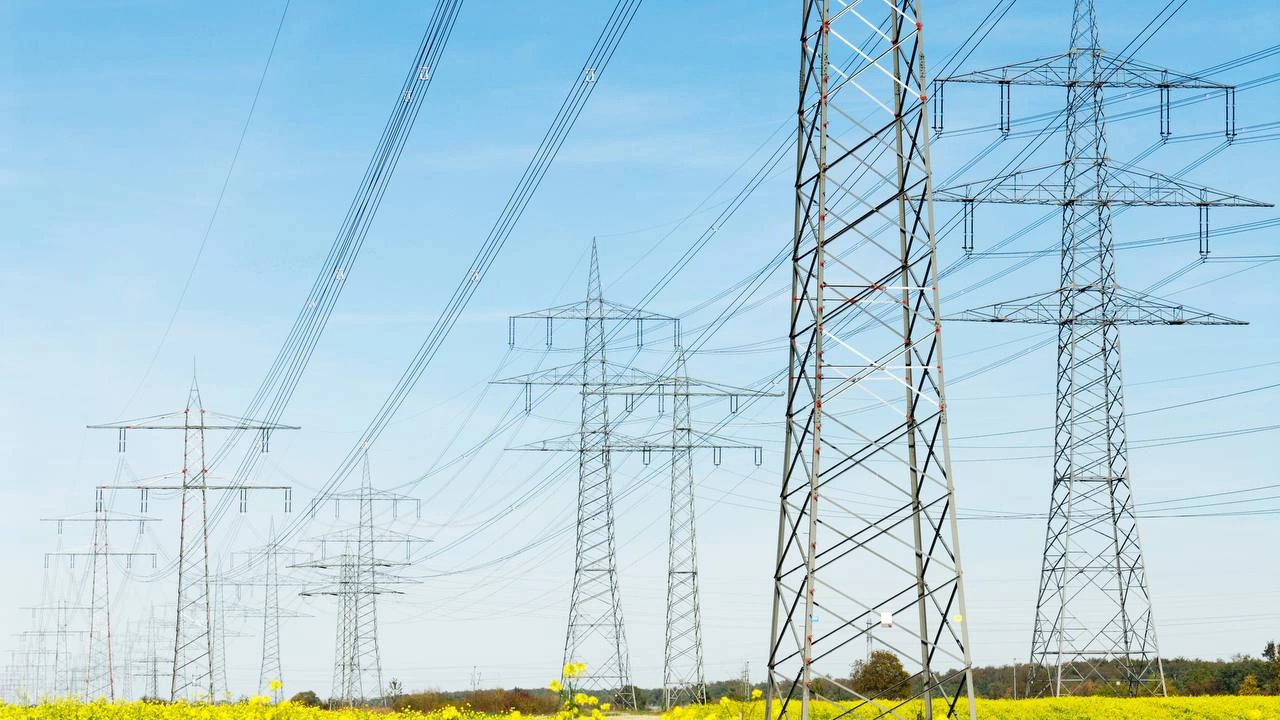
In view of the projected growth in electricity generation, KEGOC
is developing the national power grid, with a particular focus on
ensuring its readiness to transmit additional volumes of
electricity. This work includes modernizing existing
infrastructure, increasing grid transmission capacity and
strengthening connections between regions.
Over the three years, the company's investment program has
nearly quadrupled, rising from 48.8 billion tenge (approximately
$107.6 million) in 2024 to 181.8 billion tenge (approximately
$400.8 million) in 2026. The main investments are directed toward
projects aimed at expanding electricity transmission capacity and
improving the reliability of power supply across the regions.
In particular, KEGOC is implementing a project to strengthen the
Southern Zone's power grid. The construction of the 500-kilovolt
(kV) Shu-Zhambyl-Shymkent power transmission line will increase
electricity transmission capacity by 440 megawatts (MW), improve
the reliability of power supply in the south of the country, and
create additional opportunities for integrating renewable energy
sources.
Another major project involves integrating the power system of
Western Kazakhstan into the Unified Power System of the country.
The 500-kV Ulke-Karabatan line, with a transmission capacity of up
to 500 MW, will strengthen the connection between the Western Zone
and the rest of Kazakhstan's power system and reduce its dependence
on Russia's power system.
Other planned projects include strengthening Astana's external
power supply through the construction of a new 500-kV power supply
center, as well as developing electricity networks in Almaty Region
and Zhetysu Region to improve the reliability of power supply in
these areas.
At the same time, the company continues to modernize existing
infrastructure. By 2031, the capacity of substation transformers is
planned to increase by 5.6 gigavolt-amperes (GVA), or 14%. KEGOC
also plans to reconstruct 92 power transmission lines with a total
length of more than 8,600 kilometers.
The currency conversion was made at the National Bank of
Kazakhstan's exchange rate of 453.64 tenge per US dollar as of
November 3.