BAKU, Azerbaijan, October
29.The rise in overdue consumer loans in
Azerbaijan isn’t systematic in nature, the governor of the Central
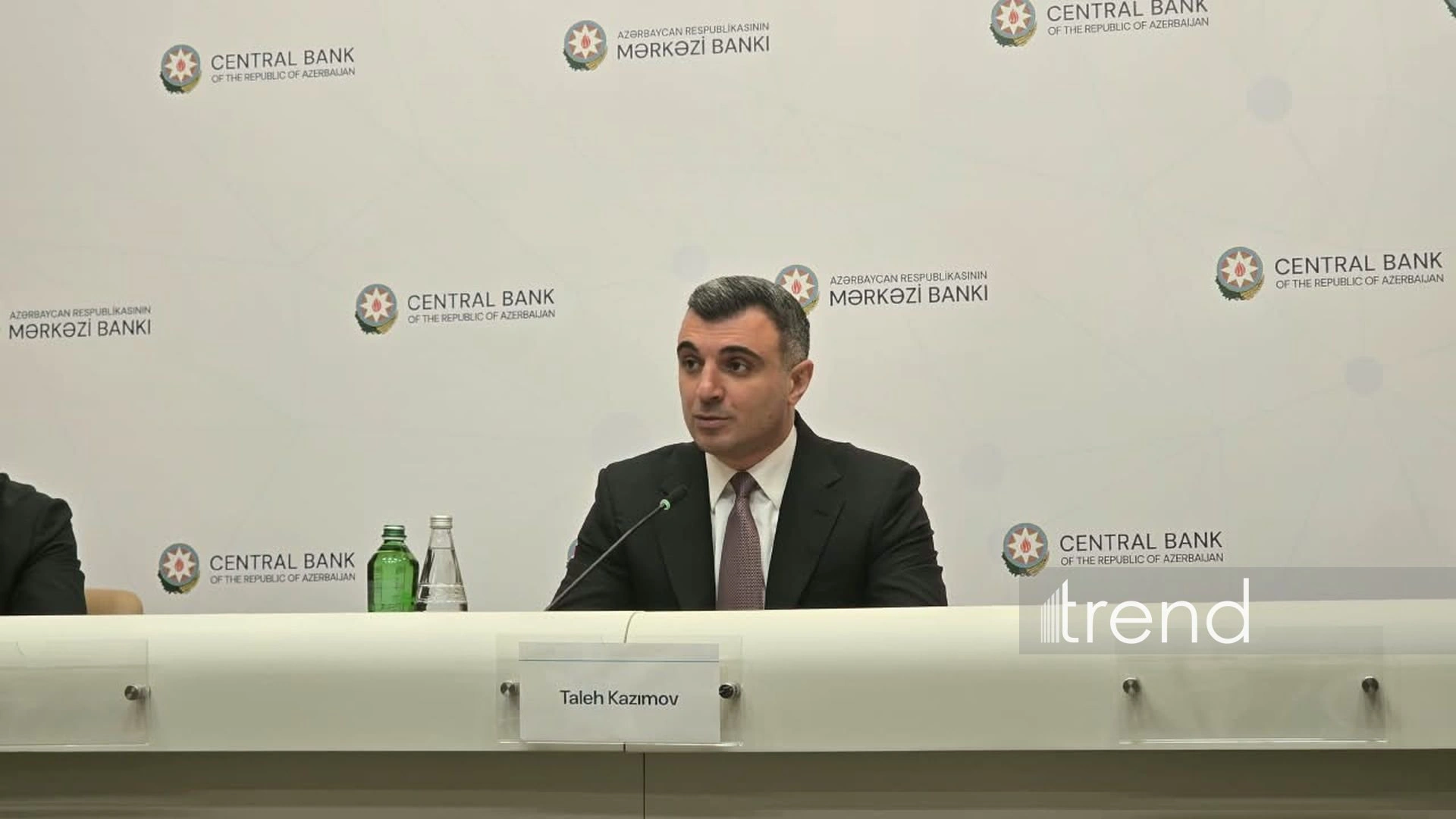
Bank of Azerbaijan (CBA)Taleh Kazimov said, Trend's correspondent reports from the
event.
He made the remarks at a press conference on Thursday following
a meeting on the parameters of the interest rate corridor.
According to him, although some increases in overdue consumer
loans have been observed, this growth does not pose a systemic risk
to the banking sector.
"Currently, there is a growth in overdue consumer loans, albeit
in relatively small amounts. In fact, this isn’t systemic in
nature. If you look at the financial statements of our banks, you
will see that the coverage ratio for our provisions is quite high,"
Kazimov noted.
The CBA governor pointed out that the coverage level of
provisions for consumer loans is more than double the value of the
loans themselves.
"Take consumer loans, for example. In fact, the provision
coverage ratio is more than twice the value of the loans.
Therefore, for this system, it’s not a problem, it’s a critical
situation," he emphasized.
Kazimov noted that it is normal for non-performing (problematic)
loans to increase, in both absolute and relative terms, during
certain periods.
"In certain periods, there has been pressure regarding
non-performing loans, and an increase in their volume, both in
absolute and relative terms, has been observed. An increase in
non-performing loans is a normal occurrence. I have issued loans
myself," the CBA governor added.
He remarked that the new requirements introduced in the lending
regulations are not aimed at limiting the volume of loans, but
rather at ensuring a more effective distribution of risks and a
more accurate assessment of credit risks.
"While there is a lot of talk about restrictions, in reality,
there are none. The new regulations are designed to facilitate a
more effective distribution of risks and to foster better
relationships with counterparties. Individuals who obtained
consumer loans in the past will still be able to do so; there are
no restrictions here," said Kazimov.
According to him, the primary objective of the new requirements
is to improve the assessment of credit risks.
"We are introducing certain requirements, most of which are
intended to ensure a more accurate assessment of credit risks.
There are some new elements in the updated lending regulations;
these are not restrictions, but rather requirements designed to
enable a more precise evaluation of risks," the CBA governor
pointed out.
Kazimov also emphasized that the complete absence of
non-performing loans should not necessarily be viewed as an
indicator of a healthy loan portfolio.
"Just because a loan portfolio contains no problem loans, it
doesn’t mean that the portfolio is free of issues in other areas.
Sometimes, someone might claim, 'There are no problem loans in my
portfolio.' Anyone with an understanding of regulatory standards
would immediately ask: 'What has expanded within this portfolio or
behind these figures?' Because there are no problem-free loans," he
explained.
The CBA governor highlighted that, for the regulator, the key
issue is not the complete absence of non-performing loans, but
rather the level at which they exist within the portfolio.
"For us, as the regulator, the primary concern is the extent of
these issues. The current situation is acceptable to us; we
consider our indicators to be low and satisfactory. We begin to
grow concerned when problem loans reach the 4–5% range. At present,
however, we aren’t concerned, as we haven’t reached that level,"
added Kazimov.