BAKU, Azerbaijan, October 28.
The goal is to completely phase out diesel buses that no longer
meet current requirements in Azerbaijan, and it’s expected that the
number of such buses in Baku will be decreased to nearly 500 by the
end of this year, and that all of them will be replaced with new
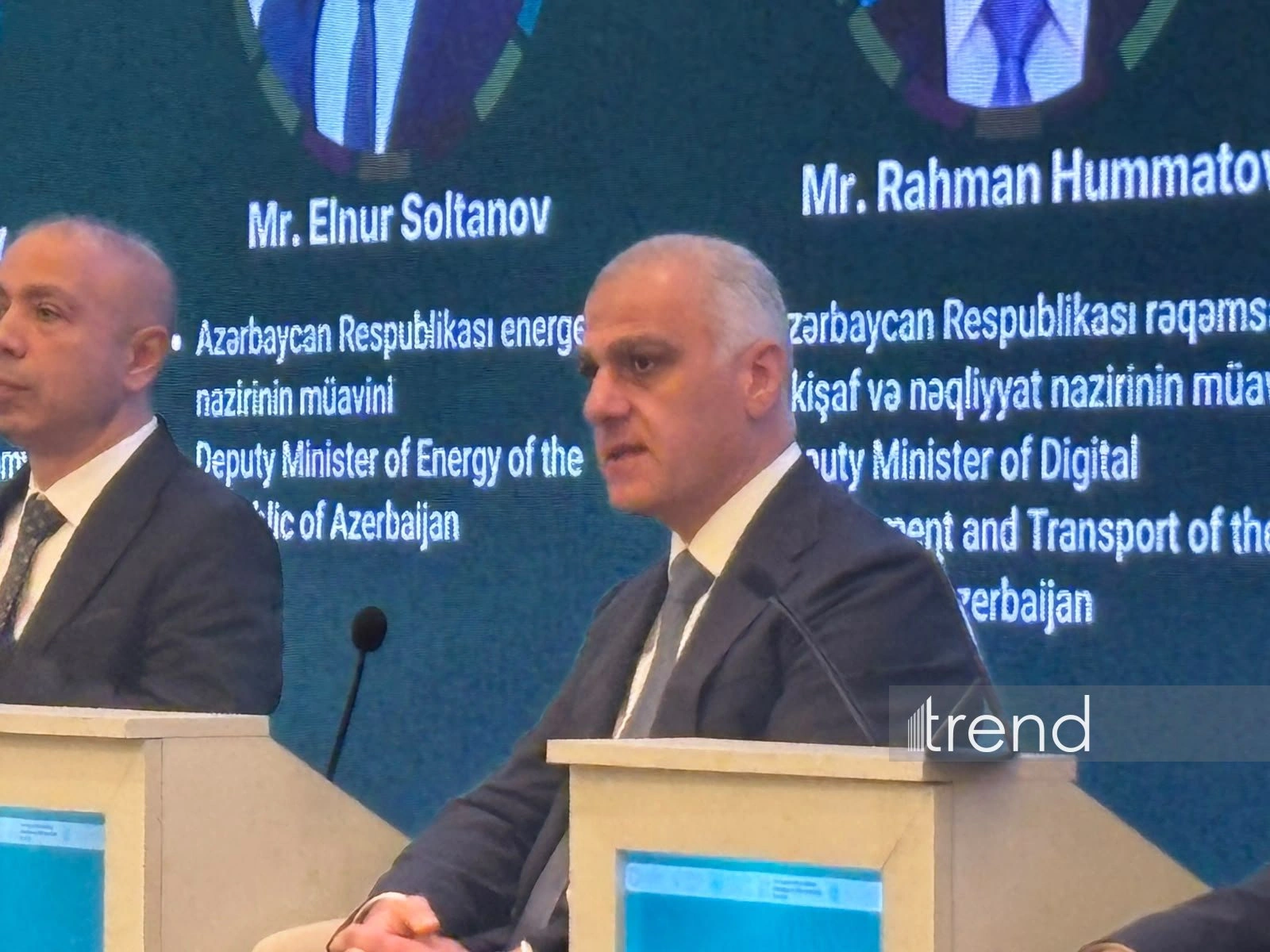
ones next year, Deputy Minister of Digital Development and
Transport Rahman Hummatov said at the 9th Sustainable Development
Goals (SDGs) Dialogue themed “Accelerating the NDC3.0: Advancing
Energy Sector Decarbonization for Sustainable Development” in Baku
on Wednesday, Trend’s correspondent
reports from the event.
He noted that combating climate change and transitioning to a
low-carbon economy are among Azerbaijan's key priorities, and the
commitments the country has undertaken in this regard are reflected
in relevant documents. The transport sector also plays a
significant role in terms of reducing carbon emissions.
"While the transport sector accounts for approximately 15% of
global carbon emissions, this figure is around 13% in Azerbaijan,"
the deputy minister remarked.
According to Hummatov, the implementation of the commitments
undertaken by Azerbaijan is supported by specific state programs.
One of the key priorities of the state program for the improvement
of transport infrastructure in Baku and its surrounding areas up to
2030, approved by President Ilham Aliyev, is to keep annual per
capita carbon emissions below 600 kilograms. The program also
outlines specific measures to achieve this target.
The deputy minister indicated that the electrification of public
transport is one of the primary measures. According to him, there
are currently approximately 2,600 buses operating in Baku. Over the
past three years, the number of buses has increased from 1,700 to
2,600, an addition of 900 vehicles. The new fleet includes
eco-friendly buses powered by compressed natural gas (CNG) and
electricity.
He pointed out that it’s planned to complete the modernization
of public transport in the coming years and to fully phase out
older diesel-powered buses that no longer meet modern
standards.
"We expect approximately 500 such buses to remain in service by
the end of this year, and these will be completely replaced by new
ones next year," emphasized Hummatov.
The deputy minister mentioned that the transition to
environmentally friendly transport is not limited to Baku. While
the state program covers the capital and its surrounding areas,
similar efforts are also underway in other regions of the
country.
According to him, public transport in Nakhchivan has been
transitioned entirely to electric power. Noting that Karabakh has
been declared a "green zone," Hummatov said that Khankendi was the
first city in this region to adopt such measures, with electric
buses now in operation there. The transition to environmentally
friendly transport is also underway in other cities and
districts.
He added that while the use of fully electric vehicles may not
always be feasible, the modernization of existing transport also
helps reduce environmental impact. For instance, vehicles that meet
Euro-6 standards contribute to a reduction in harmful atmospheric
emissions.
Hummatov also addressed the reforms implemented in the taxi
sector. He noted that prior to the start of these reforms, more
than 60% of the taxis in Baku were over 15 years old.
"Currently, the average age of taxis in Baku is five years.
Based on the information we have, we rank among the leading cities
in Europe in terms of how quickly the taxi fleet has been renewed,"
the deputy minister remarked.
According to him, the renewal of the taxi fleet also contributes
to mitigating environmental damage.