BAKU, Azerbaijan, October 28. Kazakh President
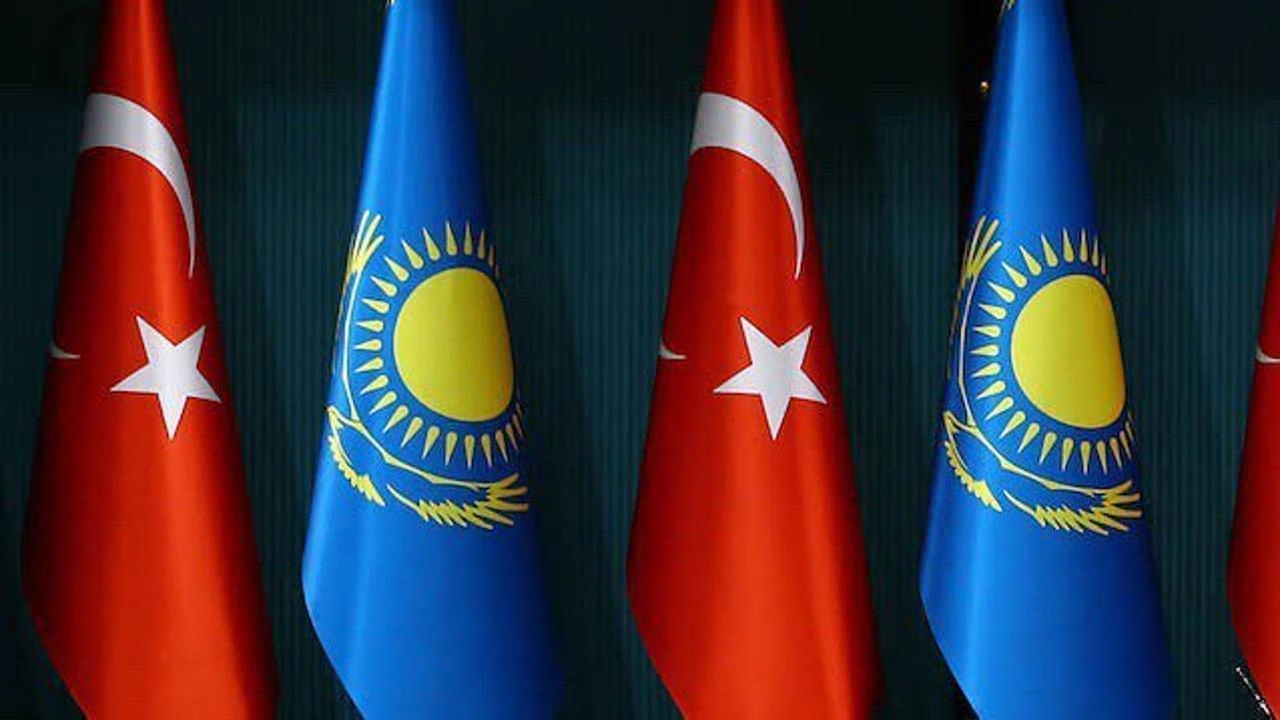
Kassym-Jomart Tokayev will pay an official visit to Türkiye on
October 28–30 at the invitation of Turkish President Recep Tayyip
Erdoğan. In Ankara, the two leaders will hold talks on further
developing their expanded strategic partnership, with trade,
investment, transport and energy among the key areas of bilateral
cooperation.
Tokayev will also attend the 13th Summit of the Organization of
Turkic States (OTS), where economic cooperation and regional
connectivity are expected to be discussed.
The visit comes amid expanding trade and economic ties between
the two countries. At the same time, the structure of bilateral
trade and new investment projects remain areas where Kazakhstan and
Türkiye have room to deepen cooperation.
How trade and investment ties are
developing
Türkiye is one of Kazakhstan’s five leading trade partners and a
major source of foreign investment in its economy. Bilateral trade
reached $5.4 billion in 2025, up 8.8% year-on-year.
Kazakhstan’s exports to Türkiye increased by 17.7% to $3.9
billion, while imports of Turkish goods fell by 9.9% to around $1.5
billion. These figures reflect growth in Kazakh exports alongside a
decline in imports from Türkiye. Further developments will depend,
among other factors, on demand in both markets and the expansion of
the range of goods traded between the countries.
The two sides have set a target of increasing bilateral trade to
$15 billion. Achieving this goal will require a substantial
expansion in trade flows. One possible avenue is deeper industrial
cooperation and increased supplies of higher-value-added
products.
Tokayev has repeatedly emphasized the importance of economic
cooperation and the scale of the existing business ties.
“Turkish entrepreneurs have invested around $6 billion in our
country’s economy. Kazakhstan’s investments in the economy of
brotherly Türkiye are also growing, reaching approximately $2.5
billion,” the Kazakh president said in a press statement following
talks with Erdoğan in May 2026.
He also highlighted the presence of thousands of companies with
Turkish capital in Kazakhstan and the contribution of joint
projects to job creation and industrial development.
According to figures cited by Tokayev, around 3,800 companies
involving Turkish capital operate in Kazakhstan. Businesses from
the two countries have jointly implemented 142 projects worth a
total of $7.6 billion. A number of other initiatives are at various
stages of implementation.
Investment cooperation spans construction, manufacturing,
energy, agriculture, healthcare and logistics. These sectors
provide a basis for further collaboration between companies from
the two countries and the development of new projects.
Path toward industrial cooperation
One area for further cooperation is deeper industrial
integration and a greater share of higher-value-added products in
bilateral trade.
Kazakhstan’s exports to Türkiye include significant volumes of
copper and copper cathodes, crude oil, aluminum and other metals,
as well as agricultural products. Turkish exports include textiles,
pharmaceuticals, construction materials, machinery, vehicles and
components, and food products.
This trade structure offers opportunities for cooperation in
manufacturing and agribusiness. Turkish companies already operate
in the Kazakh market, while Kazakh investors are expanding their
activities in Türkiye.
In agriculture and food processing, potential areas include
greenhouse production, grain and pulse processing, and the
manufacture of specialized food ingredients. Such projects could
broaden the range of processed agricultural products traded between
the two countries.
Pharmaceuticals and healthcare are another area of cooperation.
Turkish manufacturers are developing operations in Kazakhstan,
while Turkish companies are involved in hospital construction and
the development of medical infrastructure.
Energy remains an important component of economic relations.
Kazakh oil and gas companies cooperate with Turkish partners, while
the development of export infrastructure is important for future
energy supplies. At the same time, increased investment in
manufacturing, logistics and other non-resource sectors could help
diversify bilateral economic ties.
Tokayev has repeatedly invited Turkish companies to participate
in Kazakhstan’s long-term projects, emphasizing the country’s
readiness to support investors.
“As an open and reliable partner, we are always ready to support
Turkish investors and invite your companies to participate in
large-scale, long-term projects,” he said.
The upcoming talks may cover existing investment initiatives and
new areas of cooperation. They will also provide an opportunity to
discuss possible steps toward the $15 billion trade target. The
specific list of projects and agreements to be considered has not
yet been officially disclosed.
Transport and energy on the agenda
Developing transport links is another area of Kazakhstan-Türkiye
cooperation. Both countries are interested in improving
connectivity between Asian and European markets, including through
the Trans-Caspian International Transport Route, known as the
Middle Corridor.
The route connects China, Central Asia and Europe through a
combination of rail and maritime transport across the Caspian Sea.
Increasing its capacity requires investment in ports, railways and
logistics centers, as well as harmonized customs procedures and
more efficient cargo handling.
For Kazakhstan, developing the route expands options for
exporting goods and moving transit cargo. For Türkiye, the Middle
Corridor is an important transport link between Europe and
Asia.
Rail freight traffic between Kazakhstan and Türkiye is also
growing. According to figures cited in materials on bilateral
cooperation, rail freight volumes reached 6.4 million tons in 2025,
up 35% year-on-year. Further growth will depend on infrastructure
conditions, traffic coordination and the efficiency of multimodal
logistics.
Beyond transport and energy, the two countries are interested in
cooperation in manufacturing, agriculture, digital technologies,
construction and financial services.
Tokayev’s role in developing bilateral ties
Under Tokayev’s leadership, Kazakhstan is strengthening its
political and economic ties with Türkiye, with a focus on
attracting foreign investment and expanding international
trade.
Investment, industrial development, transport connectivity and
trade expansion occupy a prominent place on the bilateral agenda.
These priorities complement the countries’ historical and cultural
ties.
In May 2026, Erdoğan visited Kazakhstan. Following the visit,
the two countries signed a Declaration on Eternal Friendship and
Expanded Strategic Partnership. The document established a
political framework for bilateral engagement and outlined further
cooperation in the economy and other areas.
Tokayev describes relations with Türkiye as a partnership based
on shared history, cultural affinity and close political ties. His
upcoming visit will continue the political dialogue and provide an
opportunity to discuss further steps to develop economic
relations.
What to expect from the Ankara talks
The stated goal of the talks is to further strengthen the
expanded strategic partnership. Given the economic agenda of the
two countries, trade, investment and transport connectivity are
expected to feature among the main topics.
The presidents may discuss the implementation of agreements
reached at previous meetings, as well as opportunities for
cooperation in manufacturing, agriculture, energy and
infrastructure. Any new agreements announced following the visit
would help define the next steps in bilateral cooperation.
Tokayev’s participation in the 13th OTS Summit will add a
regional dimension to the visit. The summit will provide a platform
for discussing economic integration, trade, investment, transport,
energy and technological cooperation among member states.
For Kazakhstan and Türkiye, bilateral and multilateral agendas
are closely linked. Stronger ties between the two countries could
complement regional initiatives, particularly in transport and
trade, while cooperation within the OTS offers additional
opportunities for businesses.
The future development of Kazakhstan-Türkiye economic relations
will depend on trade growth, the implementation of investment
projects and improvements in transport links. With bilateral trade
at $5.4 billion in 2025, reaching the $15 billion target will
require a substantial increase in trade flows. Expanding the range
of exported goods and strengthening industrial cooperation could be
among the ways to achieve this goal.