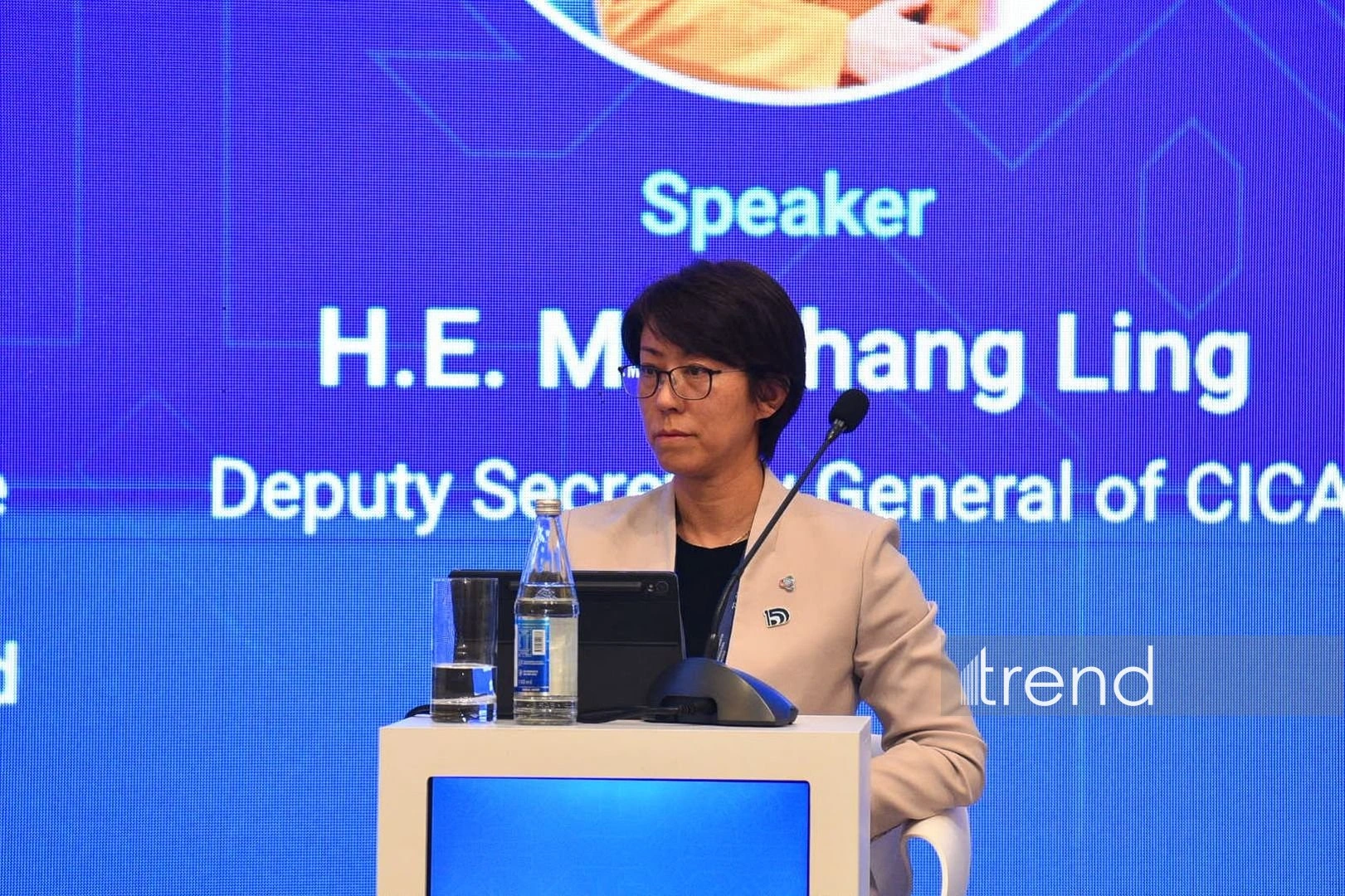
BAKU, Azerbaijan, October 27. Azerbaijan, which
has held the chairmanship of the Conference on Interaction and
Confidence Building Measures in Asia (CICA) since 2024, has
strengthened a human-centered approach within the organization,
CICA Deputy Secretary General Zhang Ling said during a panel
session titled "Culture at the center: secure paths to a shared
future," held as part of the 7th World Forum on Intercultural
Dialogue in Baku on Tuesday, Trend’s correspondent reports from the event.
According to her, within the framework of the 7th CICA Summit
held in Baku, member states demonstrated a strong commitment to
strengthening trust, cooperation, and stability in Asia.
"The Baku Declaration was adopted at the conclusion of the
Summit, and the states reaffirmed their commitments in this regard.
The organization's security strategy is based on the premise that
peace and stability can be achieved not merely through military
agreements, but through a comprehensive approach and mutual
understanding among peoples. In this context, cultural dialogue and
the human dimension play a central role in CICA's activities," she
noted.
Ling added that long-term peace and sustainable security are
rooted in mutual understanding among peoples.
"Therefore, cultural dialogue can play a vital role in this
process and make a significant contribution to strengthening
understanding and trust among nations," she emphasized.
The 7th World Forum on Intercultural Dialogue is taking place in
Baku from October 27 through October 29, under the theme "Dialogue
for a Shared Future: Building Bridges in a Fragmented World."
The forum is the primary international event of the 'Baku
Process,' an initiative launched in 2008 at the proposal of the
President of Azerbaijan, Ilham Aliyev. First organized in 2011, the
forum brings together countries, international organizations,
experts, and representatives of civil society to engage in
intercultural dialogue and cooperation.
The forum’s program includes discussions on topics such as peace
and security, intercultural and interreligious dialogue, the role
of youth, artificial intelligence, the creative economy, media,
cultural heritage, and tourism.