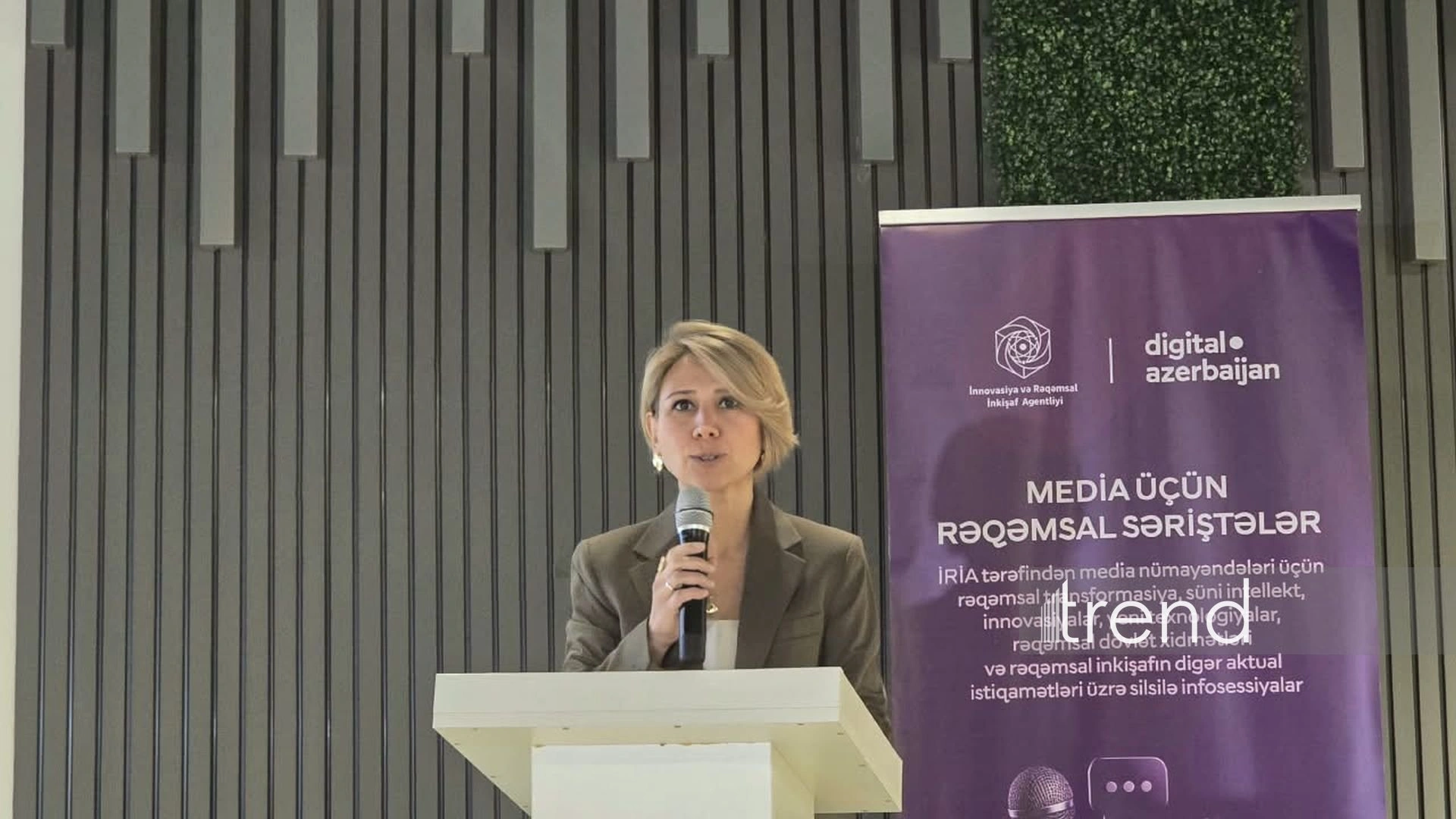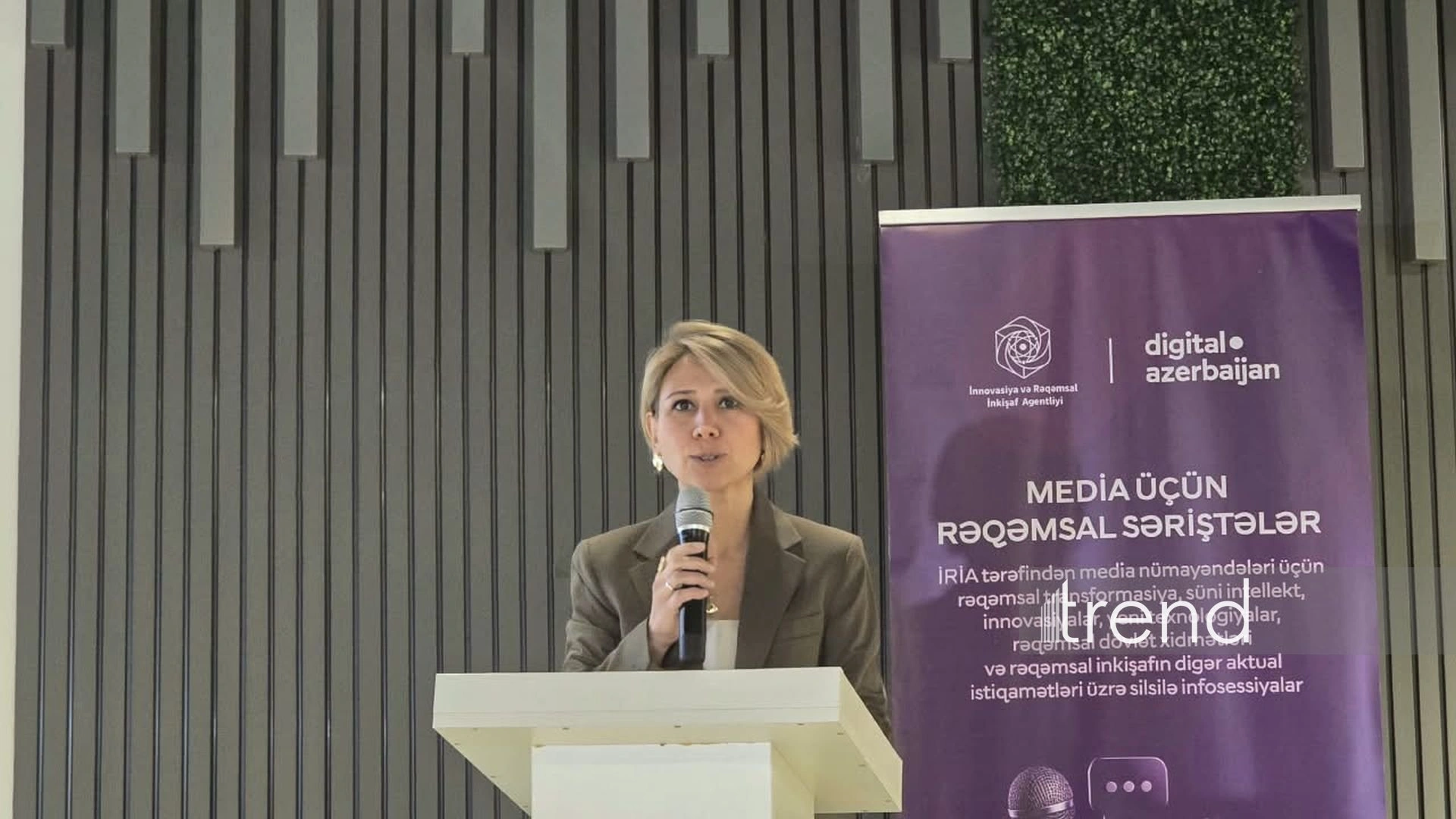
BAKU, Azerbaijan, October 27. The goal is to
raise the digital literacy of the population in Azerbaijan to 70%
by 2030, the Head of the Digital Competencies Development
Department at the Innovation and Digital Development Agency (IDDA),
Vusala Gurbanova, said at the event on "Digital skills: today's
results, tomorrow's opportunities" held in Baku on Tuesday,
Trend’s
correspondent reports from the event.
According to her, improving the country's digital development
indicators in international rankings is one of the key priorities.
The formation of a digital society and the development of a digital
economy help strengthen Azerbaijan's position in international
rankings.
Gurbanova remarked that this year, Azerbaijan improved its
standing in the Global Innovation Index, rising from 94th to 85th
place, an advancement of 9 positions among 139 countries.
"Our main goal is to strengthen our position in international
rankings by creating a digital society and developing our digital
economy," she emphasized.
The department head noted that the intensification of efforts in
this area in recent years has contributed to Azerbaijan's progress
in international rankings. She expressed hope that the country's
position in the Global Innovation Index would continue to improve
next year.
According to Gurbanova, Azerbaijan ranks 74th out of 193
countries in the E-Government Development Index. Expanding digital
services and enhancing the digital skills of the population are of
great importance for improving these indicators.
Touching upon the current level of digital literacy in the
country, he also noted that, according to an assessment conducted
by IDDA from 2023 through 2024, the digital literacy level of the
population stood at 25%. The assessment covered various groups,
ranging from households to schoolchildren, university students,
teachers, and other segments of the population. The analysis was
conducted with the participation of the International
Telecommunication Union (ITU).
"We aim to increase the digital literacy of the population to
70% by 2030," Gurbanova explained.
She emphasized that achieving this goal requires expanding
initiatives for the development of digital skills, increasing
access to modern technologies for various population groups, and
integrating digital knowledge into daily life.
According to the department head, enhancing digital literacy is
significant not only for developing the ability to use technology
but also for expanding the digital economy and strengthening the
country's international competitiveness.