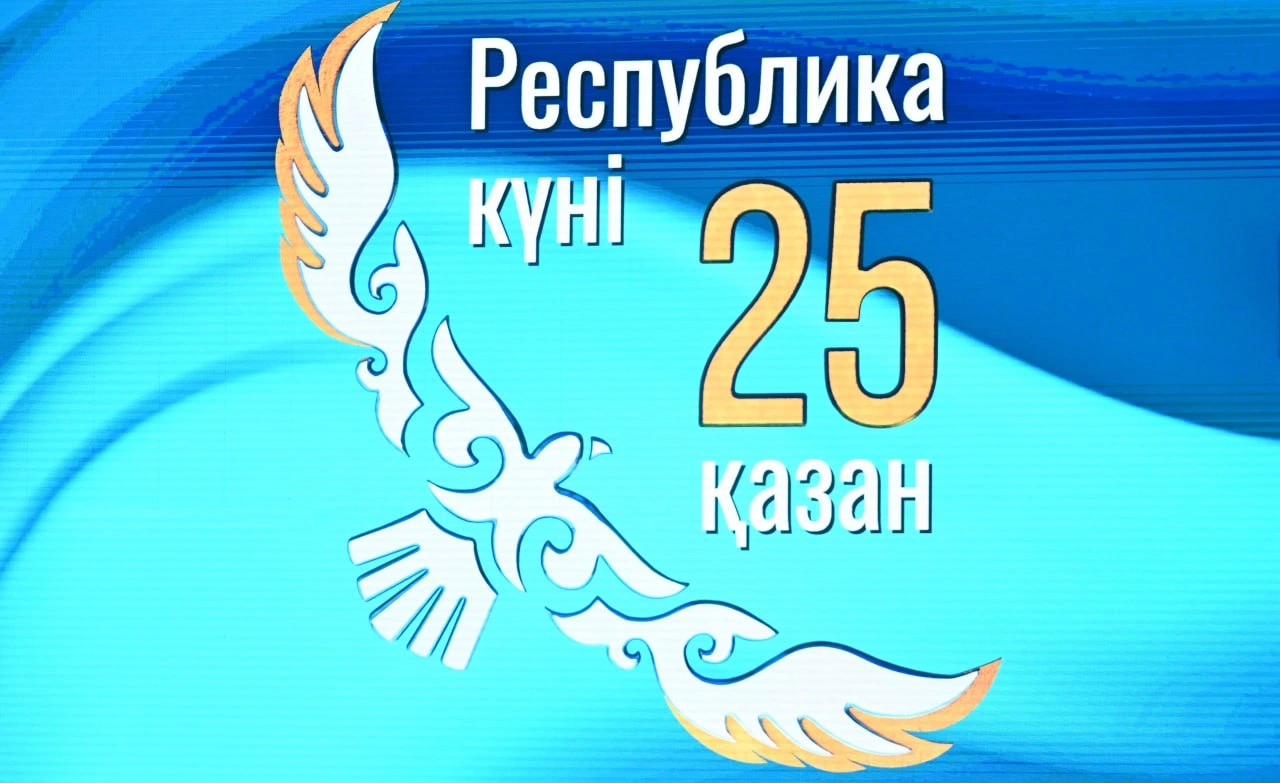
BAKU, Azerbaijan, October 25. On October 25,
Kazakhstan celebrates Republic Day. On this day in 1990, the
Declaration of State Sovereignty was adopted, laying the foundation
for the country’s subsequent independence.
One of the major recent milestones in the transformation process
was the adoption of a new Constitution following the referendum
held on March 15, 2026. The document, which entered into force on
July 1, fundamentally changed the structure of government: the
bicameral Parliament, consisting of the Senate and the Mazhilis,
was replaced by a unicameral Parliament – the Kurultai. The
institution of the vice president was also reinstated in the
political system, and the Kazakhstan People’s Council was
established as a body with the right of legislative initiative.
Sustained economic growth is one of the main conditions for
long-term development. Kazakhstan’s GDP exceeded $300 billion in
2025, while the country attracted $155 billion in foreign
investment over the past seven years, according to a statement by
Kazakh President Kassym-Jomart Tokayev on the occasion of Republic
Day. Speaking at an event in Astana, he also noted that the
country’s economy had grown by approximately 30% since 2019.
Transport infrastructure is also important for economic
development. Kazakhstan’s location between Europe and Asia creates
opportunities to expand transit and international trade. The Middle
Corridor, which runs across the Caspian Sea and through the South
Caucasus, strengthens Kazakhstan’s transport links with European
markets and creates additional opportunities to diversify export
routes. The development of Caspian ports, increased railway
capacity, and improved logistics are important for enhancing
transport efficiency. The modernization of highways and the railway
network is also intended to improve connectivity between the
country’s regions. Kazakhstan is working to develop transport links
with South Asia. A new railway route through Uzbekistan and
Afghanistan to Pakistan’s seaports is under consideration.
Social initiatives are aimed at using part of the country’s
national resources for the benefit of its citizens. The National
Fund for Children program provides for annual allocations to the
accounts of minors from the investment income of the National Fund.
Assets returned to the state are also being directed, among other
purposes, toward the construction of schools and medical
facilities.
In foreign policy, Kazakhstan pursues a multi-vector approach,
developing relations with Russia, China, Central Asian countries,
the European Union, and the United States. This approach makes it
possible to expand trade and investment ties while taking national
interests into account in relations with international
partners.
Kazakhstan marks Republic Day amid sweeping changes in its
political system, economy, and social sphere. Under Tokayev, the
country’s development agenda includes the renewal of state
institutions, expansion of the economic base, stronger transport
connectivity, and the implementation of social programs. Economic
growth of approximately 30% since 2019, GDP exceeding $300 billion,
and substantial foreign investment inflows illustrate the scale of
the changes taking place in the country.