ASHGABAT, Turkmenistan, October 23. Reducing
methane emissions during gas extraction and production could open
up opportunities for Turkmenistan to export natural gas to the
European Union (EU) market, given the tightening of environmental
requirements for imported fuel, Associate on energy and climate
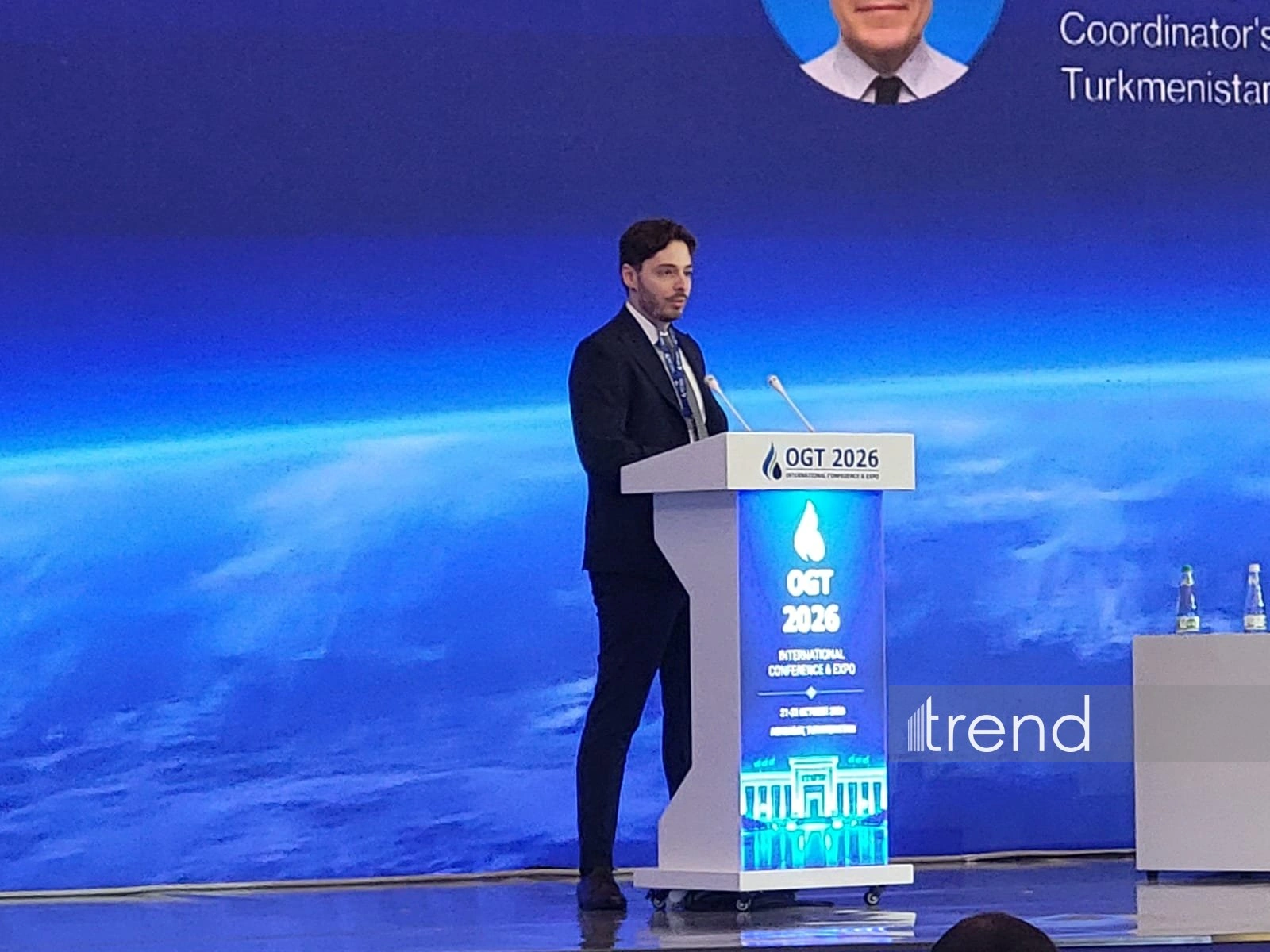
regulation at Correggio Consulting, Enri Gjondrekaj said, Trend's special correspondent
reports.
Gjondrekaj made the remark on the third day of the OGT 2026
conference in Ashgabat on October 23.
“I believe that in a few years, especially by 2030, which marks
the end of this period, this figure will decrease and meet EU
requirements. This will allow the European Union to become a
potential buyer of Turkmen gas in the future,” he said.
According to the expert, gas producers must take into account
European regulatory requirements, which provide for the phased
introduction of obligations for importers of oil, gas, and coal
from countries outside the EU. These obligations pertain to the
disclosure of information on the origin of fuel and measures to
reduce methane emissions, as well as the monitoring, reporting, and
verification of emissions data.
“This regulation establishes obligations for gas producers both
in Europe and beyond. The main provisions stipulate that importers
into the EU who supply gas, oil, or coal from countries outside the
European Union must comply with certain requirements,” Gjondrekaj
explained.
He noted that one of the key criteria going forward will be
methane intensity, defined as the ratio of methane emissions to the
total volume of fuel sold. According to the current EU regulatory
timeline, methane intensity requirements are to apply to relevant
fuel import contracts concluded or renewed after August 5,
2030.
“In 2030, the European Union will set a cap on methane
intensity. This indicator is calculated as the ratio of methane
emissions to the total volume of gas sold on the market. The limit
will be enshrined in the regulations, and gas exports to the
European Union will have to comply with the established limit. We
do not yet know what this limit will be,” the expert said.
At the same time, Gjondrekaj pointed out the possibility of
revising the deadlines for implementing certain requirements.
According to him, on October 22, the European Parliament supported
a three-year postponement of a number of obligations regarding the
monitoring, reporting, and verification of methane emissions for
importers and producers. However, this proposal still needs to be
agreed upon by the Council of the EU and has not yet changed the
current deadlines.
“Today is October 23. Yesterday, October 22, the European
Parliament adopted a series of amendments providing for a
three-year postponement of two deadlines – August 2028 and August
2030. However, these amendments have not yet been approved and have
not entered into force. Tripartite negotiations between the
relevant legislative bodies are now pending,” he noted.
Speaking about practical measures to reduce emissions, the
expert emphasized the importance of a clear division of
responsibilities at production facilities. It is necessary to
determine who is responsible for identifying leaks, eliminating
them, and documenting the work performed. Satellite technology
offers additional capabilities, allowing for the detection of large
emissions and the prompt transmission of relevant information to
government agencies.
As an example of progress in this area, Gjondrekaj cited data
from the International Energy Agency (IEA) on methane intensity in
Turkmenistan.
“The International Energy Agency conducted an analysis according
to which the methane intensity in Turkmenistan appears to be 7
percent. At the same time, this figure is gradually decreasing,” he
said.
The expert expressed the view that a further reduction in
methane intensity and the development of monitoring systems will
help Turkmenistan bring the oil and gas sector’s performance closer
to the requirements of the European market. He also emphasized that
regulation in this area continues to evolve, so producers need to
keep track of changes in the regulatory framework.
Meanwhile, the final day of the 31st International Conference
and Exhibition “Oil and Gas of Turkmenistan” (OGT 2026) is underway
in Ashgabat.
On the third day, participants are discussing ways to reduce
methane emissions, improve environmental and energy efficiency, and
the role of natural gas in ensuring a balanced and sustainable
energy future.
Participants are exploring opportunities for international
exchange of expertise and technologies aimed at reducing greenhouse
gas emissions and improving the environmental performance of the
oil and gas industry. In addition, the role of natural gas in
shaping a balanced energy system is being discussed.