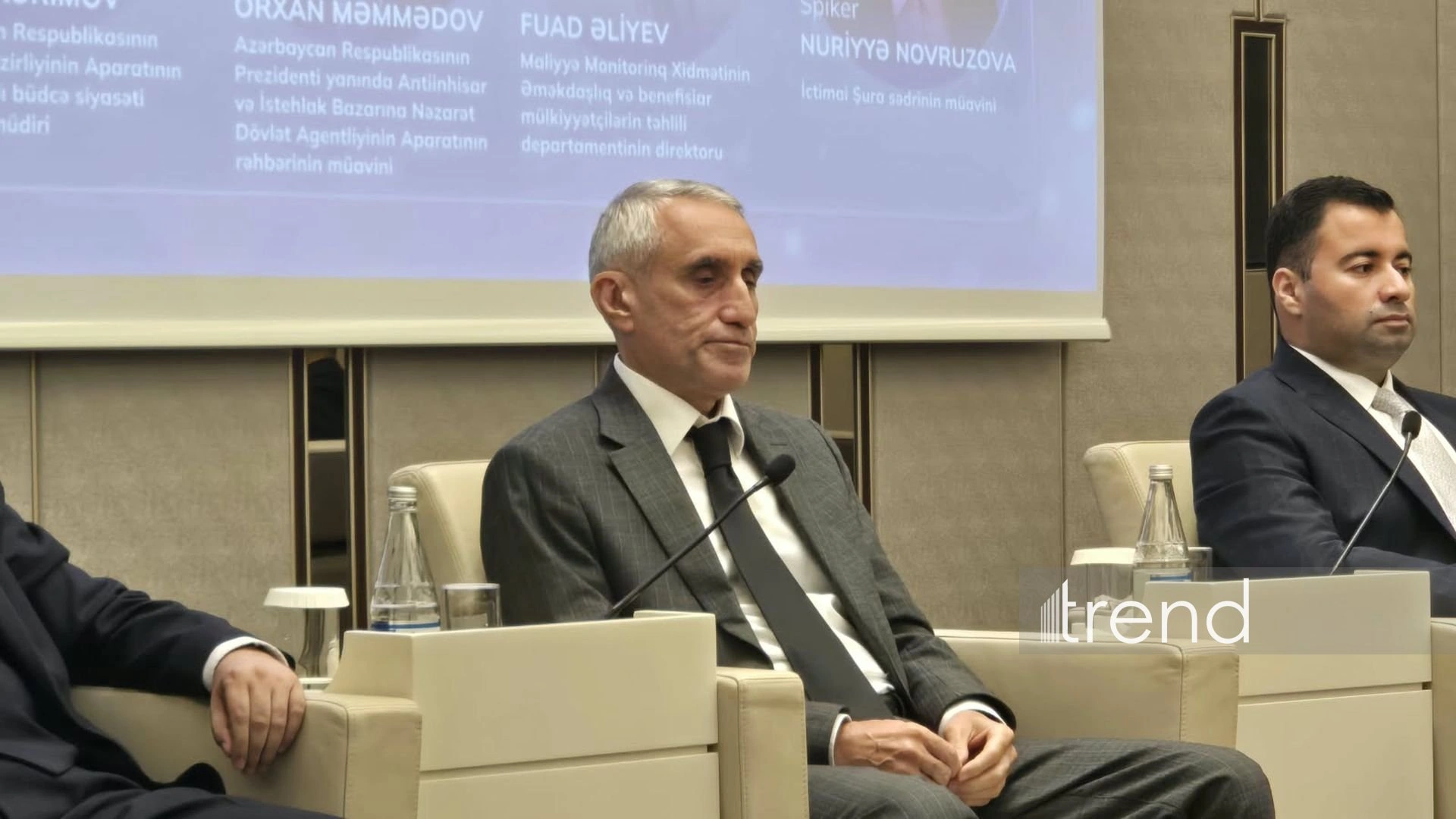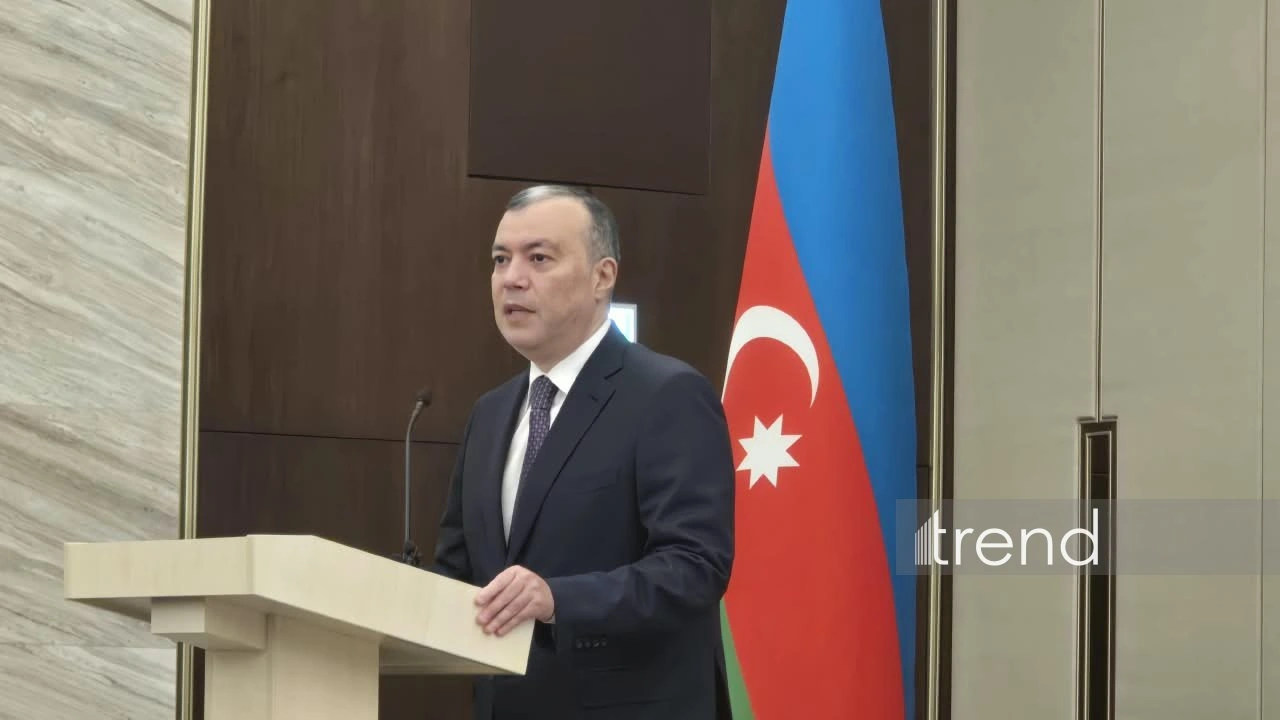
BAKU, Azerbaijan, October 22. Savings of 453.7
million manat ($266.88 million) were achieved in Azerbaijan through
electronic public (e-public) procurement during the first eight
months of 2026, and the total savings rate amounted to 14.4%,
Orkhan Mammadov, Deputy Head of the Staff of the State Agency for
Antimonopoly and Consumer Market Control under the President of
Azerbaijan, said during a conference on the digital transformation
of public finance held in Baku on Thursday, Trend’s correspondent reports
from the event.
Mammadov remarked that the growth in the volume of e-procurement
indicates the expansion of digitization in public procurement,
increased accessibility of processes, and positive developments in
the promotion of a competitive environment.
"The number of electronic procurements conducted from January
through July 2026 increased by 0.3%, and their amount increased by
10.5% compared to the same period last year. The average number of
participants in the competitions opened during that period was
1.5," he explained.
According to Mammadov, the mentioned savings of 453.7 million
manat were calculated based on the ratio of the difference between
the approved price and the probable price for electronic
purchases.
"These results are important in terms of the application of
competition mechanisms in public procurement, price optimization,
and the efficient use of public financial resources," the agency
representative stressed.
He noted that one of the main goals of public procurement is to
create equal opportunities for all participants, promote
competition, and save budget funds. In this regard, the "E-tender"
platform, which is a single internet portal for electronic
purchases, is regularly improved.
"The main goals of the portal are to increase the efficiency of
public procurement, ensure the economical use of budget funds,
expand access to procurement, and develop competition mechanisms.
Integration with state institutions creates additional convenience
for entrepreneurs, speeds up processes, and reduces obstacles
related to obtaining documents," Mammadov also said.
He pointed out that, within the framework of cooperation with
the Ministry of Finance, integration between the electronic
procurement portal and the electronic contract subsystem was
implemented. This integration allows the automated exchange of
information at different stages of the procurement process.
"The set of conditions is fully electronic on the portal, and
suppliers can submit their offers electronically. Since the data is
in a machine-readable format, after the procurement process is
completed, the relevant data is transferred to the electronic
contract subsystem. After the contract is signed, transferring its
data back to the portal for analytical purposes is part of the
planned mutual information exchange," he stressed.
The agency representative further noted that the application of
artificial intelligence has also been initiated on the portal.
Currently, this technology provides recommendations to procuring
organizations as they prepare tender documentation and assists in
identifying potentially restrictive conditions.
"In this context, artificial intelligence serves an advisory
role. When preparing tender documentation, a procuring organization
can receive alerts regarding potential flaws, along with an
analysis report generated by the system. This creates an
opportunity to rectify such issues before they are evaluated by the
oversight body or a commission. However, the final decision-making
rests with the relevant oversight authorities," Mammadov noted.
According to him, this approach can help detect potential issues
in advance and reduce the number of complaints.
Mammadov added that the portal also facilitates the automatic
transmission of complaints to the oversight body. This mechanism
enables suppliers to track the status of their submissions and link
their complaints to the specific procurement process in
question.
"The digital submission and tracking of complaints serve as
essential tools for us. Complaints regarding procurement are taken
into account during the evaluation process and may influence the
final decision. There have even been instances where previously
issued decisions were overturned based on such complaints.
Therefore, we encourage entrepreneurs to share the challenges they
encounter with us," he clarified.
The agency representative also highlighted that the electronic
signature capabilities on the portal have been expanded. According
to him, in addition to 'Asan Imza' and 'SIMA Token,' it is now also
possible to sign documents using 'SIMA Imza.' This update
simplifies the use of the platform for entrepreneurs and provides
them with a wider range of options.