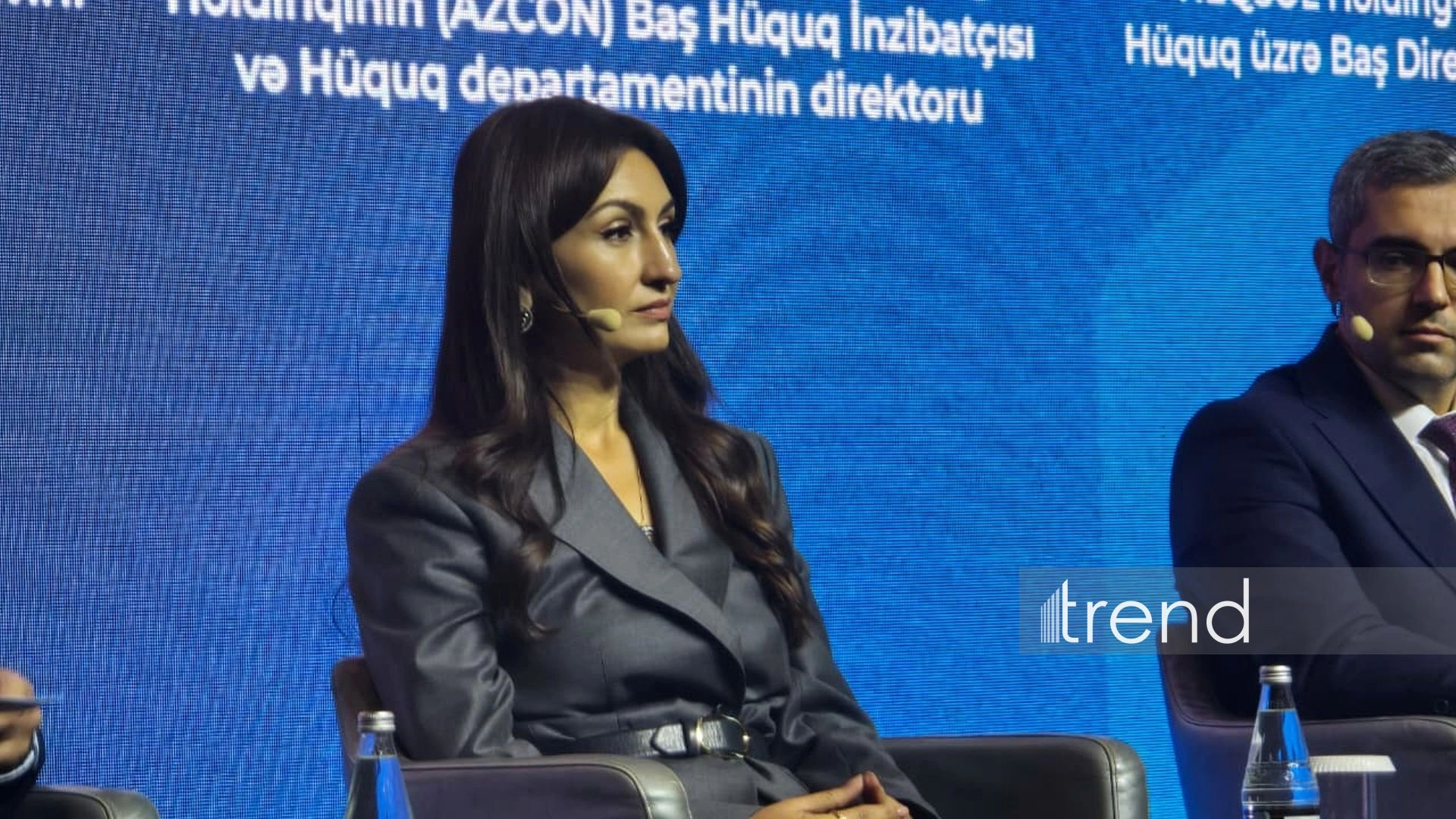
BAKU, Azerbaijan, October 20. The State Tax
Service under Azerbaijan's Ministry of Economy has established a
dedicated committee to identify and manage risks arising from
digitalization and the introduction of new technologies, Samira
Musayeva, Deputy Head of the State Tax Service, said at the
Sustainable Business, Corporate Governance, Risk and Compliance
(GRC) conference in Baku on Tuesday, Trend's correspondent reports.
She said that establishing a legal framework, ensuring data
security and properly assessing risks are particularly important
when introducing artificial intelligence (AI) in government
agencies. Regulatory legal acts governing the use of AI by public
authorities are currently under review.
According to Musayeva, AI enables tax authorities to analyze
information about taxpayers' activities, identify initial risks and
improve oversight processes. However, the legal assessment of risks
identified by AI and the final decision on whether they warrant
liability must remain in human hands.
"Protecting and securing data, identifying initial risks, and
ensuring that the final decision is made by the relevant
institution are essential when implementing AI. Responsible
officials must determine whether the identified risks are
substantiated and whether they warrant liability," she noted.
The deputy head emphasized that the potential risks of
technological innovations must be considered alongside their
capabilities. In this regard, establishing a dedicated committee
for organizational risk management is intended to create a
preventive oversight mechanism.
"We have established a separate committee for organizational
risk management. Its purpose is to identify risks arising from
digitalization in advance and prevent the introduction of digital
tools and innovations that could pose risks without the relevant
committee's assessment," Musayeva said.
She added that digitalization also plays an important role in
improving the efficiency of tax administration and optimizing
costs. According to her, tax authorities spend 1.16 manats to
collect every 100 manats in tax revenue from the non-oil sector for
the state budget.
Musayeva noted that adopting new technologies enables government
agencies to process larger volumes of data, use resources more
efficiently and improve tax oversight.
She also highlighted the importance of technical infrastructure
for the secure operation of AI systems, noting that processing data
in a closed environment requires high-performance server
equipment.
The State Tax Service official also discussed the results
achieved through data analytics and automation in tax inspections.
According to her, automating the processing of inventory results
has saved between seven and nine weeks during inspections.
AI-powered analysis of data from millions of receipts issued
through cash register systems also enables risks to be identified
more quickly.
Musayeva said that AI could also contribute to business growth,
an expansion of the tax base and an increase in taxable
transactions. This process requires government agencies to develop
their human resources and existing capabilities in line with new
demands.
"Technology makes it possible to process more data and deliver
greater results. As the tax base expands, it is also essential to
ensure adequate resources and skilled human capital for its
effective administration," she emphasized.