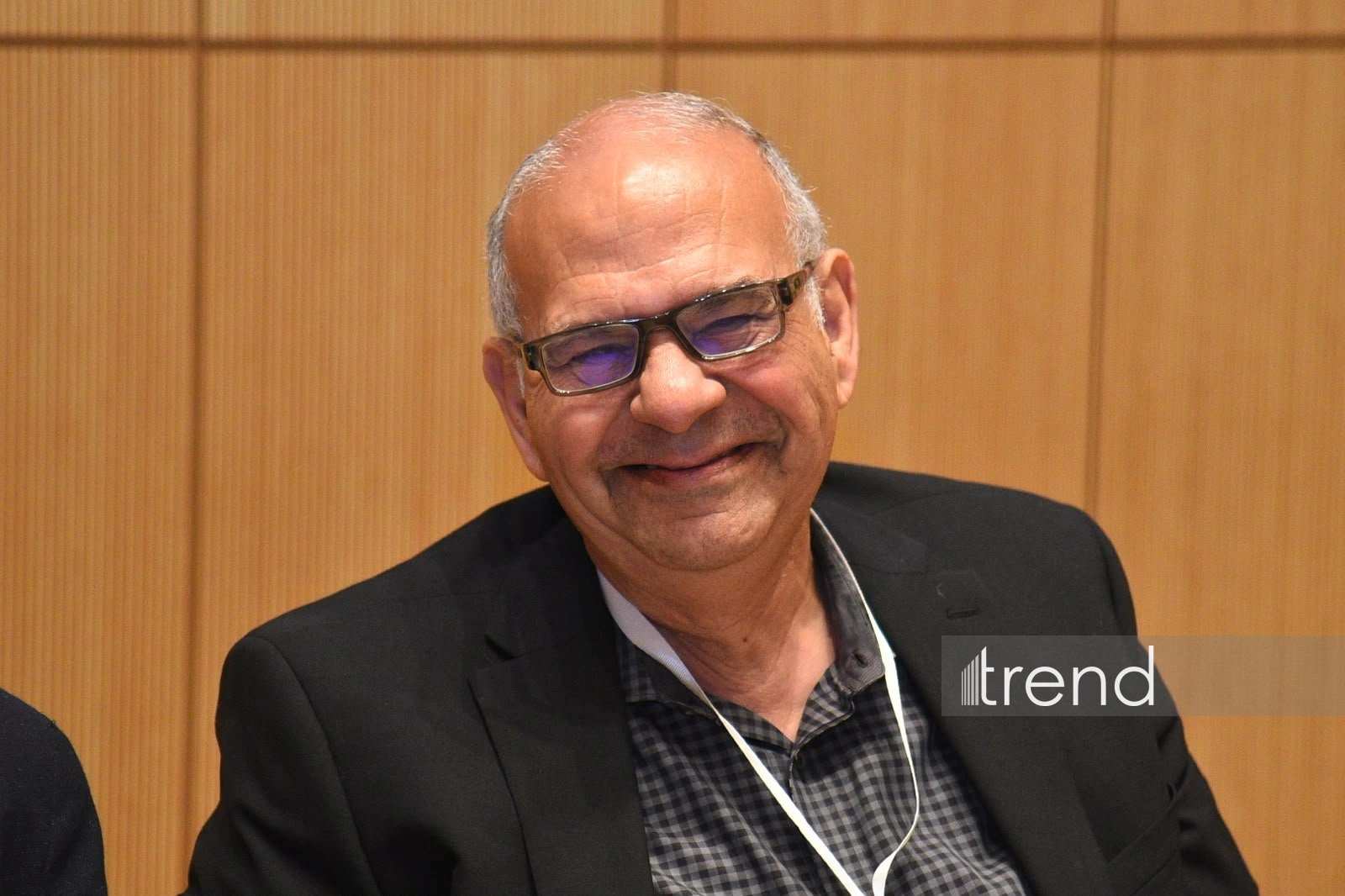
BAKU, Azerbaijan, October 14. Modern artificial
intelligence systems are still far from fully replicating the
principles of how the human brain works, which leads, in
particular, to problems with energy consumption and heat
generation, the chair of the Department of Electrical and Computer
Engineering at George Washington University (U.S.), Tarek
El-Ghazawi said at the opening ceremony of the 20th IEEE
International Conference on the Application of Information and
Communication Technologies (AICT2026) in Baku, Trend's correspondent
reports.
“We are trying to replicate the brain’s functioning using
machines in which memory is located separately, and computations
are performed elsewhere, whereas in the brain itself, everything is
integrated. That is precisely why we are facing problems such as
heat dissipation and energy consumption today: we have not yet
found the right way to implement this approach,” he said.
According to Tarek El-Gazawi, despite significant advances in
the field of artificial intelligence, we are still far from fully
replicating the principles of how the human brain works.
The 20th IEEE International Conference on Application of
Information and Communication Technologies (AICT2026) is underway
at ADA University in Baku.
The conference is being held in Azerbaijan for the seventh time
and marks the 20th anniversary of the AICT series this year, under
the slogan “20 Years Connecting Science, Technology and
Society.”
The event is jointly organized by ADA University, relevant IEEE
units in Azerbaijan, Politecnico di Torino, George Washington
University, Nazarbayev University, the United Arab Emirates
University, Tashkent University of Information Technologies,
Kazakh-British Technical University, Tbilisi State University,
Georgian Technical University, SDU University, the Nikola Tesla
Institute of Electrical Engineering, and the Alessandro Faedo
Institute of Information Science and Technologies.
The conference aims to facilitate knowledge exchange in
information and communication technologies and discuss the latest
advances in the field. It brings together researchers, scientists,
and industry representatives.