BAKU, Azerbaijan, October 14.
Azerbaijan invites Lao companies to invest in industrial parks and
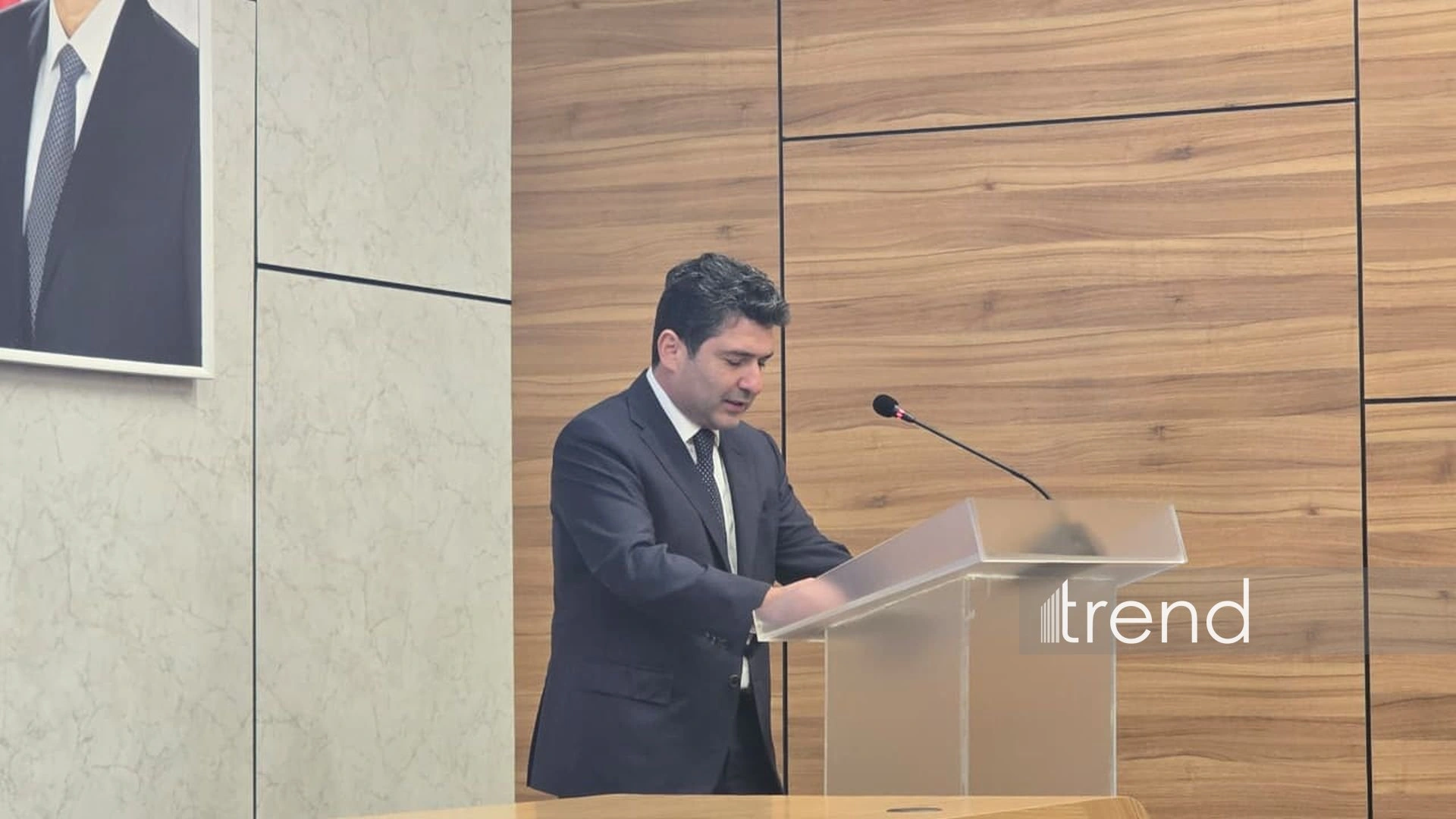
the Alat Free Economic Zone, Deputy Minister of Economy Anar
Akhundov said at the Azerbaijan-Laos Business Forum held in Baku on
Wednesday, Trend’s
correspondent reports from the event.
According to him, Azerbaijan is interested in expanding economic
and trade ties with Laos, promoting mutual investments, and
fostering direct cooperation between business communities.
He noted that Southeast Asia is of growing importance to
Azerbaijan and that developing relations with this region is one of
the country's economic priorities.
"Several significant events regarding relations between
Azerbaijan and Laos have taken place this week. A business forum
was held in Azerbaijan earlier in October, and today we have had
the opportunity to meet with partners from Laos. This reflects the
increasing importance of Asia, and Southeast Asia in particular, to
Azerbaijan," the deputy minister pointed out.
According to him, situated between Asia and Europe, Azerbaijan
plays a vital role in strengthening ties between the continents.
Expanding cooperation among countries and regions is of particular
importance at a time when the global situation is becoming
increasingly complex.
Akhundov emphasized that Azerbaijan's political and
macroeconomic stability, as well as its standing as a reliable
partner, sustain long-term interest from international investors.
He noted that Azerbaijan places special importance on human capital
development, the digitalization of the economy, and the
implementation of artificial intelligence.
The deputy minister noted the growing international interest in
the country's investment opportunities. According to him,
representatives of companies with a combined asset volume exceeding
$30 trillion have participated in the Azerbaijan International
Investment Forum over the past month.
"Large-scale investment projects have been implemented with
international partners across various sectors of Azerbaijan's
economy, and this success is being continued through new projects.
Companies from Laos are also invited to take advantage of these
opportunities," he explained.
According to Akhundov, the development of a strong private
sector is crucial for creating new jobs, adopting modern
technologies, and fostering the economic development of the
regions. He expressed confidence that a partnership between the
business communities of the two countries would yield mutual
benefits.
The deputy minister also noted that Azerbaijan's non-oil economy
continues to grow, with private companies accounting for more than
half of the investments in the non-oil sector. The state supports
entrepreneurs through concessional financing, credit guarantees,
tax and customs incentives, as well as regular dialogue.
He added that state compensation for up to 70% of exporters'
transport and logistics costs, as well as a portion of customs
clearance expenses, expands the opportunities for Azerbaijani
companies to access foreign markets.
Akhundov further highlighted the conditions created for foreign
investors. He noted that in the Alat free economic zone, foreign
investors can benefit from advantages such as full foreign
ownership, the free repatriation of profits, and the absence of any
requirement to involve a local partner.
The deputy minister remarked that strengthening direct ties
between the private sectors of the two countries is essential for
identifying specific investment projects and realizing business
initiatives. In this regard, establishing regular ties between
chambers of commerce can help companies develop their projects.
He noted that the friendly relations and political dialogue
between Azerbaijan and Laos, spanning over 30 years, have created a
solid foundation for expanding economic cooperation.
According to Akhundov, there are vast opportunities for
cooperation between the economies of both countries. Laos stands
out for its hydropower potential, rich mineral resources, and
opportunities in agriculture and tourism. Azerbaijan, meanwhile,
can share its experience with partners regarding industrial
potential, the energy sector, transport infrastructure, and the
development of new economic fields.
The deputy minister emphasized that Azerbaijan attaches special
importance to the development of the manufacturing industry and
high value-added production sectors. In this context, the new
mining and metallurgy program being implemented in the country
represents a significant step toward expanding industrial
potential.
"Our companies can cooperate on the processing of mineral and
agricultural resources, as well as the development of production
chains. Companies from Laos are invited to establish manufacturing
facilities in Azerbaijan, including within industrial parks and the
Alat Free Economic Zone," he mentioned.
Akhundov also noted the significant potential for cooperation in
the energy sector. According to him, Laos's experience in
hydropower and Azerbaijan's efforts to expand solar, wind, and
hydropower generation create opportunities for the mutual exchange
of expertise in this field.
He also mentioned that renewable energy and the management of
electrical grids and joint initiatives could be implemented in the
fields of energy efficiency. In the agricultural sector,
cooperation on product processing, storage, packaging, and
certification could facilitate access to new markets for producers
from both countries.
Besides, the deputy minister identified transport and logistics
as promising areas for cooperation. He noted that the Laos-China
railway integrates Laos into China's transport network, while the
Middle Corridor, passing through Azerbaijan, connects China and
Central Asia with Europe.
According to him, Azerbaijan's transport and transit
infrastructure could create additional opportunities for Lao
companies to access markets in Central Asia, the South Caucasus,
and Europe. At the same time, the fact that Laos is a member of the
Association of Southeast Asian Nations (ASEAN) is significant for
Azerbaijani companies looking to explore business opportunities in
the region.
Akhundov added that existing political relations and mutual
economic advantages should be effectively utilized to expand
economic ties between the two countries. This could contribute to
the implementation of new investment projects, the increase of
trade turnover, and the establishment of long-term partnerships
among business circles.