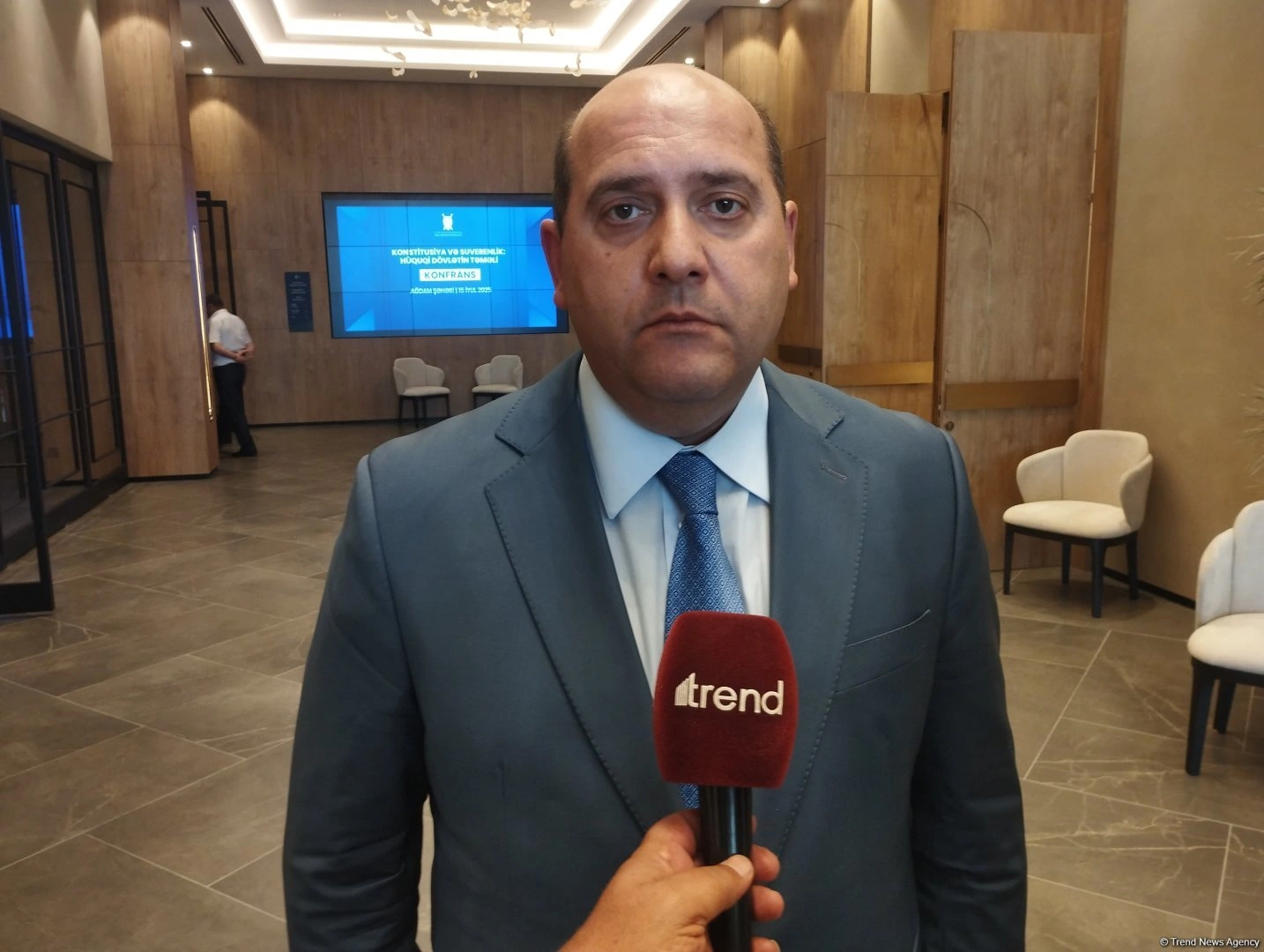
BAKU, Azerbaijan, October 14.
The establishment of new manufacturing and service enterprises,
support for local entrepreneurship, the attraction of investments,
and the creation of sustainable jobs are of particular importance
in the next stage of the reconstruction process in Karabakh, the
Special Representative of the President of Azerbaijan in the
Aghdam, Fuzuli, and Khojavand districts, Emin Huseynov, said in an
address to the participants of the 6th Azerbaijan International
Exhibition for the Restoration, Reconstruction, and Development of
Karabakh - "Rebuild Garabagh 2026", Trend’s correspondent reports from the
event.
He noted that the "Rebuild Garabagh" exhibition has become a
significant platform for cooperation regarding the restoration and
sustainable development of Karabakh.
According to Huseynov, Karabakh is currently undergoing a
large-scale transformation that reflects Azerbaijan's will to
build, its determination for economic development, and its
strategic vision for the future.
"Our primary goal is not merely to establish modern settlements
in the liberated territories, but also to create all the necessary
conditions for people to lead safe, dignified, and prosperous
lives," he explained.
The special representative emphasized that the consistent policy
implemented under the leadership of President Ilham Aliyev has laid
a solid foundation for the restoration and reconstruction of the
liberated territories.
Huseynov noted that the phased continuation of the "Great
Return", including the return of residents to their native lands,
the expansion of employment opportunities, and the promotion of
entrepreneurial activity, ranks among the process's key
priorities.
He pointed out that the success of these efforts depends on
aligning construction activities with economic vitality, social
well-being, and long-term sustainability. According to him, the
projects being implemented in the Aghdam, Fuzuli, and Khojavand
districts are making a significant contribution to shaping the new
economic and social landscape of Karabakh.
The special representative also noted that the reconstruction of
settlements, the development of transport and utility
infrastructure, and the establishment of social facilities serve to
restore people's daily lives.
He stressed that the next stage places particular importance on
the efficient use of existing potential, the creation of new
production and service enterprises, support for local
entrepreneurship, the attraction of investments, and the creation
of sustainable jobs.
Huseynov mentioned that the "Rebuild Garabagh" exhibition plays
a vital role in this regard. According to him, the exhibition not
only serves as a venue for showcasing modern solutions in
construction, urban planning, infrastructure, and restoration but
also creates a favorable opportunity for direct dialogue among
government agencies, investors, construction companies, technology
providers, and other partners.
"Transforming the connections established here into concrete
projects, innovative initiatives, and long-term cooperation can
help fully realize Karabakh's economic potential," he noted.
The special representative expressed his belief that the
meetings held among the exhibition participants would foster new
partnerships, facilitate the exchange of best practices and
technologies, and boost initiatives aimed at the region's
restoration and development.
He underscored that building the future of Karabakh requires the
joint efforts of the state, the private sector, and international
partners, as well as a responsible approach and a long-term
vision.
Huseynov thanked everyone who contributed to the organization
and realization of the exhibition, wishing the participants
fruitful discussions, productive meetings, new ideas, and
successful collaborative projects.
He also expressed confidence that the exhibition would serve to
unlock new opportunities for the restoration and sustainable
development of Karabakh.