
BAKU, Azerbaijan, October 13. Uzbekistan’s
nuclear energy program is emerging as a key component of President
Shavkat Mirziyoyev’s strategy to strengthen energy security,
attract investment and support long-term economic growth, as the
country advances construction of its first nuclear power plant and
prepares a second project.
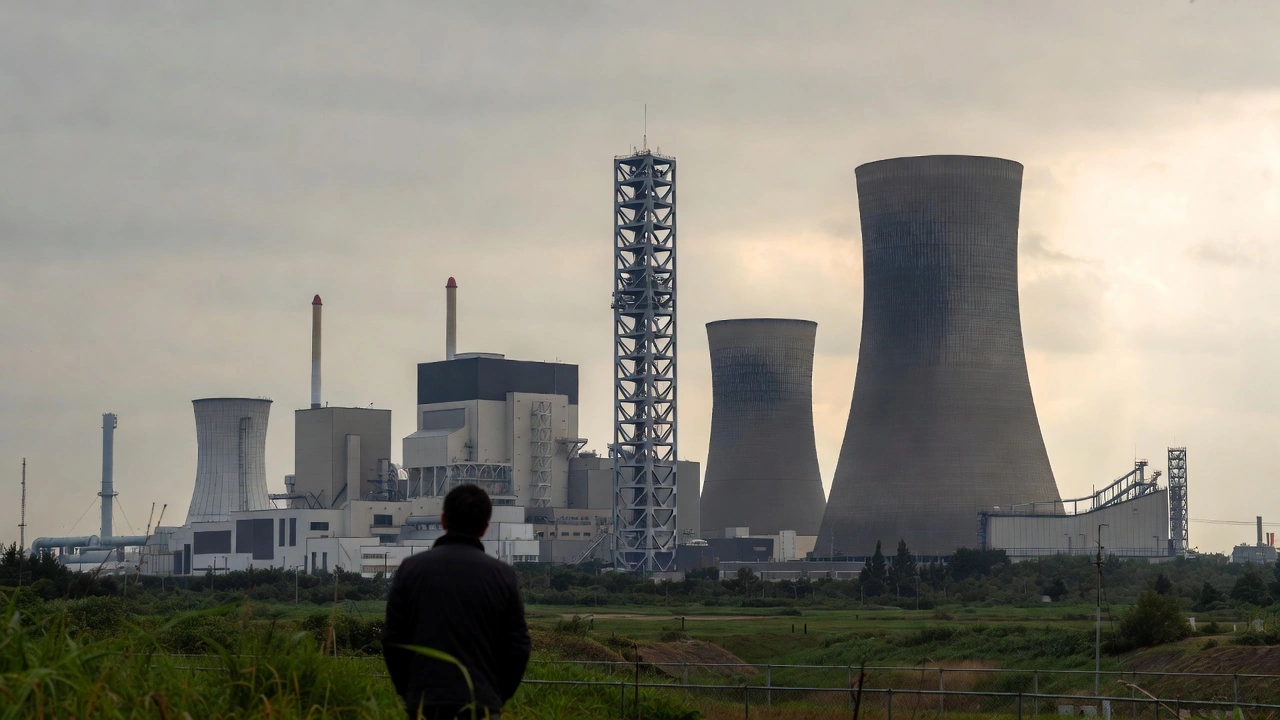
Uzbekistan’s first integrated nuclear power plant, under
construction in the Forish district of the Jizzakh region, is
designed to have a total capacity of 2,110 megawatts (MW) and
generate an estimated 16–17 billion kilowatt-hours of electricity
annually. The project’s total estimated cost is $9.5 billion.
The project entered its active construction phase on June 4,
2026. In August, Mirziyoyev announced that preparations were also
underway for a second nuclear power plant, although its location,
capacity, and construction timeline have not been disclosed.
The expansion comes as Uzbekistan seeks to increase electricity
generation to meet rising demand from industrial production,
population growth and investment projects. For the government,
nuclear power represents not only an additional source of
electricity but also an opportunity to develop domestic engineering
expertise and strengthen the country’s technological
capabilities.
Energy demand drives nuclear ambitions
Uzbekistan’s nuclear program forms part of a broader strategy to
expand generating capacity and diversify the national energy
mix.
Speaking at the St. Petersburg International Economic Forum
(SPIEF) on June 5, Mirziyoyev said Uzbekistan planned to increase
total electricity generation from 87 billion kilowatt-hours to 120
billion kilowatt-hours annually by 2030, with renewable energy
sources accounting for 54% of the total.
The president noted that electricity production had already
increased from 58 billion to 87 billion kilowatt-hours through
large-scale investment projects.
He also linked the nuclear power project to the country’s
long-term technological development and the training of a new
generation of engineers.
“For us, this is a project for long-term development, the
training of a new engineering school, and the development of
advanced technologies,” Mirziyoyev said.
He added that Uzbekistan intended to expand the peaceful
application of nuclear technology beyond electricity generation,
including in medicine, agriculture, industry and science.
The country’s economic expansion is reinforcing the need for
additional generating capacity. Mirziyoyev said Uzbekistan’s gross
domestic product had increased from $50 billion to $147 billion
over the preceding decade, creating demand for new power generation
facilities and supporting infrastructure.
In August, speaking at a ceremony launching investment projects
in the Khorezm region, the president also stressed that reliable
electricity supplies and competitive prices were essential to
attracting investors.
“If we fail to deliver on our strategy through 2030, fail to
guarantee power supply, and fail to bring down costs, who will
come? No one, ever,” he said.
These priorities help explain why the government is pursuing
nuclear energy alongside solar and wind projects. While renewable
generation is expected to account for a growing share of
electricity production, nuclear power could provide stable baseload
generation to complement weather-dependent sources.
Nuclear power as an economic development
tool
The economic contribution of nuclear power will depend on more
than the amount of electricity generated. The project could also
create demand for domestic suppliers, construction companies,
engineering services, and specialized technical personnel.
According to official project parameters, the integrated nuclear
power plant will combine two VVER-1000 reactor units, each with a
capacity of 1,000 MW, and two small modular RITM-200N reactors,
each rated at 55 MW.
Once fully operational, the facility is expected to generate
16–17 billion kilowatt-hours annually, equivalent to approximately
12–15% of Uzbekistan’s projected electricity mix under official
estimates.
The construction and operation of the plant will require
supporting infrastructure, including electricity transmission
networks, water systems, transportation links and facilities for
workers. These requirements could create opportunities for domestic
businesses to participate in the project and develop expertise in
complex infrastructure construction.
During a review of the project on September 2, Mirziyoyev
emphasized the importance of construction quality, safety, and
timely implementation. Authorities also highlighted plans for a
modern satellite town to accommodate personnel involved in the
nuclear program.
Developing a qualified workforce will be another important
priority. Nuclear facilities require specialized expertise in
engineering, reactor operations, radiation protection and technical
maintenance. Training programs and international educational
cooperation could help Uzbekistan build these capabilities and
reduce its long-term dependence on external specialists.
The extent of the economic benefits will depend on how much
domestic industry can participate in the project, the development
of local expertise and the ability to control construction and
operating costs.
Uzbekistan is already exploring potential partnerships with
international companies to support the construction and
infrastructure stages of its nuclear program.
On September 25, Uzatom Agency and Türkiye’s Özaltın Holding
discussed possible cooperation on the nuclear power plant project,
including civil and earthworks, hydraulic structures,
transportation infrastructure and social facilities.
Özaltın Holding CEO Muzaffer Özdemir said the company was
interested in assessing the project in areas where it has relevant
expertise. The Turkish group has experience in major energy and
infrastructure projects, including hydropower plants, dams, bridges
and water infrastructure. It has also carried out civil
construction work on a residential complex for personnel of
Türkiye’s Akkuyu Nuclear Power Plant.
Uzatom Director Azim Axmedxadjayev said the government aimed to
attract international companies with proven experience while
developing Uzbek enterprises, expanding localization and training
the national workforce.
The discussions have not resulted in a construction contract,
but they illustrate the potential role of international
infrastructure companies in supporting the project. If cooperation
advances, domestic suppliers and contractors could gain
opportunities to participate in construction, while workforce
training and technology transfer could strengthen Uzbekistan’s
industrial capabilities.
U.S. cooperation adds a regulatory
dimension
Alongside construction and industrial partnerships, Uzbekistan
is developing the regulatory framework required to oversee its
emerging nuclear sector.
In an exclusive interview with Trend on October 7,
the U.S. Nuclear Regulatory Commission (NRC) said it would work
with Uzbekistan’s Committee for Industrial, Radiation and Nuclear
Safety to determine the initial areas and format of cooperation
under a memorandum of understanding signed in September.
The agreement was concluded on the sidelines of the 70th General
Conference of the International Atomic Energy Agency (IAEA). It
provides a framework for cooperation on nuclear and radiation
safety, licensing and inspections, emergency preparedness,
professional training and the exchange of expertise.
“The MOU is collaborative, so implementation will be based on
activities agreed to by both parties. Any initial areas of
cooperation will be decided jointly,” the NRC’s Office of Public
Affairs told Trend.
The commission said cooperation could include regulatory
collaboration, information sharing and training, depending on the
activities agreed upon by both sides.
“The NRC does not assess the technical capacity of its partners.
We work with regulatory counterparts to identify areas for
collaboration or information sharing, including training if
mutually agreed,” it said.
The NRC also emphasized that regulatory responsibility would
remain with the Uzbek authorities.
“NRC cooperation is intended to support strong regulatory
programs that protect people and the environment. Regulatory
responsibility remains with Uzbekistan,” the commission said.
The memorandum establishes a framework for institutional
cooperation; it does not constitute a commitment by the United
States to oversee or certify Uzbekistan’s nuclear facilities.
For Uzbekistan, effective regulatory oversight will be essential
as the project progresses toward commissioning and eventual
operation. Licensing, inspections, emergency preparedness, and the
training of qualified personnel will all be important to ensuring
nuclear safety and maintaining public confidence.
The agreement also highlights the distinction between building
nuclear infrastructure and developing the institutions needed to
regulate it. Both will be essential to the long-term sustainability
of Uzbekistan’s nuclear program.
Balancing investment, safety and long-term
costs
Despite the potential benefits, nuclear power projects require
substantial upfront investment, lengthy construction periods and
sustained spending on operation, maintenance, safety and waste
management.
Uzbekistan’s first plant carries an estimated price tag of $9.5
billion, making financing arrangements and cost control important
factors in determining its long-term economic value.
The project’s performance will depend not only on its generating
capacity but also on construction deadlines, financing terms,
operating costs, and the reliability of the electricity it
supplies. Delays or cost overruns could affect the overall economic
return, while greater domestic participation and the development of
local expertise could improve the project’s contribution to the
economy.
Environmental protection, nuclear safety and effective
regulatory oversight will be essential to the long-term success of
Uzbekistan’s nuclear program. The country’s ability to expand
nuclear generation and support industrial growth will depend on
timely project implementation, sustainable financing, qualified
domestic specialists and appropriate arrangements for emergency
preparedness, radioactive waste management and spent nuclear fuel.
As Uzbekistan prepares for a second nuclear power plant, the
economic benefits of nuclear energy will ultimately depend on how
effectively it manages the associated financial, technical, and
regulatory responsibilities while ensuring reliable electricity
supplies and attracting investment.


