
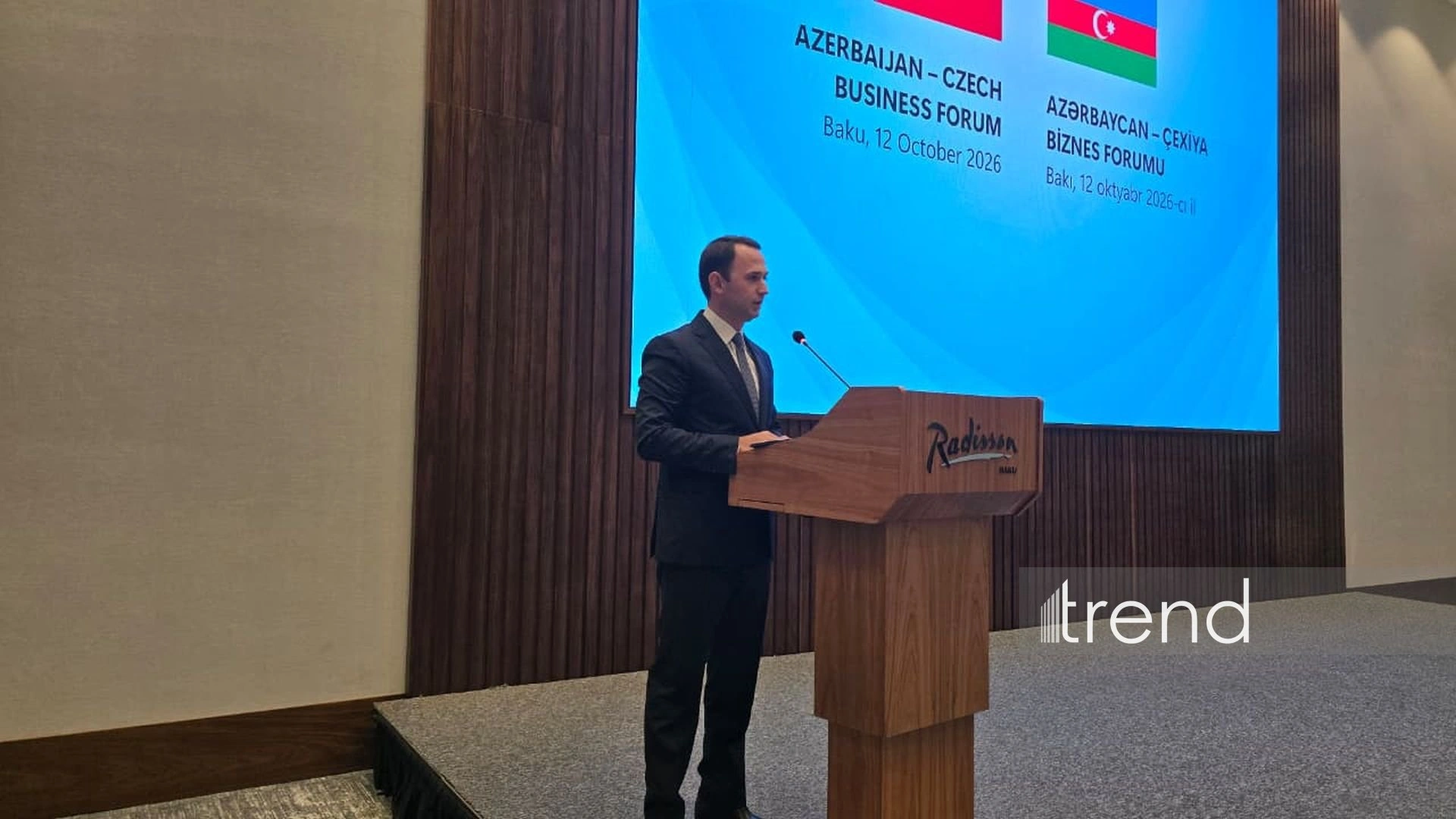
BAKU, Azerbaijan, October 12. Azerbaijan is
interested in expanding cooperation with Czech companies in
transportation, logistics, railway infrastructure, urban mobility,
and digital technologies, Shahin Babayev, executive director of
Azerbaijan Transport and Communications Holding (AZCON), said at
the Azerbaijan-Czech Republic business forum in Baku on Monday,
Trend’s correspondent
reports from the event.
He said there are broad opportunities to strengthen bilateral
ties and develop cooperation between the business communities of
the two countries.
“I would like to thank our Azerbaijani and Czech partners for
their commitment to strengthening bilateral ties and promoting
closer cooperation. This forum provides a valuable platform for our
companies to identify areas of mutual interest and discuss new
opportunities for collaboration,” Babayev said.
According to him, amid changes in global supply chains,
reliable, efficient, and sustainable transportation routes are
becoming increasingly important for businesses. Azerbaijan is
investing in the development of the East-West transport corridor
and taking steps to strengthen connectivity along the North-South
route.
“Our goal is not merely to be a transit country, but also to
become a regional logistics hub that creates added value for
businesses and investors. Czech companies can contribute to this
process through their technologies, engineering expertise, and
long-term industrial partnerships,” he said.
Babayev noted that the Czech Republic’s industrial and
engineering expertise aligns with Azerbaijan’s plans to modernize
its transportation infrastructure. Cooperation has particular
potential in railway system upgrades, digitalization, and improving
operational efficiency.
“Railway infrastructure is one of the promising areas for
cooperation. Azerbaijan’s efforts to modernize and digitalize its
railway system and improve operational efficiency create new
opportunities for Czech companies. The exchange of expertise in
railway engineering, equipment supplies, and innovative
technologies could deliver mutual benefits,” the AZCON executive
director said.
He also said that air transportation plays an important role in
developing economic and business ties between the two
countries.
According to Babayev, Azerbaijan Airlines (AZAL) operates four
scheduled flights per week on the Baku-Prague route. In 2026, the
total number of flights on the route is expected to increase by 14%
year-on-year to 194.
He added that expanded air connectivity helps facilitate
business travel, promote tourism, and increase direct contacts
between the business communities of the two countries.
Babayev also highlighted prospects for cooperation in urban
transportation and industry. He said Czech companies specializing
in metro infrastructure, urban mobility, mechanical engineering,
metalworking, and equipment manufacturing could contribute their
expertise to Azerbaijan’s modernization projects.
He added that the use of digital solutions and artificial
intelligence technologies by organizations operating in the
transportation and communications sectors represents another
promising area for cooperation.
Discussing AZCON’s operations, Babayev noted that the holding’s
portfolio spans air and rail transportation, maritime shipping,
urban mobility, telecommunications, satellite services, digital
solutions, and artificial intelligence.
Cooperation with Czech companies in these areas is important for
expanding technological capabilities, introducing innovative
solutions, and developing industrial ties, he said.
Babayev emphasized that the business forum gives companies from
both countries an opportunity to discuss projects of mutual
interest and identify specific areas for future partnerships.
Bilateral meetings and site visits planned after the forum are also
expected to help advance cooperation in practical terms.
He noted that strengthening business ties between Azerbaijan and
the Czech Republic, expanding the exchange of technology and
expertise, and implementing joint projects serve the economic
interests of both countries.


