
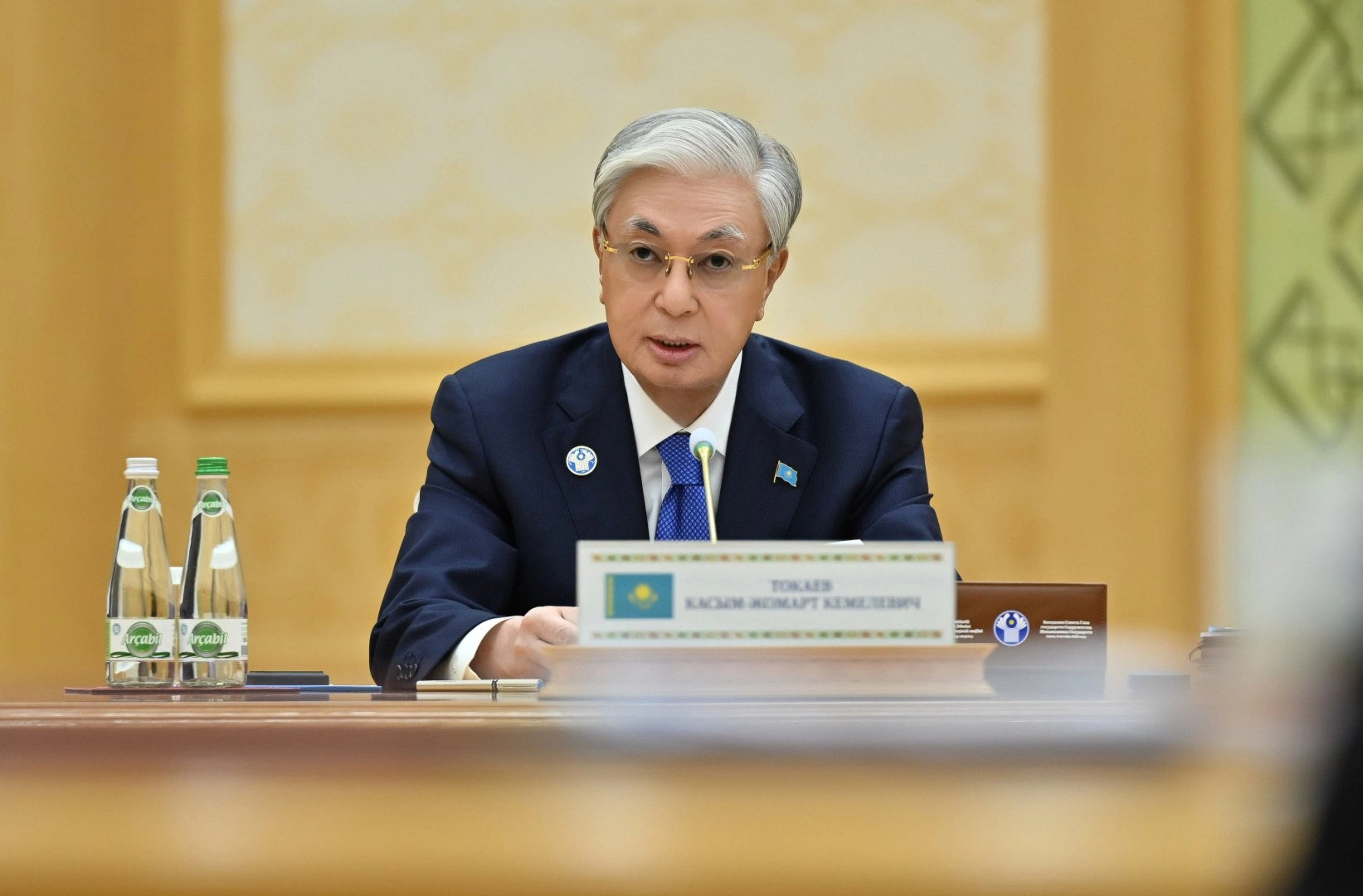
BAKU, Azerbaijan, October 9. Kazakhstan's
President Kassym-Jomart Tokayev has proposed developing a CIS
Development Strategy through 2035, focusing on the economy, energy,
infrastructure, advanced technologies and human capital.
This was reflected in a press release published by the press
office of the Kazakh president. He proposed this today during a
meeting of the CIS Council of Heads of State in Turkmenistan.
Tokayev noted that the current CIS Development Concept was
approved in 2007 and updated six years ago. Subsequent programmes
and documents have largely addressed individual sectors and often
lack coordination, he said.
“I therefore propose that the Executive Committee, together with
the governments of our countries, begin developing a CIS
Development Strategy through 2035,” Tokayev said.
He stressed that the Commonwealth's member states need to
establish a shared long-term vision for the organization and define
its role in Eurasia's changing geopolitical landscape.
Tokayev also highlighted the importance of deeper economic
cooperation and stronger industrial and technological partnerships
among CIS countries.
“For Kazakhstan, the markets of CIS countries have traditionally
been of great importance, accounting for more than a quarter of our
country's foreign trade turnover,” he said.
According to Tokayev, Kazakhstan's trade turnover with CIS
countries amounted to approximately $40 billion in 2025 and
increased by 10% in the first seven months of 2026.
He also cited joint industrial projects as an important area of
cooperation. Kazakhstan's portfolio of industrial projects and
initiatives involving Russia includes 178 projects worth a total of
$61 billion, of which 124 have already been implemented, Tokayev
said.
Cooperation with Uzbekistan includes work on 80 projects worth
approximately $2 billion. Kazakhstan and Belarus, meanwhile, have
established joint production of specialized machinery and
agricultural equipment, he added.
Tokayev said that aligning the Commonwealth's long-term
priorities would help ensure continuity and coordination in efforts
to achieve sustainable progress across member states.


