
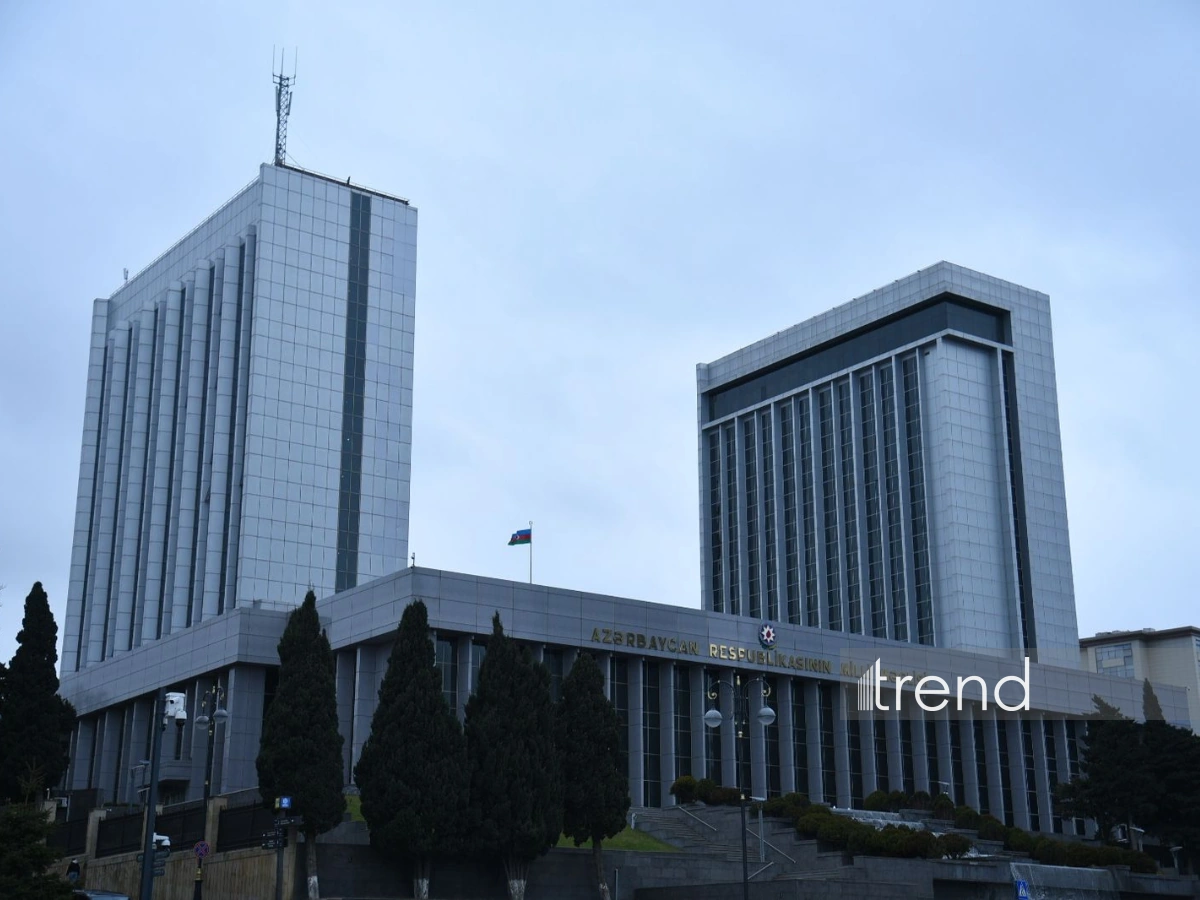
BAKU, Azerbaijan, October 8. Azerbaijan’s
parliament has rejected the allegations contained in the European
Parliament’s October 8 resolution on human rights and freedoms in
Azerbaijan, describing the document as a biased political
action.
The Azerbaijani parliament made the remarks in its response to
the European Parliament’s resolution.
The parliament said the European Parliament’s targeted political
approach toward Azerbaijan had become more confrontational
following the Second Karabakh War. It said resolutions adopted in
recent years, along with calls for political pressure and sanctions
against Azerbaijan, demonstrated that the organization had failed
to accept what it described as the new geopolitical realities in
the South Caucasus.
The response also criticized the European Parliament for seeking
to determine the scope of authority of Azerbaijan’s state bodies,
issue instructions to law enforcement and judicial institutions,
and set political conditions for bilateral relations. According to
the parliament, this raises questions about whether the European
Parliament seeks to build relations with Azerbaijan based on
equality, mutual respect and non-interference in internal
affairs.
The parliament also referred to issues of corruption and illicit
lobbying influence within the European Parliament, stressing the
importance of the organization consistently applying its own
standards.
The response further said that the European Parliament applies
double standards in its approach to human rights. It noted that
while resolutions are adopted concerning Azerbaijan, European
countries themselves continue to face problems related to police
violence, restrictions on freedom of peaceful assembly and
accountability for human rights violations.
The parliament said the adoption of the resolution at a time
when the Azerbaijan-Armenia peace agenda is advancing was also a
matter of concern. It said unilateral initiatives and what it
described as misguided assessments make it more difficult to build
an environment of mutual trust and create additional obstacles to
normalizing relations.
The response also highlighted what the parliament described as a
contradiction between the European Parliament’s call to restore
cooperation with the Azerbaijani parliament and its adoption of
documents that create interparliamentary tensions. The parliament
said restoring trust requires abandoning confrontational rhetoric
and recognizing the equal nature of interparliamentary
relations.
The Azerbaijani parliament said the country remains committed to
protecting human rights and fundamental freedoms, ensuring the rule
of law and implementing the principles of a state governed by
law.
The response also said that, while making allegations against
Azerbaijan, the European Parliament remained silent about the
rights of Azerbaijani refugees and internally displaced persons
who, according to the parliament, were subjected to ethnic
cleansing and other serious human rights violations during
Armenia’s occupation of Azerbaijani territory.
The Azerbaijani parliament called on the European Parliament to
abandon what it described as confrontational rhetoric toward
Azerbaijan and refrain from interfering in the country’s internal
affairs.
The parliament stated that no force can divert Azerbaijan from
its


