BAKU, Azerbaijan, October 2. The CAMCA region
should be viewed not as a collection of individual countries but as
a single ecosystem, and it is necessary to create shared
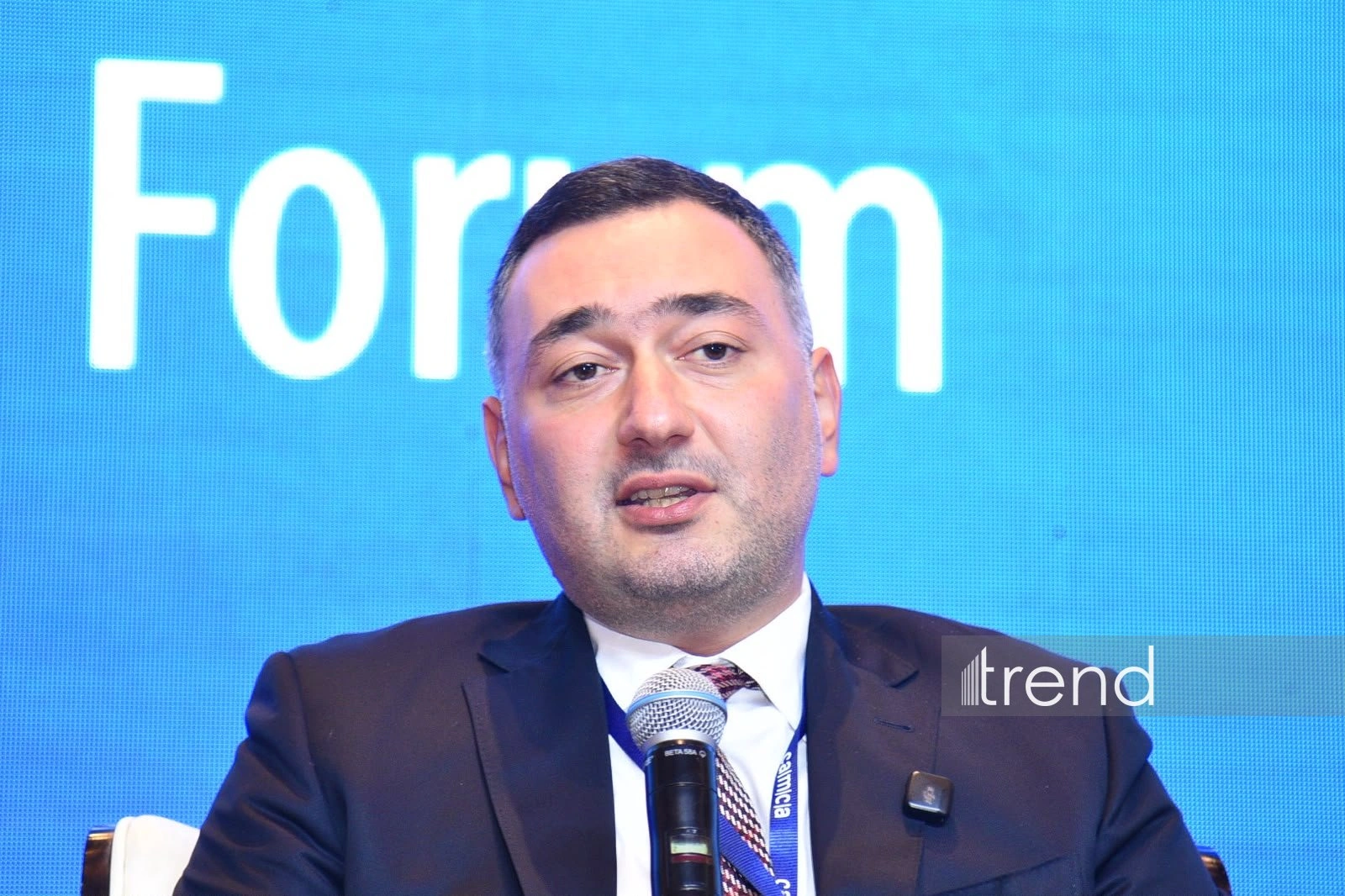
opportunities for business expansion, founder and chairman of the
board of directors of Sabah Investment Group, Orkhan Mustafayev,
said at the CAMCA regional forum held in Baku on October 2,
Trend's correspondent
reports from the event.
He noted that, as an entrepreneur, he approaches this issue from
the perspective of a business representative rather than a
politician, and believes that closer integration among countries is
important for business development in the region.
“Our main area of activity is the real estate sector, and we
have been focused on this field for the past 16 years. We are
currently expanding our operations in the CAMCA region, including
in Georgia and Uzbekistan. We are entering these markets together
with our partners from the United Arab Emirates, Israel, and Italy.
This is a fairly diversified portfolio of investors who believe in
our platform,” Mustafaev noted.
He said that viewing CAMCA as a single ecosystem, rather than
separating Azerbaijan, Georgia, Uzbekistan, Kazakhstan, and other
countries, could make it easier for businesses to scale up.
“Of course, policies and regulations cannot be the same in every
country. But they can be very similar. In that case, we can scale
up and grow in these markets more easily,” he added.
Mustafayev noted that the approaches used in Georgia and
Uzbekistan toward public, commercial, and public-private
partnerships are interesting examples.
“We’re taking some interesting aspects from the Georgian
approaches and trying to apply them in Azerbaijan. Sometimes we try
to use these mechanisms more effectively,” he said.
The entrepreneur emphasized that expanding cooperation among
countries in the region could create conditions for the financing,
production, and sales of business projects across different
countries.
“Imagine that a technological idea is conceived in Azerbaijan,
capital is attracted from Kazakhstan, production takes place in
Georgia, and a partner is found in Uzbekistan. After that, the
successful business can be expanded throughout the CAMCA region. At
the same time, a larger and more established market is created—one
that understands the business and its operational model,” O.
Mustafayev noted.
He said that while it is relatively easy to start a business, it
is much more difficult to ensure its sustainability, expand its
operations, and scale it up.
“Starting a business is very easy. But maintaining it, expanding
it, and scaling it up is very difficult. Being the leader of a
company that employs 200, 100, or even 50 or 500 people places a
huge responsibility on an entrepreneur. As the business grows, you
are responsible for every one of those people,” he emphasized.
O. Mustafayev described CAMCA as an important opportunity for
business development in the region and for strengthening economic
ties between countries.
“CAMCA is an opportunity for me. I think it can become a good
platform and tool for bringing together certain policies and
goals,” he said.
According to him, both the public and private sectors are
creating opportunities for the development of startups, as well as
small and medium-sized businesses in the region.
“Of course, there are many opportunities in Silicon Valley. But,
in my view, there is also capital in the Middle East, especially in
Dubai, Abu Dhabi, and Qatar, with the potential for major
investments in startups. At the same time, there are good examples
of private investment in startups in the GCC region that are
contributing to the development of the real estate, construction,
and property development sectors,” Mustafayev said.
He noted that the existing mechanisms for startup development in
Azerbaijan are effective only to a certain extent and that there
are many small and medium-sized enterprises operating thanks to
government support, subsidies, and private-sector investment.
“As an entrepreneur, I believe there are three key factors for
transforming CAMCA into a successful regional platform where
businesses can easily scale up,” he said.
According to him, the first issue is time and the simplicity of
regulations.
“Time is capital. All rules and regulations must be very clear
and simple, and information must be presented with complete
transparency and accuracy. I simply want to log into the system
from my computer and see all the information on the screen,”
emphasized O. Mustafayev.
Noting the second key issue — access to capital — the
entrepreneur stressed the importance of ensuring access to various
sources of financing for businesses operating in the CAMCA
region.
“If we conduct any business within the framework of CAMCA, we
need access to family offices, institutional investors, and other
financial sources to secure funding when necessary,” he noted.
O. Mustafayev said that the third important area is policy and
legislation.
“I am confident that if internationally recognized legislation
is applied to any of the CAMCA countries, large institutional
investors will find it easier to enter that country. For example,
mechanisms based on the legal systems of England, Singapore, and
other countries will allow investors to feel more comfortable
placing their assets here and viewing the CAMCA region as a whole
as a long-term investment,” he added.