BAKU, Azerbaijan, October 2. For the effective
functioning of the Middle Corridor, it is not enough to simply
develop infrastructure; it is also important to coordinate the
activities of various countries and institutions, harmonize
legislation, and adopt a unified approach to digitalization and
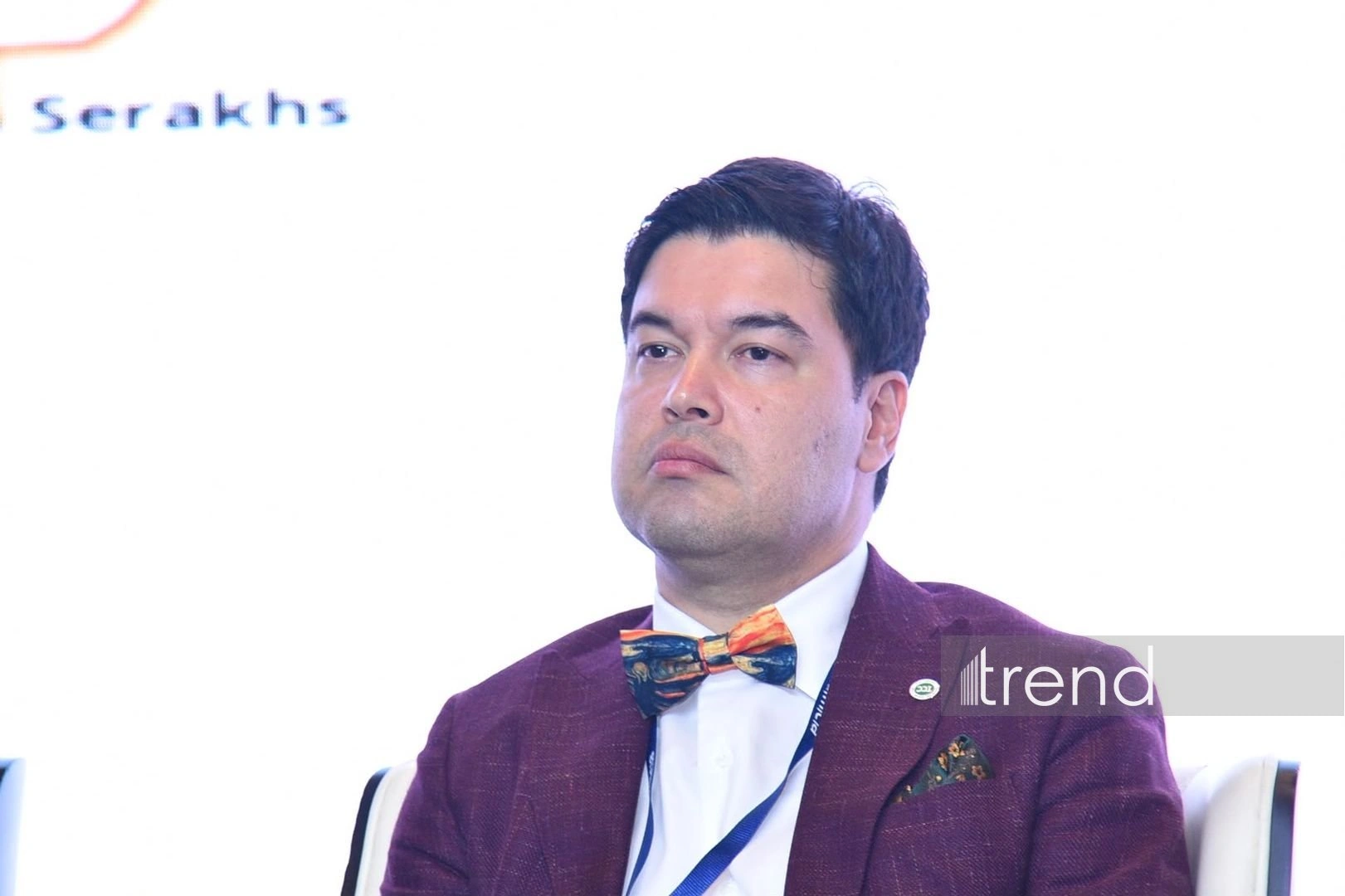
logistics processes, the co-founder and country director of the
Central Asian Development Institute (CADI) based in Tashkent, and a
prominent member of the CAMCA network, Farrukh Irnazarov, said on
the second day of the CAMCA regional forum held in Baku on Friday,
Trend's correspondent
reports from the event.
According to him, the operation of the Middle Corridor is like a
relay race, and it is necessary to properly coordinate the actions
of the parties involved in the various stages of the process.
“The Middle Corridor is a kind of relay race. Everyone runs
their own leg, holds the baton, and prepares to pass it on to the
next participant. However, at that moment, one party might say to
another, ‘Fill out the paperwork first, then I’ll take the baton.’
This creates an additional problem,” he said.
F. Irnazarov noted that the participation of several countries
and organizations in the Middle Corridor’s activities means that
the actions of each of them affect the overall result.
“Given that six countries and various agencies are working
together to implement this process, even if each of them achieves
95 percent accuracy and timeliness in their work, the overall
success rate may ultimately drop to about 70 percent. This is
because all parties are interdependent,” he emphasized.
According to him, each country and agency can document the
successful completion of its own activities, but due to the
interdependence of the processes, the overall result may fall short
of expectations.
“On paper, every country can say, ‘We did our job well;
everything went smoothly.’ However, in the end, it may prove
impossible to reach the required level. This is because the parties
are interdependent, and various modes of transport are involved in
the process,” added F. Irnazarov.
He noted that to coordinate these processes, it is important to
harmonize legislation and strengthen trust between the parties.
“To ensure synchronization, certain changes in legislation,
harmonization, and trust, which we discussed yesterday, are
necessary,” he noted.
Irnazarov stated that placing excessive emphasis on
infrastructure in discussions about the development of the Middle
Corridor is also not the right approach.
“Unfortunately, we keep talking about infrastructure.
Infrastructure is perceived as some kind of universal solution for
the development of the Middle Corridor. However, while
infrastructure is undoubtedly important, it alone will not solve
all the problems,” he said.
According to him, the main focus should be on “bottlenecks” that
arise along transport routes and on constraints that slow down
processes.
“We must always pay attention to bottlenecks and constraints and
determine which measures can yield tangible results. This approach
will make it possible to implement the project,” Irnazarov
emphasized.
F. Irnazarov noted that the drop in the water level of the
Caspian Sea also creates certain difficulties for the
transportation process.
“The decline in shipping volumes across the Caspian Sea also
creates certain problems. Furthermore, the preference for certain
types of cargo, vessel classes, and modes of transport belonging to
a specific country further complicates the situation,” he
added.
According to him, one of the key steps toward resolving these
issues is to standardize the entire process around a single
operator and a single shipping document.
“One of the most important issues is structuring all these
processes in such a way that there is a single operator and a
single cargo document. Thus, instead of holding separate
discussions with each agency, a single party is designated to be
responsible for the entire process,” said F. Irnazarov.
He also emphasized the importance of imposing financial
accountability to ensure the timely and high-quality execution of
processes.
“Another issue is defining the financial consequences of failing
to meet obligations. If you cannot deliver the required result by a
certain deadline, there must be financial accountability. Because
this is one way to ensure that processes function properly,” he
noted.
F. Irnazarov also noted that digitalization plays an important
role in improving the efficiency of the Middle Corridor. “All
documents must be distributed digitally, and processes must be
understandable to all parties. There is a lot of work ahead, and we
need to cover a vast area,” he added.