BAKU, Azerbaijan, September
25. Azerbaijan is creating new economic
opportunities for long-term investments, political analyst Azer
Garayev told Trend.
“The Second Azerbaijan International Investment Forum, held in
Baku, has become another significant platform for expanding
Azerbaijan's dialogue with global investors. Government officials,
international financial institutions, leading companies, and
investors are gathering for the two-day event. The topics on the
forum's agenda illustrate the directions in which the new
investment phase of Azerbaijan's economy is taking shape,” he
said.
According to him, the theme "Rebuilding Trust in a Fragmented
World: The South Caucasus as a Pillar of Global Connectivity and
Investment Stability" wasn’t chosen by chance. Shifts in global
supply chains, the emergence of new transport and energy routes,
and the growing role of technology in the economy are directing
investor attention toward more reliable and diversified
connectivity. In this process, Azerbaijan stands out as a country
that complements its geographical location with tangible economic
projects.
"In his address to the forum participants, President Ilham
Aliyev highlighted the changes occurring in Azerbaijan's economy
using specific figures. According to President Ilham Aliyev, since
2020, real GDP growth in the non-oil sector has averaged 5%
annually; the non-oil industry has expanded 1.5-fold, and non-oil
exports have nearly doubled. Consequently, the non-oil sector's
share of GDP reached 72% in 2025.
These indicators demonstrate the growing importance of non-oil
and gas sectors within Azerbaijan's investment agenda. In other
words, the range of opportunities available to investors is
expanding. Manufacturing, logistics, agriculture and food
processing, digital technologies, tourism, infrastructure, and
renewable energy now feature prominently among the key areas of the
investment agenda," he explained.
Garayev noted that one of the key points highlighted in
President Ilham Aliyev's address is that Azerbaijan is not merely
seeking capital.
"President Ilham Aliyev noted that the country highly values
technology, expertise, innovation, and access to new markets. This
approach transforms the very nature of investment: it is not merely
about bringing financial resources into the country, but about that
capital generating new production capabilities, technologies,
export markets, and skilled jobs.
This approach is clearly evident in the forum's agenda. Sessions
are being held on the Middle Corridor, energy and the green
transition, artificial intelligence and digital transformation,
industry and free economic zones, critical raw materials,
agribusiness, financial cooperation, small and medium-sized
enterprises (SMEs), tourism, real estate, and human capital. Such
an extensive agenda demonstrates Azerbaijan's desire to present
itself as an economic hub offering investment opportunities across
a wide range of sectors, rather than just one," he said.
The analyst emphasized that transport and logistics constitute
one of the key pillars of these opportunities.
"Azerbaijan is situated at the intersection of the East-West and
North-South routes. The development of the Middle Corridor connects
Central Asia with the South Caucasus, Türkiye, and Europe via the
Caspian Sea. The expansion of this route creates new investment
opportunities not only in transport infrastructure but also in
warehousing, logistics, manufacturing, and trade services.
A similar shift is being observed in the energy sector. In
addition to being a reliable partner for traditional energy
resources, Azerbaijan is positioning the development of renewable
energy and green energy corridors as a new economic direction. This
creates a broader chain of projects for investors—extending beyond
mere energy production to encompass electricity transmission,
technology, and infrastructure," Garayev clarified.
According to him, industrial zones and the Alat Free Economic
Zone also reinforce the practical aspects of investment
opportunities. Ready-made infrastructure, tax and customs
incentives, and public-private partnership mechanisms enable
investors to evaluate projects based on concrete production and
export potential, rather than just at the conceptual stage.
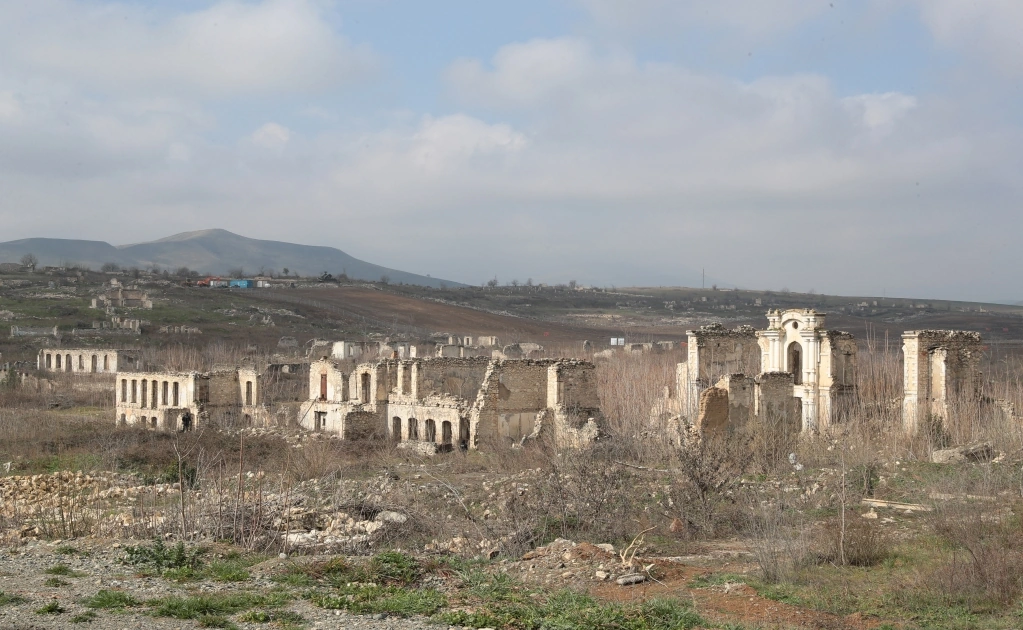
"The territories liberated from occupation stand out as a
distinct area for investment. Alongside the development of
transport, energy, and utility infrastructure, new opportunities
for economic activity are emerging in sectors such as industry,
agriculture, and tourism," he said.
Garayev pointed out that a key factor enhancing the forum's
significance is its role as a platform that translates discussions
into tangible results. The inaugural Azerbaijan International
Investment Forum brought together over 1,000 participants,
resulting in the signing of investment agreements with a total
value exceeding $10 billion. Of this amount, more than $7 billion
was allocated to the non-oil sector.
"In this regard, the second forum marks the next stage in
Azerbaijan's relations with investors. The key issue here is not
merely the presentation of new projects; discussions also cover the
directions of Azerbaijan's economic growth, the technologies to be
introduced to the country, the production and logistics chains to
be established, and the expansion of the country's role in regional
economic ties.
This is precisely the message conveyed by the forum held in
Baku: Azerbaijan's investment agenda is no longer limited to simply
showcasing existing opportunities. The goal for the upcoming phase
is to forge long-term partnerships that integrate capital with
technology, production, exports, energy, logistics, and human
capital. Ultimately, the transformation of the discussions held
over the two-day forum into concrete projects will determine the
platform's tangible results," the analyst added.