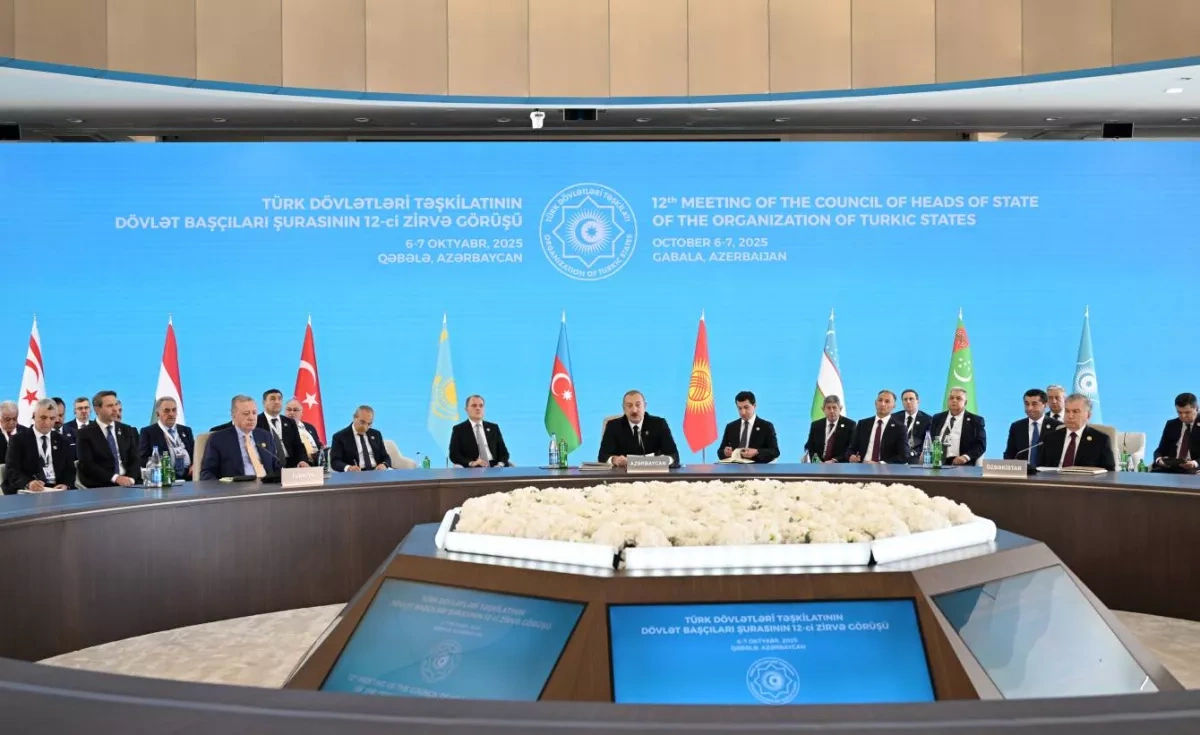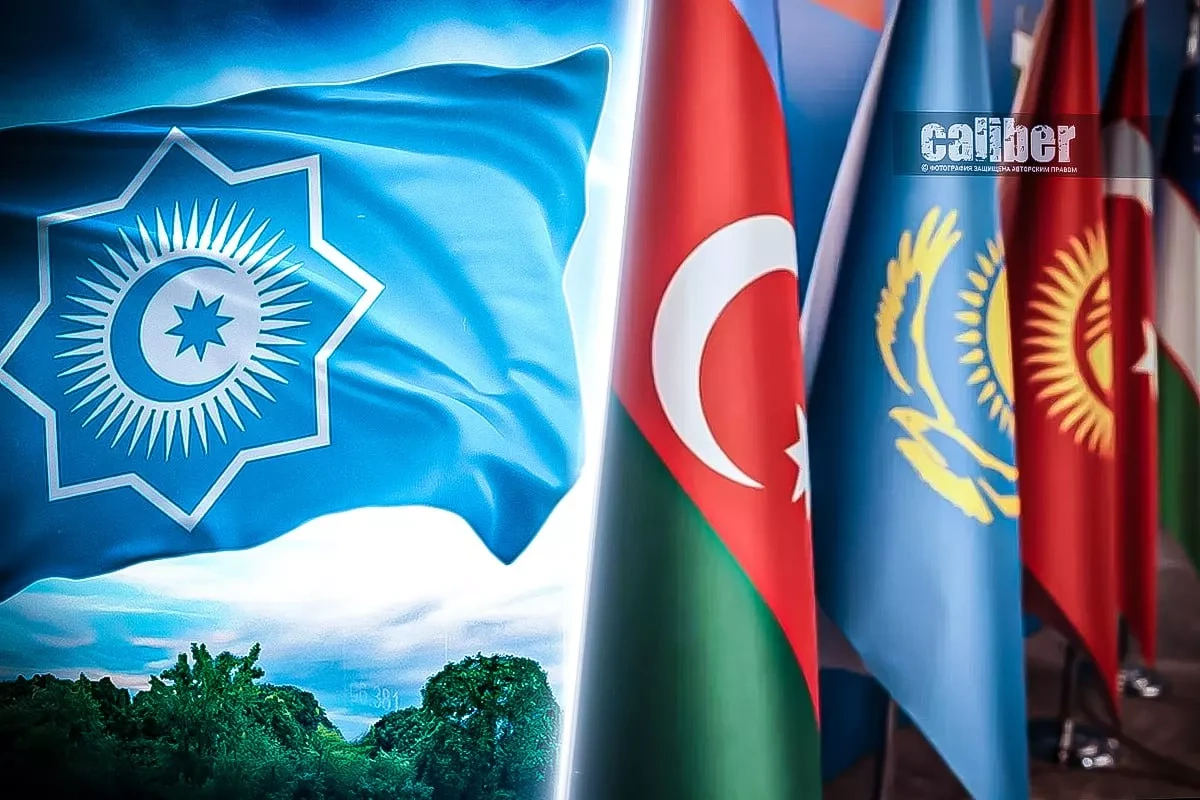
The Gabala Declaration, adopted in 2025 at the 12th Summit of the Organisation of Turkic States (OTS), established the concept of the Turkic world as a single family united by common ethnic roots, history, language, culture, traditions and values, as well as committed to peace, security and stability.
The declaration underscored the need to coordinate actions in the field of security and develop a collective strategy for the OTS, as well as to set more ambitious goals, taking into account the global potential of the Turkic states. It also highlighted the development of transport connectivity, the importance of the Middle Corridor and efforts to launch the Zangezur Corridor.
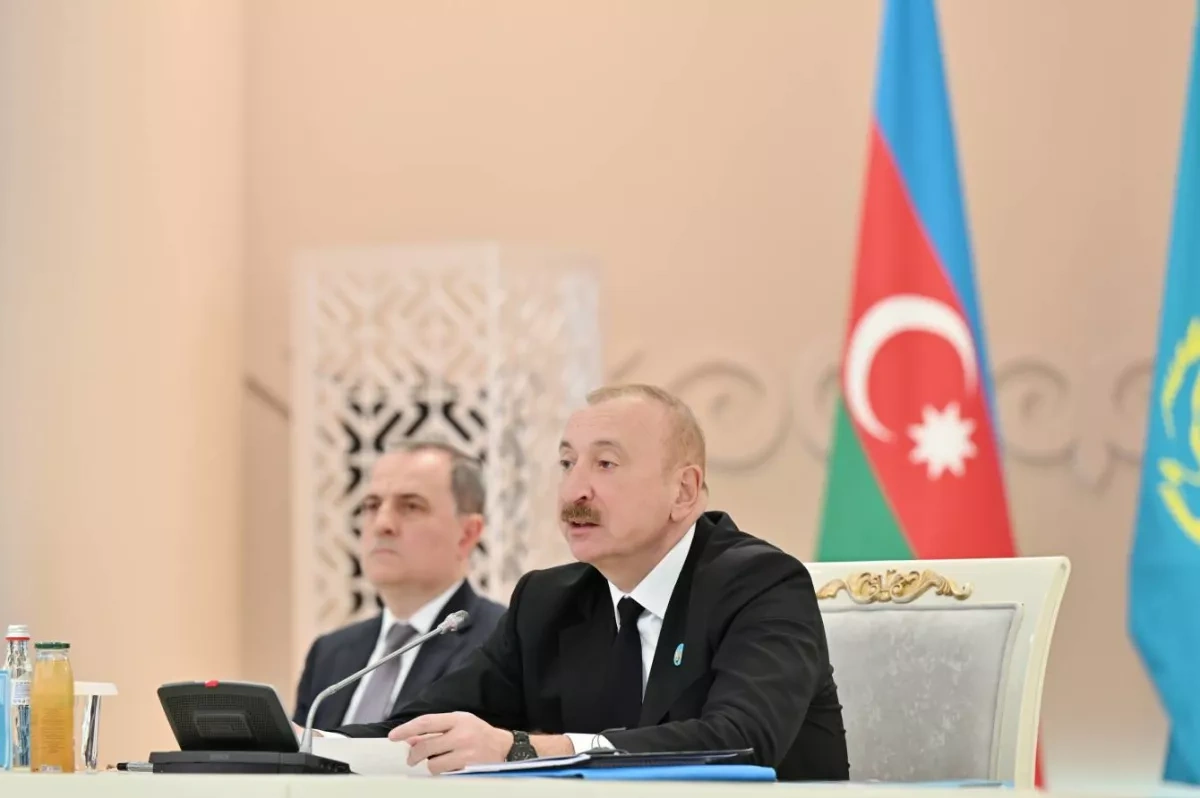
Speaking in Gabala, President of Azerbaijan Ilham Aliyev described the formation of the OTS as one of the major geopolitical processes and noted the organisation’s potential to become an important actor on the global stage. Among the factors contributing to the strengthening of the OTS, the head of state highlighted the domestic political and economic stability of its member states, their significant geostrategic position, favourable demographic trends and young populations. He added that these factors were complemented by considerable opportunities in transport and logistics, natural resources, and growing potential in the military and defence-industrial spheres.
At the informal OTS summit held in Turkistan in May 2026, speaking about the organisation’s growing role in global processes, Ilham Aliyev described the emergence of the Organisation as one of the influential geopolitical centres of power of the 21st century.
The President of Azerbaijan elaborated on these points in his address to the participants of the 5th meeting of the secretaries of the Security Councils of the OTS member states and at a meeting with senior security officials from the member states. Emphasising the importance of consolidating the OTS countries, the President noted that its foundation rests not only on political and economic interests but also on relations among peoples. Spiritual affinity, cultural closeness and common ethnic roots, he said, strengthen the organisation. National self-awareness also plays an important role, Aliyev noted, and should be preserved despite external influences.
According to the head of state, the Turkic world has entered a period of resurgence at the current historical stage. One of the factors behind this process, he said, was Azerbaijan’s Victory in the Patriotic War, which, among other things, created conditions for the implementation of the Zangezur Corridor.
This position echoes a statement made by Ilham Aliyev back in 2009 at the 9th Summit of the Heads of State of Turkic-speaking Countries in Nakhchivan. At the time, he noted that the separation of Azerbaijan during the Soviet period from “its historical, ancestral land — the Zangezur region” and the incorporation of the territory into Armenia had geographically divided the Turkic world, while its activities as a single family and a single force had been suspended for decades.
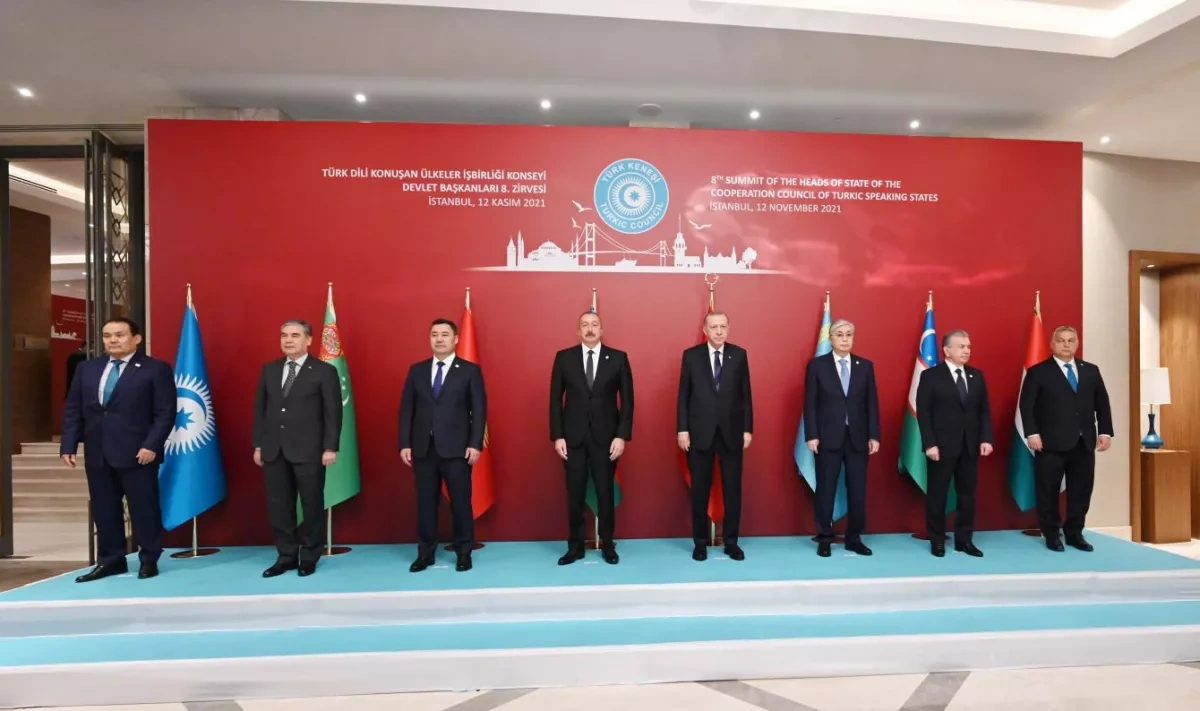
In 2021, following the Second Karabakh War, the head of state once again highlighted the new opportunities that had emerged for the region and noted that the Zangezur Corridor project would restore the geographical connectivity of the Turkic world. Ilham Aliyev linked the prospects for strengthening the OTS’s role on the international stage to the stability, security and economic growth of the organisation’s member states, as well as to the development of energy and transport routes running through their territories. In this context, he highlighted the importance of the Middle Corridor and Azerbaijan’s role as a supplier and transit country for energy resources from Central Asia to global markets.
The head of state also pointed to new challenges, including cyber threats and the crisis of international law, stressing the need to develop a common OTS agenda for addressing regional and global problems. According to the President, bilateral military exercises and cooperation between security councils demonstrate the strategic nature of ties among OTS countries and indicate that the integration of the Turkic world has extended beyond the political, economic and cultural spheres.
Ilham Aliyev also addressed this issue in autumn 2025, speaking at the international conference “The Role of Special Service Agencies in Ensuring the Security of International Transport Lines”. He highlighted the importance of strengthening cooperation among special services and security agencies to protect the extensive transport network passing through the territories of the Turkic states and connecting Europe and Asia.
According to the President, these transport and communication routes are viewed not only as a source of economic prosperity but also as a foundation for closer integration among the Turkic states in the political, cultural, defence and security spheres.
At the same time, the growing importance of transport hubs makes them potential targets for external destabilising forces. In particular, this includes cyber threats capable of paralysing the systems that manage critical transport infrastructure, as well as attempts at external interference and destabilisation aimed at obstructing the implementation of major regional projects. In this regard, as Aliyev noted, the effectiveness of cooperation within the OTS on the security of transport and communication routes is of direct importance to the economic development and long-term stability of the countries in the region.
The President thus emphasised that modern threats may be not only physical but also ideological in nature. This, in turn, creates a need for joint efforts to counter various forms of ideological influence, including those disseminated through media outlets based outside the region.
Particular importance in this context is attached to raising the younger generation in the spirit of patriotism, national self-awareness and adherence to national moral principles. As the head of state has noted, raising young people in the national spirit is one of the important factors shaping the country’s future development.
According to him, it is necessary to raise a generation that is educated and well-informed while maintaining a strong connection with its homeland and resisting external influence. In this regard, Aliyev has also emphasised that young people should know the history of their country and its statehood.
Thus, Azerbaijan’s approach to the development of the OTS encompasses a broad range of areas, from political and economic cooperation to transport and energy connectivity, defence and security. At the same time, common cultural and historical values, national self-awareness and the upbringing of the younger generation occupy an important place.
The emphasis articulated by Ilham Aliyev indicates that the development of the Turkic world is viewed not merely as a political and economic process. Its important components include spiritual and cultural unity, common historical roots and strategic cooperation among states. It is precisely the combination of these factors that shapes the OTS’s long-term agenda and contributes to its growing role in regional and international processes.