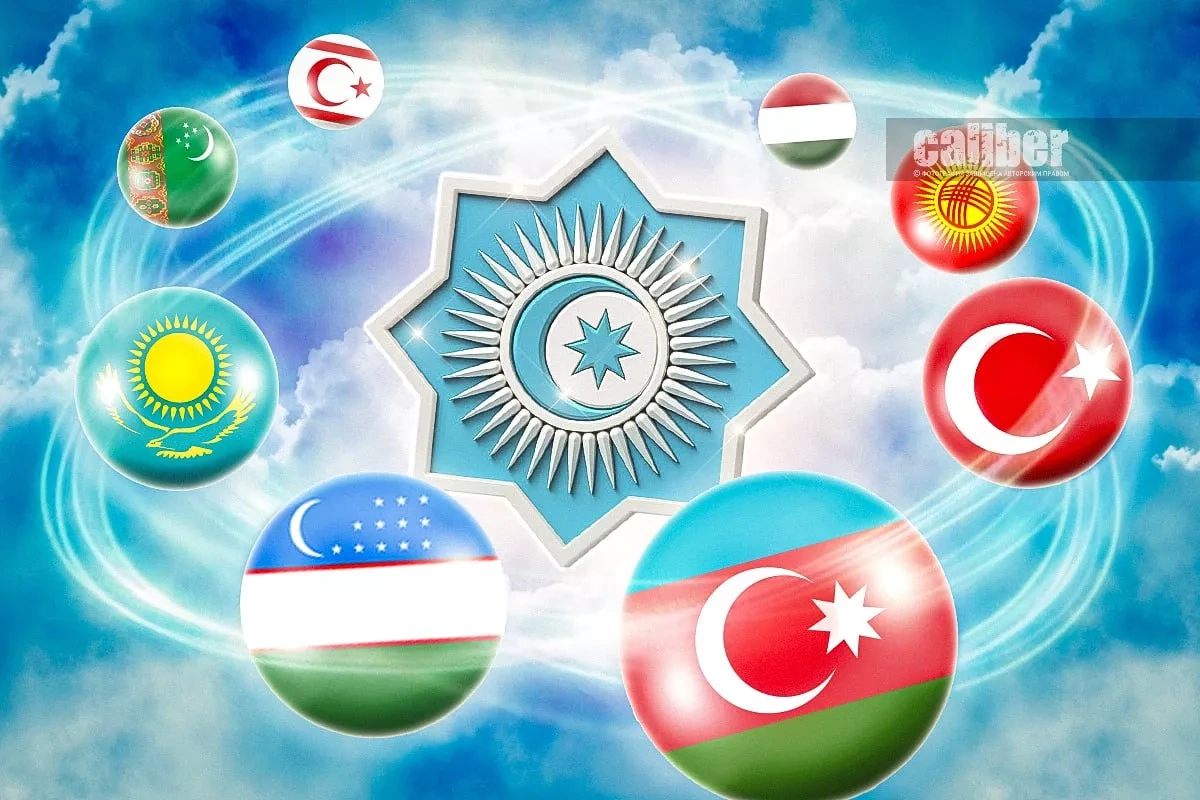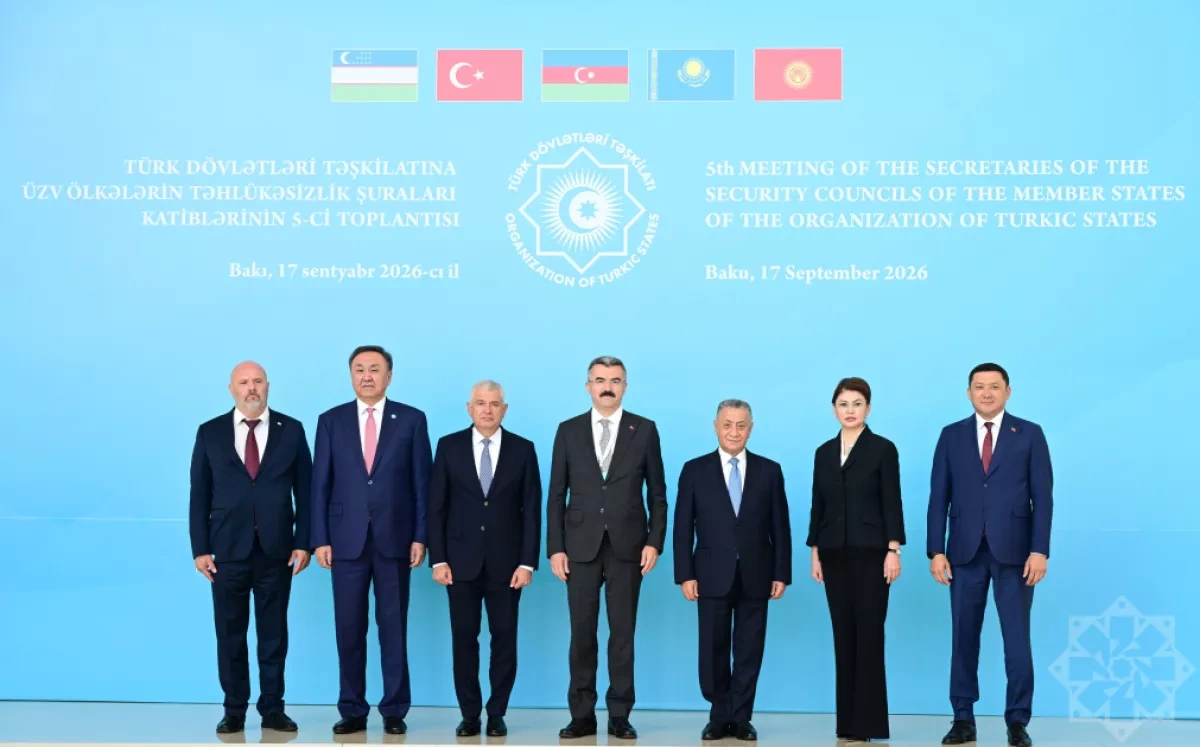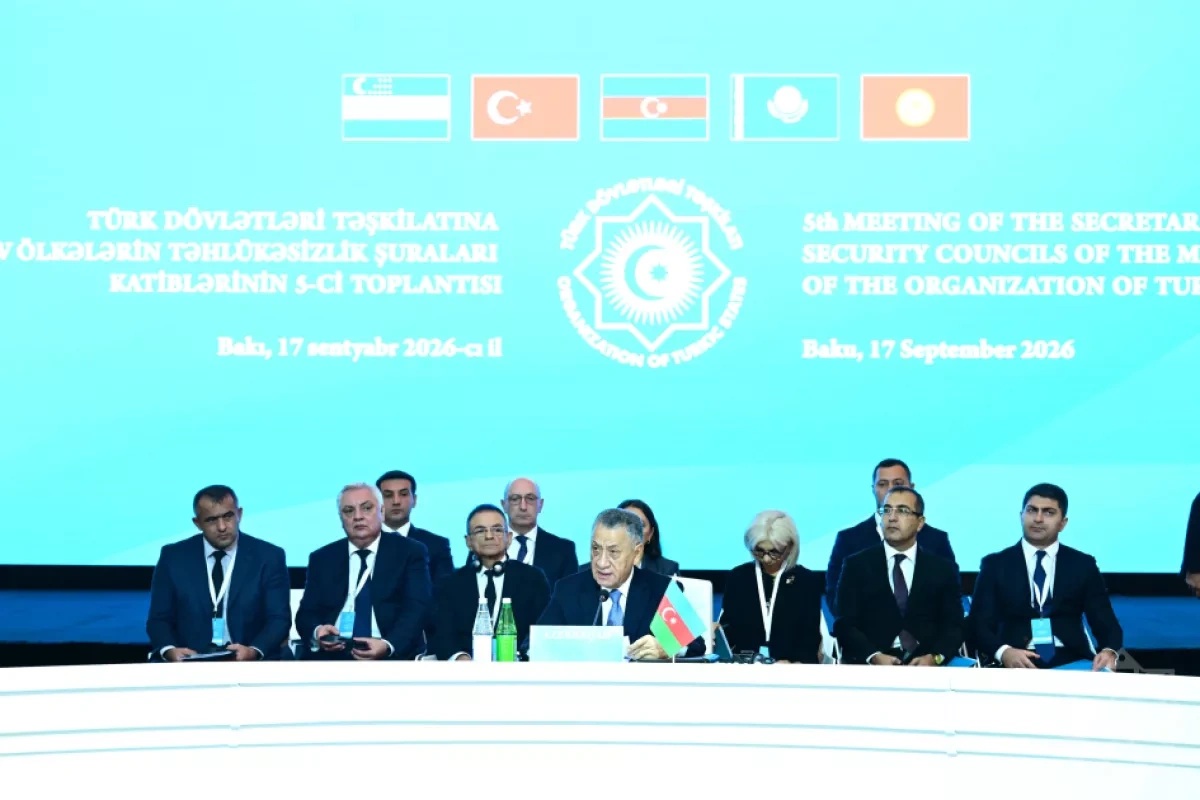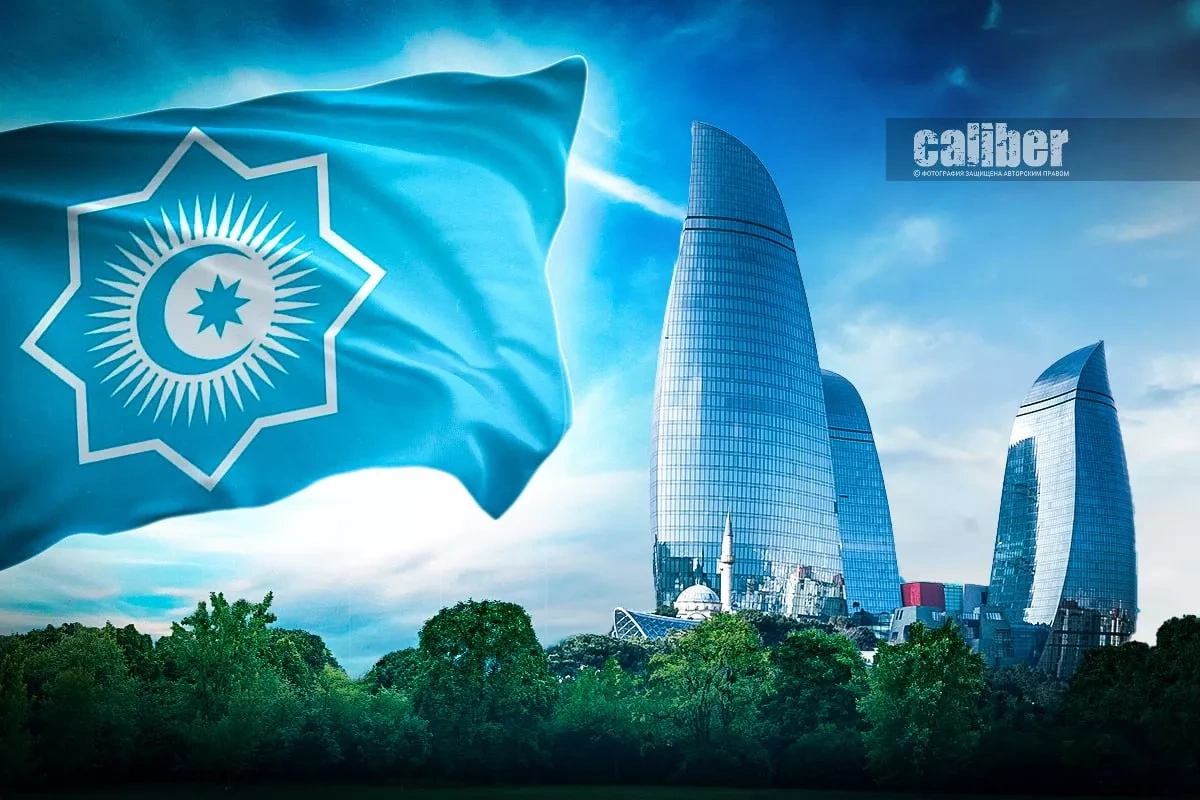
Yesterday, 17 September, the fifth meeting of the secretaries of the Security Councils of the member states of the Organisation of Turkic States (OTS) was held at the Heydar Aliyev Center. The meeting was chaired by Azerbaijan’s Secretary of the Security Council, Colonel-General Ramil Usubov, who read out President Ilham Aliyev’s address to the participants, including representatives of Türkiye, Uzbekistan, Kazakhstan, Kyrgyzstan, the Turkish Republic of Northern Cyprus and the OTS Secretariat.
At first glance, the meeting may appear to have been a routine event. However, the context in which it was held deserves closer attention. Just days earlier, Baku hosted a meeting of the heads of Muslim religious authorities from OTS countries. Two events with different profiles — one spiritual and the other security-related — held at the same venue within a matter of weeks is no longer a coincidence, but an indication of Baku’s emerging role.
Why Baku?
International organisations choose venues for meetings based on three main criteria: the technical capacity to host delegations, political acceptability to all participants, and the reputation and neutrality of the venue.
Azerbaijan meets all three criteria, both in religious and security matters — a combination that is exceptionally rare, given that discussions in these fields require very different atmospheres and levels of trust. Yet, as we can see, Baku has emerged as an equally suitable destination for all OTS member states in both areas.
The value of such a status goes far beyond protocol. A state that hosts specialised meetings participates in shaping their agenda from the preparation stage. For Azerbaijan, which currently holds the OTS chairmanship, this translates into a direct role in influencing the substance of the decisions adopted.
Once a year is not enough
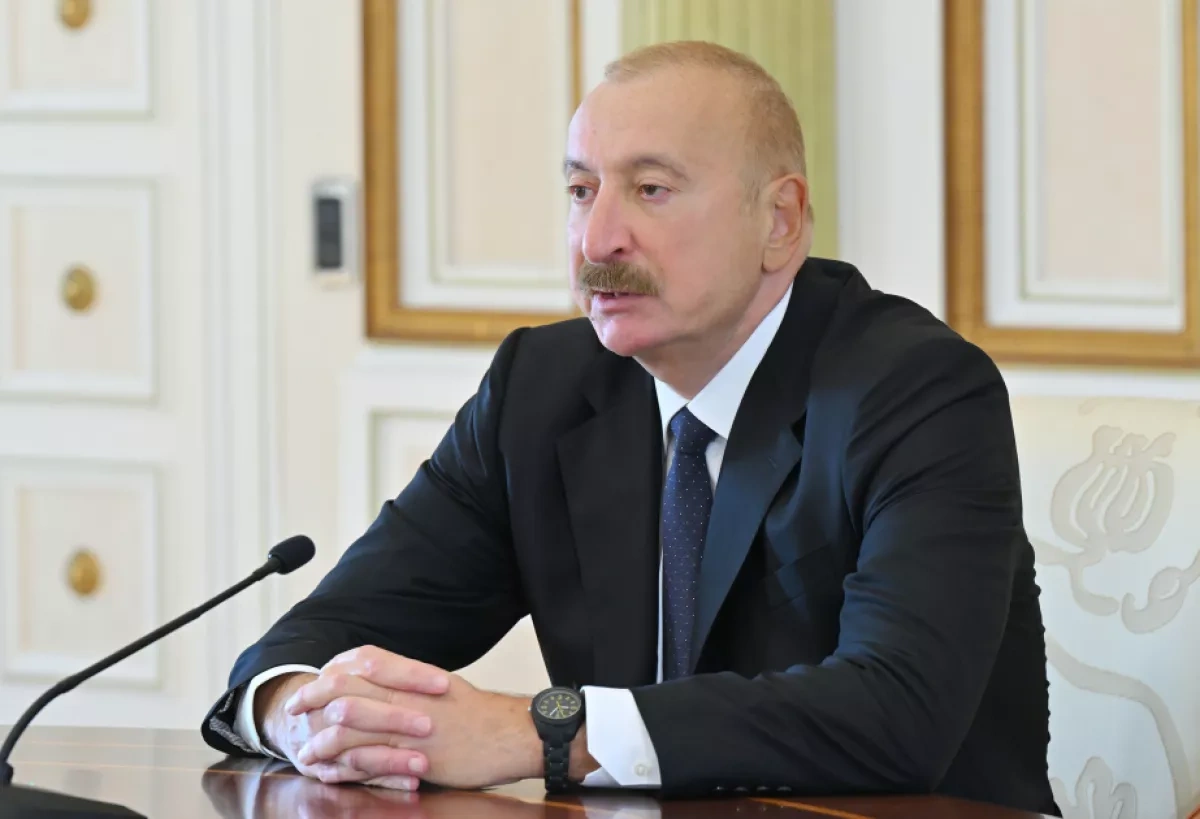
In his address to the participants of the meeting, President Aliyev highlighted the growing standing and potential of the OTS amid an increase in traditional threats and new challenges. The President described this as one of the key factors behind the Organisation’s transformation into one of the world’s major geopolitical centres, and this formulation has a concrete operational follow-up.
The Azerbaijani leader has previously made the point directly: “[...] meeting once a year at the head-of-state level in this format was not enough. Although, as I said, each of our countries has a fairly active bilateral agenda with fellow member states, we gather together only once a year, and we considered that insufficient.” This assessment gave rise to informal summits. The difference between the two formats is fundamental: an annual summit is where agreements already reached are ratified, whereas an informal meeting is where the process of reaching those agreements itself takes place. An organisation in which leaders meet twice a year operates very differently from one in which they meet only once a year.
Seventeen years have passed since the Nakhchivan Summit of 2009. During this period, the organisation has evolved from a consultative format into the Organisation of Turkic States, with a secretariat, sectoral mechanisms and a regular security platform. Five meetings of the secretaries of the Security Councils are no longer an experiment, but an established institution.
Security as a consequence of connectivity
The substance of the meeting was defined by the list outlined in the address by the President of Azerbaijan: international terrorism, transnational organised crime, drug trafficking, religious extremism, hybrid threats and the protection of critical infrastructure. The common denominator is clear: none of these challenges can be addressed by any one country alone.
This is where the connection between two issues that are usually considered separately becomes apparent. The OTS region constitutes a vast transport and energy network through which strategically important routes run. Azerbaijan serves as a transit country for Central Asian goods seeking access to global markets via the Caspian Sea, and this position at the crossroads of Europe and Asia benefits all member states. But every kilometre of pipeline and every logistics hub is also an asset requiring reliable security.
The Middle Corridor cannot function amid instability along any part of its route. The Zangezur Corridor, whose potential implementation was made possible by Azerbaijan’s victory in the 2020 Patriotic War, will connect the countries economically, logistically and strategically, and it too will require a coordinated security regime.
The logical conclusion is that the OTS is moving from declarative cooperation towards the development of a common security architecture because the infrastructure being built increasingly demands it.
A bilateral foundation
A multilateral format works effectively only when it rests on a solid bilateral foundation. Azerbaijan has built such a foundation systematically: treaties and declarations on allied relations have been signed with Türkiye, Kazakhstan, Kyrgyzstan and Uzbekistan. In addition, joint investment funds have been established with the three Central Asian states mentioned above, and the volume of mutual investment is growing.
The allied level of relations with four of the OTS’s six member states points to a stable framework. Each such agreement also resolves some of the issues that, in other regional formats, have to be addressed anew at every summit.
Baku has declared the Turkic world a key foreign policy priority in terms that leave little room for interpretation: “The Turkic world is our family, and we have no other family.”
A recipe for countering hybrid threats
The most sensitive part of the agenda is also the one that is hardest to describe in terms of budgets and kilometres. The threats discussed at the meeting in Baku are not limited to purely physical ones. Hybrid threats, explicitly mentioned in the address by the President of Azerbaijan, include information influence, with young people as its primary target audience. The geography of conflicts around the region is expanding, and under such circumstances, societal resilience becomes no less important a resource than the inviolability of borders.
The mechanics of such influence have long been documented and vary little from one country to another. Funding comes from distant centres and is presented as support for independent media, educational initiatives or civil society projects. A network of organisations is created that are formally unrelated but operate within a common agenda.
What follows is not direct propaganda but a substitution of the frames through which issues are interpreted: national interests are portrayed as imposed from above, adherence to traditions as backwardness, and the state’s position as inherently unreliable. The aim is not necessarily to persuade people of a specific proposition, but to erode the foundation on which trust in their own state rests. Young people are targeted deliberately: they have less personal experience against which to measure loud promises against tangible results.
In Azerbaijan, this scenario has encountered resistance from society itself. Structures acting against national interests with the backing of foreign funding failed to gain broad public support and remained marginal; adherence to spiritual values and traditions in the country is not a narrow subculture but an established mainstream.
But marginality is a result, not a permanent guarantee: it rests on trust between the state and its citizens. This leads to the practical approach Baku proposes for OTS countries: active engagement with youth organisations, regular forums and effective feedback mechanisms are necessary. The point is not to impose ready-made ideas on the younger generation, but to ensure that young people’s views are genuinely heard and taken into account. Otherwise, someone else will occupy this space, with resources and an agenda shaped far beyond the region.
The fifth meeting of the secretaries of the Security Councils, held in the Azerbaijani capital, demonstrated that the member states of the Organisation of Turkic States are moving in the right direction — towards developing practical instruments that can make a tangible contribution to consolidating the security architecture of the Turkic world.