BAKU, Azerbaijan, September 16. Uzbekistan
President Shavkat Mirziyoyev proposed launching a Central
Asia-Korea Climate and Carbon Partnership and a long-term human
capital development partnership as part of efforts to support green
investment, technological transformation and youth employment
across the region.
This was reflected in the statement by the press service of
Uzbek president.
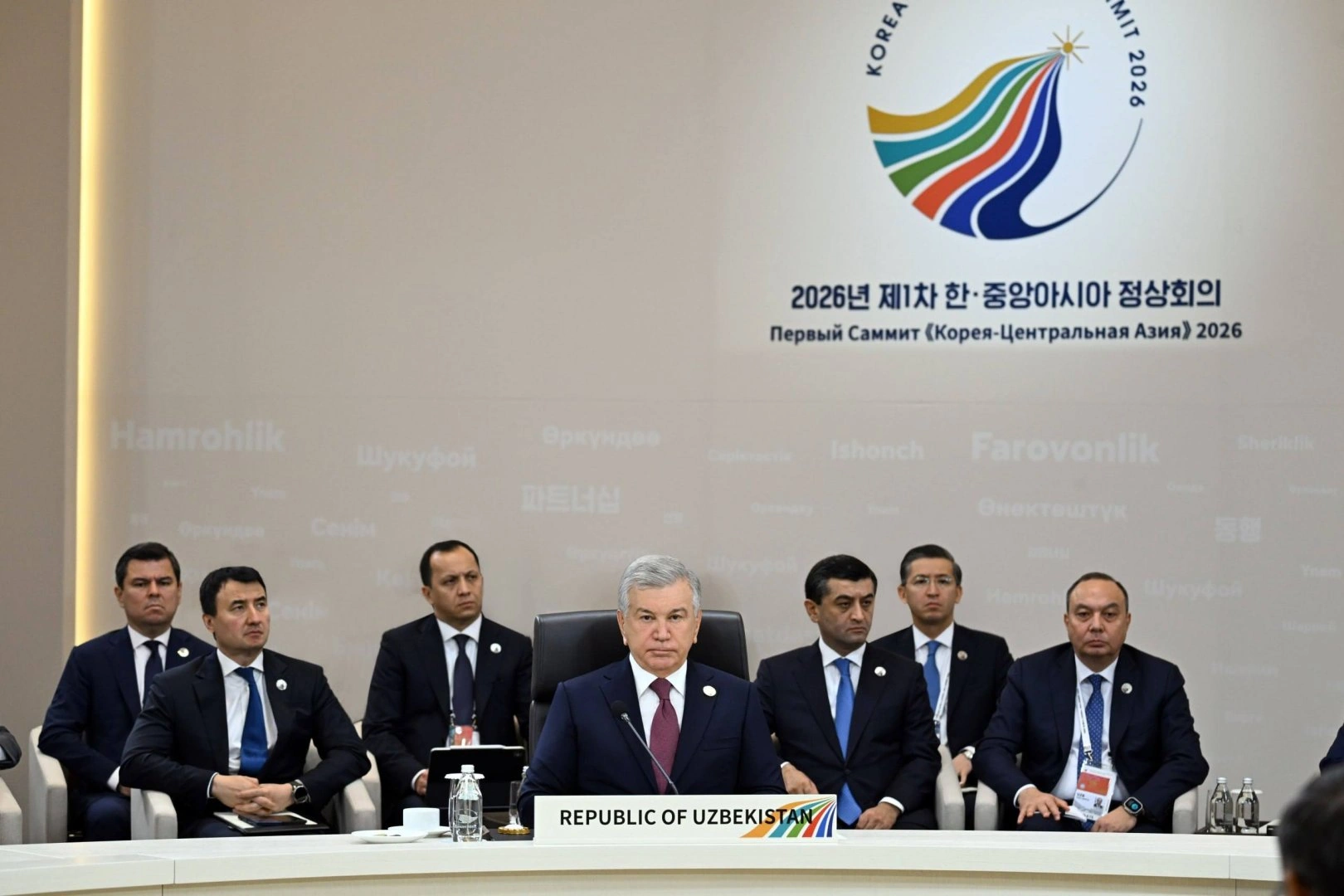
Speaking at the first Central Asia-South Korea summit in Seoul,
Mirziyoyev said the proposed climate partnership could combine
South Korea’s experience in overseas climate projects with Central
Asia’s potential to host green investments.
“Central Asia is ready to provide optimal conditions and become
a reliable platform for green investment,” Mirziyoyev said.
He proposed launching the Climate and Carbon Partnership to
support cooperation on climate action, the energy transition and
air quality.
Mirziyoyev said the initiative could facilitate the transfer of
South Korean technologies and help Central Asian countries
transition toward circular and low-carbon economies.
“We welcome the joint initiative on climate, the energy
transition and air quality,” he said.
The Uzbek president also highlighted human capital as a
fundamental area for long-term cooperation, noting that people
under 30 account for more than half of Central Asia’s
population.
The region is facing growing demand for engineers and
specialists in technology and digital fields, he said, making the
development of relevant skills increasingly important for future
economic competitiveness.
Mirziyoyev proposed establishing a long-term Partnership for
Human Capital Development based on the principle of
“demand-training-employment.”
The model would directly link the workforce needs of South
Korean businesses with the educational potential of Central Asian
countries, helping prepare specialists for joint projects while
creating employment opportunities for young people.
“We see prospects in directly linking the personnel needs of
Korean businesses with the educational potential of our region,”
Mirziyoyev said.
He also identified young people as an important resource for
developing and deploying artificial intelligence and building
technological capabilities across Central Asia.
Mirziyoyev proposed using South Korean President Lee Jae Myung’s
“Indispensable Korea” doctrine as one of the key pillars for
advancing AI cooperation in the region.
The proposals were presented as two of five strategic areas
outlined by Mirziyoyev at the inaugural Central Asia-South Korea
summit, alongside long-term strategic planning, trade and
industrial cooperation, and critical minerals.
The summit brought together the leaders of Uzbekistan,
Kazakhstan, Kyrgyzstan, Tajikistan and Turkmenistan under the
chairmanship of South Korean President Lee Jae Myung.