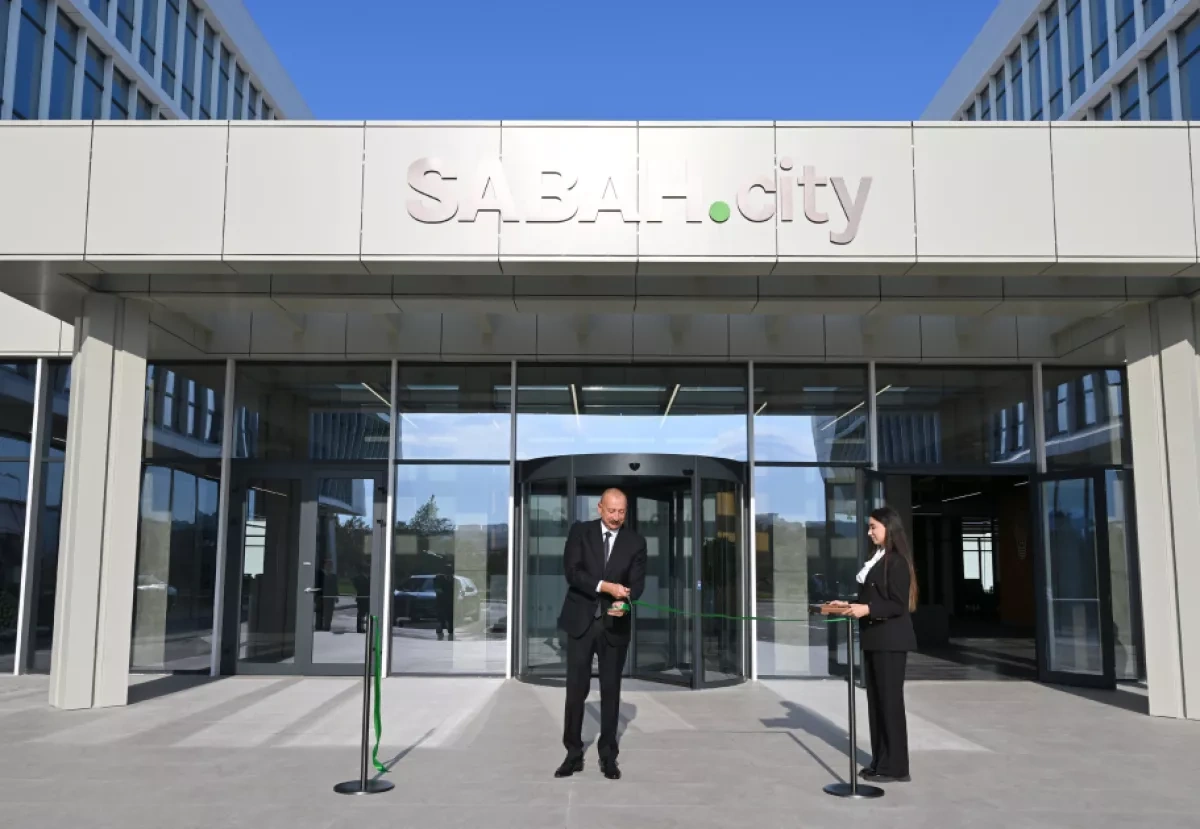
As the global economy moves towards a post-industrial model, the development of advanced information technologies is receiving increasing attention. Under the Unified Action Plan “Azerbaijan's New Digital Architecture”, approved by President Ilham Aliyev in February 2026, Azerbaijan has identified Fourth Industrial Revolution (4IR) technologies and artificial intelligence (AI) as key priorities. This includes strengthening specialised incubation centres and comprehensive innovation platforms where startups can grow and highly skilled professionals can be trained. Against this backdrop, the opening of the first phase of SABAH.city, an innovation hub established at the High Technologies Park of the Ministry of Science and Education in Baku, with the participation of President Ilham Aliyev, is particularly significant.
Speaking at the “Azerbaijan's New Digital Architecture” meeting in February, President Ilham Aliyev stressed the importance of these developments, saying: “The application of artificial intelligence, the creation of data centers, and the introduction of reforms related to digitalization actually determine the future development of countries. Certain work has been done in this direction in Azerbaijan [...] our initiatives in the areas of digitalization, artificial intelligence, and the establishment of data centers should ensure the long-term and sustainable development of our country.”
To advance this process, the Concept of Digital Development of Azerbaijan and the Artificial Intelligence Strategy of Azerbaijan for 2025–2028 were adopted last year at the initiative of the President. Their overarching goal is to drive the digital transformation of Azerbaijan’s economy, including by developing an Industry 4.0 framework.
In addition, Azerbaijan has taken steps to develop its government cloud system, G-Cloud, and build Big Data infrastructure. The Ministry of Economy’s Centre for Analysis and Coordination of the Fourth Industrial Revolution (4SIM Azerbaijan) is also playing a role in developing the country’s artificial intelligence ecosystem. Over the past three years alone, a range of incubation and acceleration programmes, hackathons and ideathons have been organised, supporting more than 600 startups. Azerbaijani universities and research centres, as well as international partners, have played an active role in these efforts.
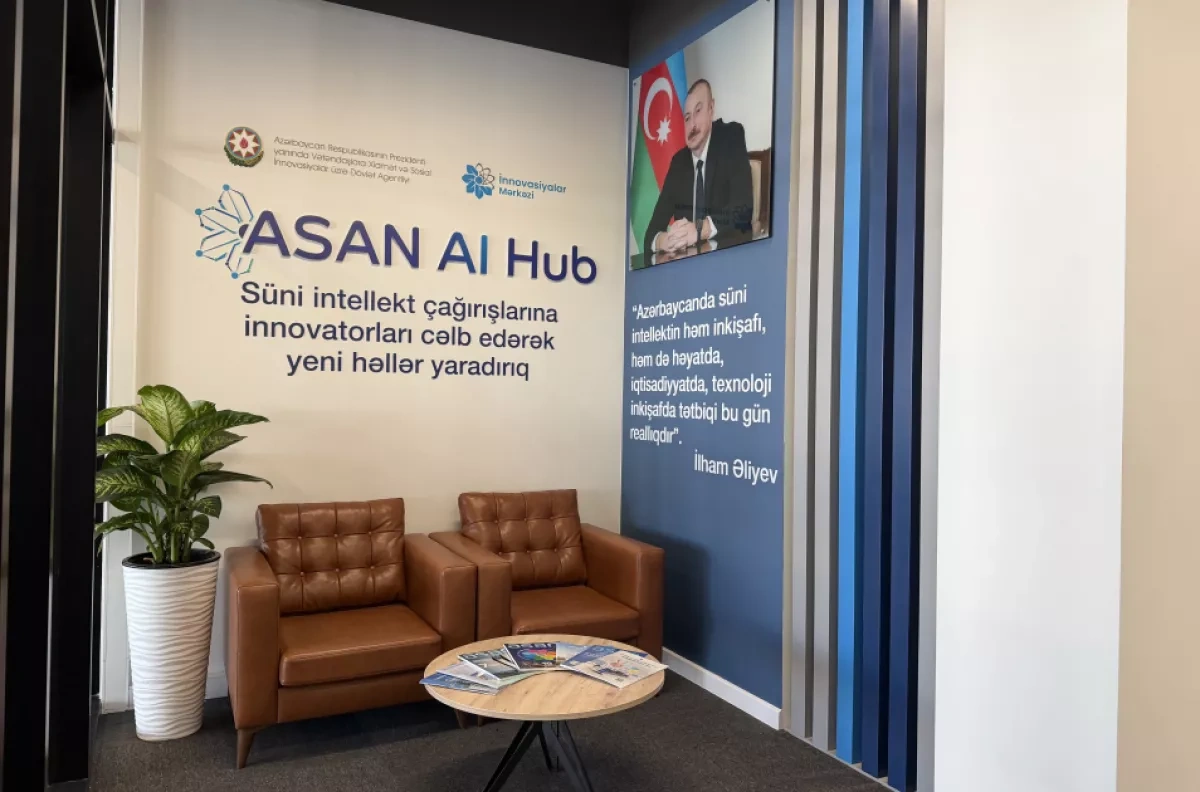
Against this backdrop, the opening of the first phase of the SABAH.city innovation hub marks an important milestone in the development of the country’s new digital architecture. The hub brings together a range of infrastructure and initiatives, including the ASAN Artificial Intelligence Centre (ASAN AI Hub). The centre is designed to support AI innovation in Azerbaijan, bring researchers, government institutions and the private sector together on a single digital platform, and strengthen cooperation among government, business and academia through an open innovation model.
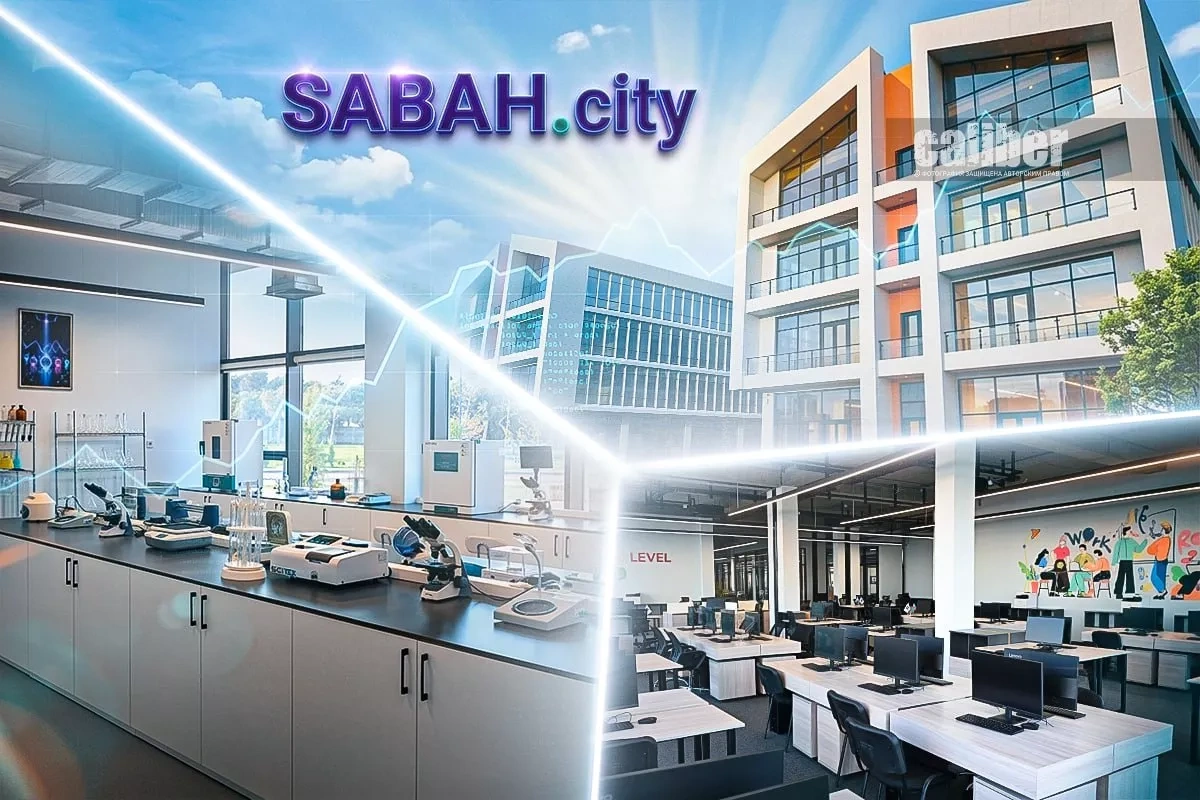
The SABAH.city innovation hub houses 13 educational and research laboratories established by Baku State University, Azerbaijan Technical University and Azerbaijan State Oil and Industry University. The laboratories are focused on research and applied projects in fields including artificial intelligence, robotics, computer science, cybersecurity, biotechnology, nanobiology, nanophysics, chemistry and telecommunications.
The hub also features a coworking area — a shared workspace for individual professionals and companies — which accommodates 12 startups, as well as 22 offices for local and international technology companies, corporate research and development centres, and other participants in the innovation ecosystem.
Education and talent development have been identified as key areas of SABAH.city’s activity. More than 1,500 students from the universities mentioned above are expected to be brought into the innovation hub to study engineering, information technology and applied sciences. Once the hub becomes fully operational, the number of daily visitors is expected to reach around 3,000.
Thus, SABAH.city combines two core functions: developing human capital and creating a hub to support applied research, technology transfer and the competitiveness of the country’s innovation ecosystem. In doing so, it is designed to forge stronger links between education and science on the one hand and industry and government initiatives on the other.
Under the Concept of Digital Development of Azerbaijan and the Artificial Intelligence Strategy of Azerbaijan for 2025–2028, the Innovation and Digital Development Agency of Azerbaijan (IDDA) has identified 10 priority areas for innovation organisations and the incubation ecosystem. In addition to AI, these include cybersecurity, cloud and digital infrastructure, gaming and creative technologies, startup development and venture entrepreneurship, the Internet of Things (IoT), green energy and software development, among others.
Another important development is the planned expansion of the principle of extraterritoriality for technology park residency. As Sabina Humbatzada, head of the Legal Support Department at IDDA, recently explained: “Previously, a technology park resident was understood to mean only individuals and legal entities operating within a specific territory. Later, the concept of an external technology park resident was introduced, allowing such residents to operate remotely.”
This is a significant development, as it will allow more organisations working in digitalisation and innovation to access the same benefits and incentives available to other technology park residents.
At the same time, the future development of new large-scale, multifunctional facilities similar to SABAH.city could help address a number of sector-specific challenges. One such measure could be to ease fiscal requirements and introduce other incentives to attract digital nomads and IT freelancers to incubation ecosystems.
Within the framework of public-private partnerships, startups could also be supported through the procurement of their digital products, helping them generate their first revenues and gain access to the market. Over time, it will also be important to strengthen the expertise of IT entrepreneurs. In many cases, a weak or predominantly secondary startup pipeline — made up of foreign services adapted for the local market — results in technological products that are difficult to scale and replicate in other markets. As a result, incubators are often forced to devote their resources not to accelerating businesses, but to providing startup founders with basic training.
For Azerbaijan’s incubation ecosystem to mature, the focus will therefore need to shift increasingly towards developing original, scalable technologies and building the entrepreneurial expertise required to take them successfully into international markets.
In this context, it is also worth noting that Azerbaijan has relatively few IT entrepreneurs who have successfully built, scaled and exited technology businesses in international markets. As a result, incubators have a limited pool of qualified local mentors with genuine international experience. This has also been one of the reasons why, until recently, large domestic companies have been reluctant to entrust operational projects to young startups.
Against this backdrop, cooperation between the local incubation ecosystem, major business groups and government institutions should be strengthened, with startups given opportunities to work on projects that address the real needs of major market players. It should also be recognised that most incubation centres remain dependent on government funding and foreign grants, while relying to a considerably lesser extent on orders from major telecommunications operators and banks. Azerbaijan therefore needs to gradually move towards the classic venture incubator model, under which incubators can generate returns by taking equity stakes in promising startups.
Taken together, the continued development of SABAH.city, the opening of new innovation hubs, stronger incentives for IT entrepreneurs and efforts to address the challenges outlined above can help advance Azerbaijan’s broader, multifaceted objective: transforming the economy through digitalisation and positioning the country as a regional IT hub.