BAKU, Azerbaijan, September 10. South Korea’s
experience in transitioning from an aid recipient to an aid donor
is similar to Azerbaijan’s development path and creates a special
bond between the two countries, Ambassador Extraordinary and
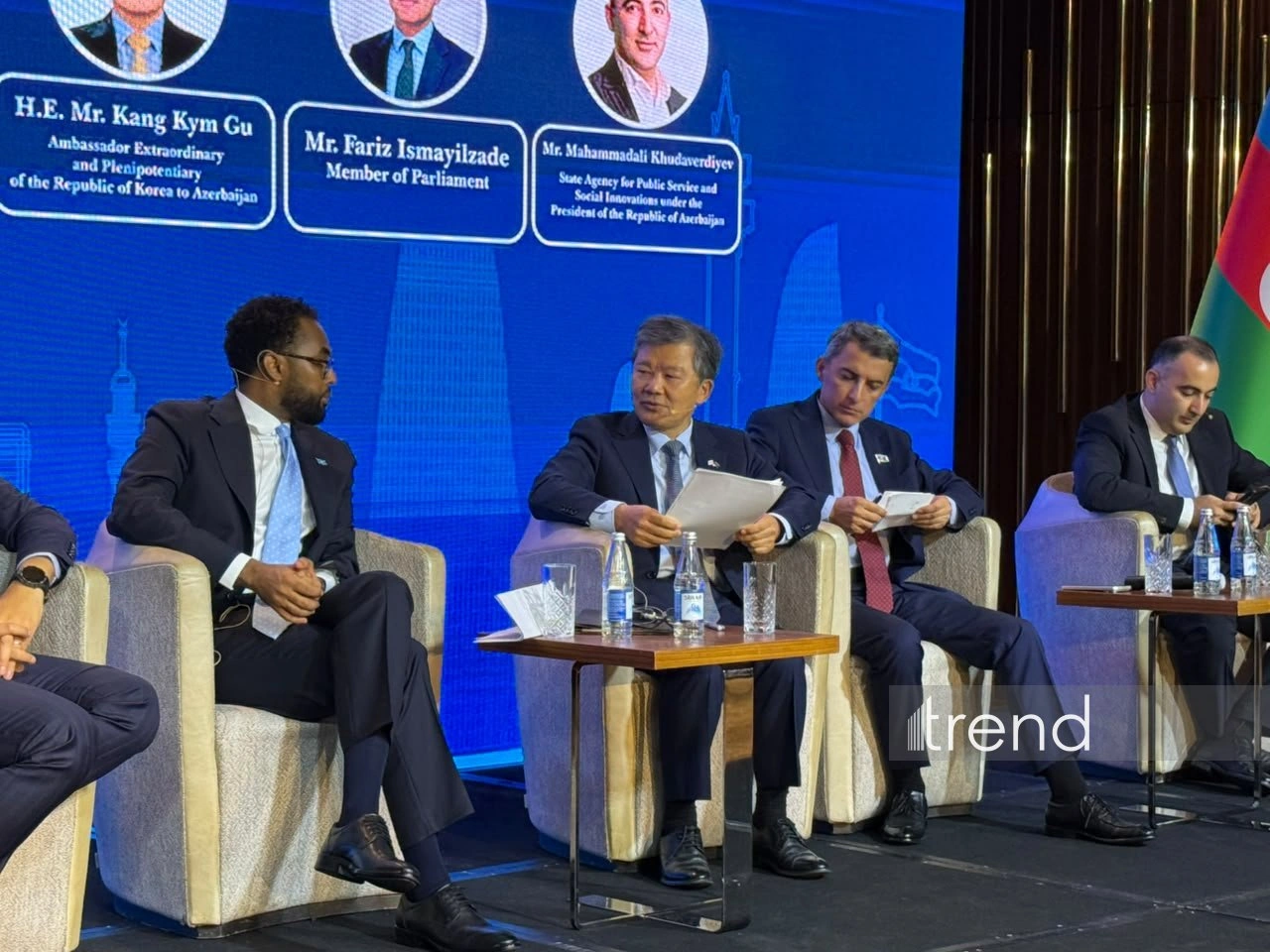
Plenipotentiary of the Republic of Korea to Azerbaijan, Kang Kymgu
said, Trend's
correspondent reports from the event.
He made the statement during a panel session titled
“Partnerships for Sustainable Development and Effective
Humanitarian Assistance,” held as part of the conference “Advancing
Global Solidarity Through Humanitarian Assistance and Developmen
Cooperation,” dedicated to the 15th anniversary of the founding of
the International Development Cooperation Agency.
The ambassador noted that from the time it gained independence
in 1945 until the late 1990s, Korea received a total of $12.7
billion in foreign aid.
“Foreign aid was an important resource for the Korean people,
helping them meet their basic needs and maintain a minimum standard
of living,” Kang Kymgu.
According to him, a number of important factors influenced the
rapid transformations in Korea.
The ambassador noted that the Korean government systematically
channels foreign aid to key areas such as compulsory education,
export-oriented industrial infrastructure, and agricultural
modernization.
“This approach ensures that every dollar serves as a catalyst
for long-term self-sufficiency, rather than merely temporary aid,”
he emphasized.
Kang Kymgu said that a strong commitment to poverty eradication
and national development is accompanied by the resilience,
discipline, and dedication of the Korean workforce to education and
national productivity.
He added that the international community’s steadfast support
during Korea’s most difficult times created a crucial opportunity
for the country to lay the foundation for economic development.
According to the ambassador, through the strategic and effective
use of foreign aid, the government and the people overcame
difficulties and achieved rapid economic growth in conjunction with
domestic development factors.
“In 2000, Korea officially and proudly graduated from the list
of countries receiving official development assistance. The
transition from an aid recipient to an aid donor is a unique
experience for Korea and an advantage that many traditional donors
do not have,” the diplomat said.
Kang Kymgu emphasized that Azerbaijan also has a similar
advantage in this regard.
“Azerbaijan and Korea have different histories and different
experiences. However, I believe that our shared journey of
transformation from aid recipients to aid donors allows us to
understand each other more deeply and creates a special bond
between our two countries,” the ambassador noted.
He noted that the global economic and environmental situation,
as well as the field of international development, are undergoing
significant changes. Noting that regional conflicts have
intensified in recent years, global crises have become more
complex, and challenges have become more diverse, the diplomat
pointed out that the burden of these crises falls primarily on the
most vulnerable segments of the population.
The ambassador noted that global development financing has
declined significantly.
“According to the Organization for Economic Cooperation and
Development (OECD), total official development assistance (ODA) in
2025 fell by 23% compared to 2024. This is the largest decline on
record,” Kang Kymgu emphasized.
According to him, a number of major donor countries are facing
growing financial difficulties, which is affecting the priorities
of official development assistance (ODA) in national policy.
“Today, ODA is under increasing pressure to demonstrate better
results and greater effectiveness,” the ambassador added.
The ambassador stated that the Korean government is also seeking
ways to enhance the effectiveness of official development
assistance (ODA) and ensure that programs yield meaningful results,
taking these changes into account.
He also noted that one of the Korean government’s top priorities
is to continue responding to global crises and promoting inclusive
values.
“To this end, the South Korean government will continue to
address global challenges such as climate change, public health,
and food security, as well as expand its humanitarian aid efforts.
This includes strengthening partnerships with international
organizations to address climate change and preparing to implement
an agenda that goes beyond the Sustainable Development Goals,” the
diplomat said.