BAKU, Azerbaijan, September 10. Humanitarian
aid, development cooperation, and peacebuilding can no longer be
viewed as separate areas, the President of the Turkish Cooperation
and Coordination Agency (TİKA), Abdullah Eren said, Trend's correspondent reports
from the event.
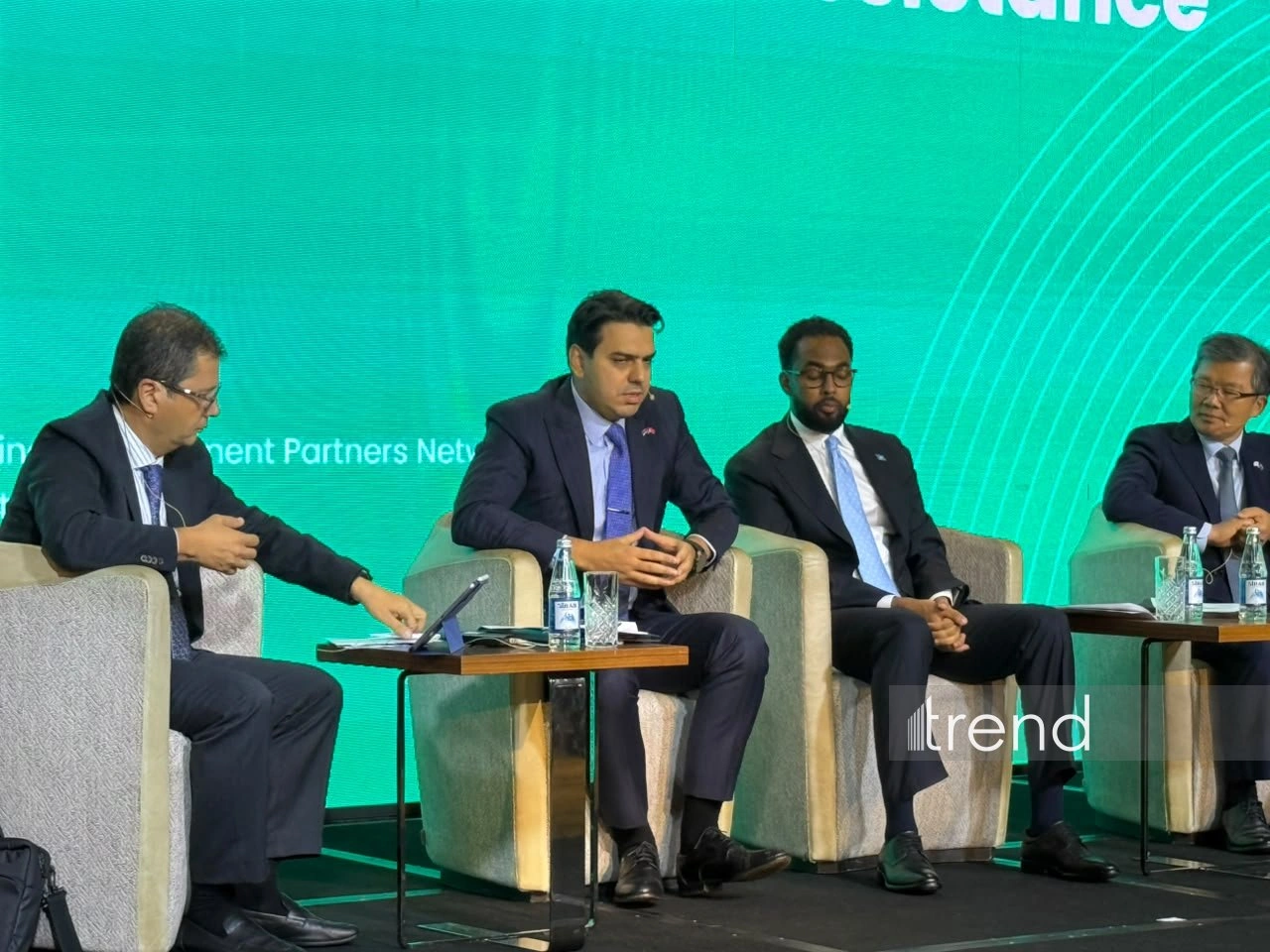
Eren made the statement during a panel session titled
“Partnerships for Sustainable Development and Effective
Humanitarian Assistance,” held as part of the conference “Advancing
Global Solidarity Through Humanitarian Assistance and Developmen
Cooperation,” dedicated to the 15th anniversary of the founding of
the International Development Cooperation Agency.
He noted that in recent years, the number of conflicts worldwide
has increased, wars continue in Europe and the Middle East, and in
Gaza, the displacement of people from their homes and the descent
into poverty and instability are causing serious concern.
“The link between humanitarian aid, development cooperation, and
peacebuilding is very important. We can no longer view them as
separate areas,” Eren emphasized.
The head of TIKA stated that there are concrete examples of
Turkey’s humanitarian aid, development cooperation, and
peacekeeping activities in countries such as Somalia and
Ukraine.
Moreover, he noted that the creation of a more representative
and just world order is not a requirement imposed on any particular
country.
The head of TIKA highlighted three key points from Türkiye’s
experience. According to him, there is currently a shift from a
vertical to a horizontal model of cooperation.
“The previous model was vertical. There were donor countries and
recipient countries. Donor countries provided aid to recipient
countries under certain conditions. The new model is cooperation
among equals. Here, knowledge, technology, and experience flow in
all directions simultaneously,” he added.
A. Eren emphasized that humanitarian aid, development
cooperation, and peacebuilding are integral parts of a single
process.
He cited the situation in Gaza as an example and said that the
phase of providing humanitarian aid is currently underway, while
the borders remain closed.
“We at TIKA are working in Ramallah, and we used to work in Gaza
as well. Unfortunately, under the current circumstances, we are
unable to operate there. However, these three sectors are
converging, and we are now talking about a single, continuous
process,” noted A. Eren.
The TIKA president also emphasized that the importance of
South-South and trilateral cooperation has grown in recent years.
He stated that, against the backdrop of budget cuts at the U.S.
Agency for International Development (USAID), concerns have arisen
regarding the future of development cooperation.
He noted that this issue is particularly important for
vulnerable African countries.
“Of course, funding is a major issue. We need large budgets.
Unfortunately, official development assistance has been declining
over the past few years. We cannot carry out these projects without
money. But it’s not just about money. We also need expert
knowledge, and we need to strengthen local institutions rather than
replace them,” A. Eren said.
He noted that TIKA currently operates in 53 countries and has 57
offices.