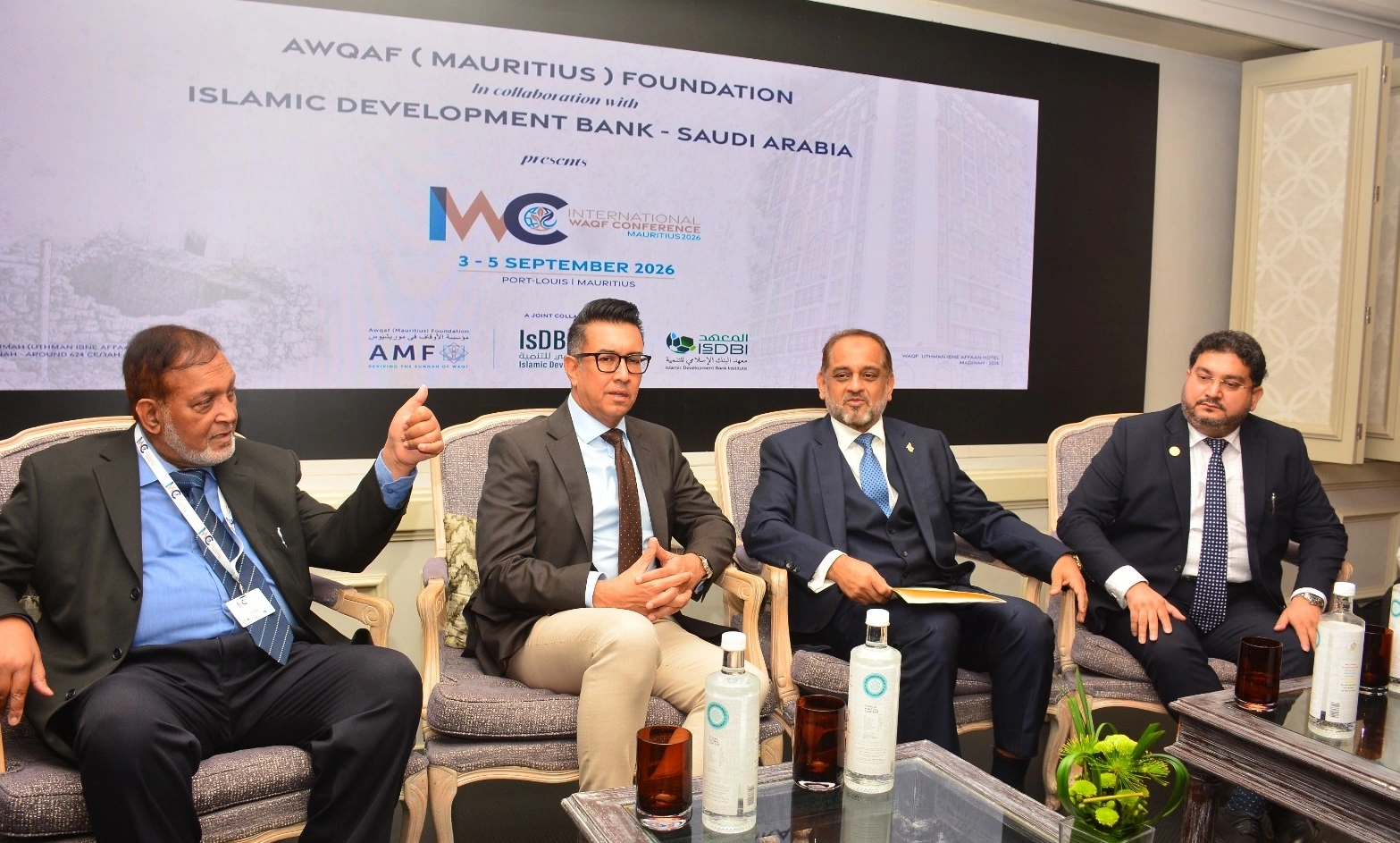
BAKU, Azerbaijan, September 10. The Islamic
Development Bank Institute (IsDBI) and Awqaf (Mauritius) Foundation
(AMF) successfully concluded the International Waqf Conference held
in Port Louis, Mauritius, from 3 to 5 September 2026.
Organized under the theme “Reviving Waqf for Community
Empowerment: Building Strong Waqf Foundations through Strategic
Management, Good Governance and Sustainable Investment,” the
conference provided a high-level platform to explore how waqf can
be revitalized as a heritage institution and transformed into a
modern driver of socio-economic development.
The three-day programme convened ministers and lawmakers, waqf
founders and managers, diplomats, imams, legal practitioners,
non-governmental organizations, community leaders, academics, youth
representatives and members of the wider Muslim community. In
addition to Mauritius, participants from Comoros, Madagascar,
Malaysia, Singapore, Maldives, Mozambique, Reunion, Seychelles,
South Africa, Tanzania and the United Kingdom attended the
conference.
Participants examined the foundational principles of waqf,
governance models, asset development strategies, investment
approaches, practical solutions and examples, legal documentation
and the role of waqf institutions in promoting transparency,
accountability and long-term social impact.
The conference opened with a welcome address from AMF Chairman,
Dr. Najmul Hussein Rassool, and speeches by the
Honourable Muhammad Reza Cassam Uteem, Minister of
Labour and Industrial Relations, and the Honourable Shakeel
Ahmed Yousuf Abdul Razack Mohamed, Minister of Housing and
Lands.
This was followed by a keynote address by Yahya Aleem ur
Rehman, Head of Knowledge Leaders, IsDBI, on “Reviving
Waqf: Unlocking a Heritage Asset for Impactful Socio-Economic
Development.” Sessions over the first two days covered the history
and principles of waqf, the state of waqf in Mauritius, governance
and accountability models, sustainable structuring of waqf assets,
and international experiences from Southeast Asia, Europe and
Africa.
The programme also featured a panel discussion on the Waqf Act
1941 and a dedicated session on the financing of waqf projects by
IsDB’s Awqaf Properties Investment Fund (APIF) led by Dr.
Mohamed Ali Chatti and Dr. Hassan
Mahfooz. These discussions highlighted the importance of
enabling legal frameworks, sound fiduciary oversight, strong
documentation, professional asset management and innovative
financing in advancing the waqf sector.
The final day was dedicated to a capacity-building workshop on
“Strengthening Waqf Leadership: Capacity Building for Waqf Managers
(Mutawallis) and Legal Practitioners.” The workshop focused on
practical training in waqf development, management and operations,
as well as the drafting of waqfnama, or waqf deeds, in line with
Shari’ah requirements and the Mauritian legal context. The capacity
building was delivered by experts from various jurisdictions
including Aboubacar Salihou Kante from the IsDB
Institute.
Experts from IsDBI, APIF and international partner institutions
shared practical insights on the roles of waqif, mutawalli,
beneficiaries and regulators; waqf development strategies and best
practices; the design of waqf development plans; and the essential
elements of a waqf deed. The training reinforced the need for clear
governance structures, robust investment policies, risk management,
compliance, monitoring and reporting mechanisms, and the effective
use of technology in waqf administration.
The participation by IsDBI and APIF representatives in the
conference underscored the IsDB Group’s commitment to supporting
member countries and Muslim communities in strengthening Islamic
social finance institutions, promoting knowledge-based solutions,
and helping unlock the developmental potential of waqf. The
Institute’s contribution reflected its broader mandate to advance
capacity development, applied research and knowledge sharing in
Islamic economics and finance.
IsDBI commends the Awqaf (Mauritius) Foundation for organizing
the conference and for its efforts to raise awareness, build
institutional capacity and encourage community engagement around
waqf in Mauritius. The Institute also acknowledges the
contributions of speakers and experts from Mauritius, Saudi Arabia,
Malaysia, Singapore, South Africa, Türkiye and the United Kingdom,
whose participation enriched the exchange of experiences and
practical solutions.