BAKU, Azerbaijan, September 10. The strategic
importance of the Middle Corridor is growing amid geopolitical
tensions and disruptions in traditional supply chains. In addition
to its important role in connecting Europe with Central Asia and
China, Türkiye is strengthening its position as a regional
logistics hub thanks to its access to Iraq, the Middle East, and
the Gulf Cooperation Council (GCC) countries.
This was announced in a report published by the International
Road Transport Union (IRU).
According to the report, IRU President Radu Dinescu, speaking at
the 11th Economy and Logistics Summit in Türkiye, stated that
geopolitical tensions and disruptions in traditional supply chains
are increasing demand for faster, more flexible, sustainable, and
predictable transport routes.
He noted that Türkiye is well-positioned in this changing
landscape. The country connects Europe with Central Asia and China
via the Middle Corridor, and also provides access to Iraq, the
Middle East, and the GCC region via the Development Road and the
Syrian route.
“The IRU supports the development of road transport corridors
between Türkiye and Europe, extending to the Gulf countries. The
project to build the Development Road through Iraq is viewed as an
important strategic opportunity for establishing a fast land
connection between the Gulf countries, Türkiye, and Europe.”
The implementation of the TIR (UN-backed Transports
Internationaux Routiers) system in Iraq has improved the efficiency
of this route. Since 2025, more than 5,000 TIR carnets have been
used on the Iraqi route. Pilot TIR shipments from the Arar border
crossing in Iraq have also demonstrated the route’s potential. For
example, the delivery time for cargo from Gaziantep to Riyadh was
3.9 days, and to Medina—3.7 days.
The resumption of the Syrian route in 2025 also reestablished an
important road transport link between Türkiye, Jordan, and the Gulf
States. “The use of more than 5,000 TIR carnets on this route also
attests to the high demand for trade and freight transport,” stated
the IRU president.
Radu Dinescu emphasized that the Middle Corridor connects China
and Central Asia with Europe via the Caspian region and Türkiye,
and its importance as an alternative route for trade between Europe
and Asia is growing as companies diversify their supply chains.
According to him, Türkiye can further strengthen its position as
a major logistics and transportation hub by making transportation
along the Central Corridor faster, more digital, and more
predictable: “IRU is collaborating with governments and customs
authorities in this regard through mechanisms such as TIR, TIR
Green Lanes, TIR-EPD, and eTIR. The goal is to reduce waiting times
and unnecessary procedures at borders.”
Another important step in the development of digital
connectivity along the Middle Corridor was the launch of the first
eTIR operations connecting Azerbaijan, Turkmenistan, and Uzbekistan
via the Caspian Sea in July 2026.
According to the IRU, the organization was also recognized at
the summit for its contribution to the regional transport and
logistics sector.
The IRU President noted that the development of new transport
corridors should not be limited to infrastructure alone but must be
supported by efficient border procedures, digitalization, and
harmonized regulations: “The organization will continue its work to
transform the Middle Corridor, the Road to Development, and Syrian
routes into fast, safe, and predictable trade routes based on TIR
and digital trade facilitation mechanisms.”
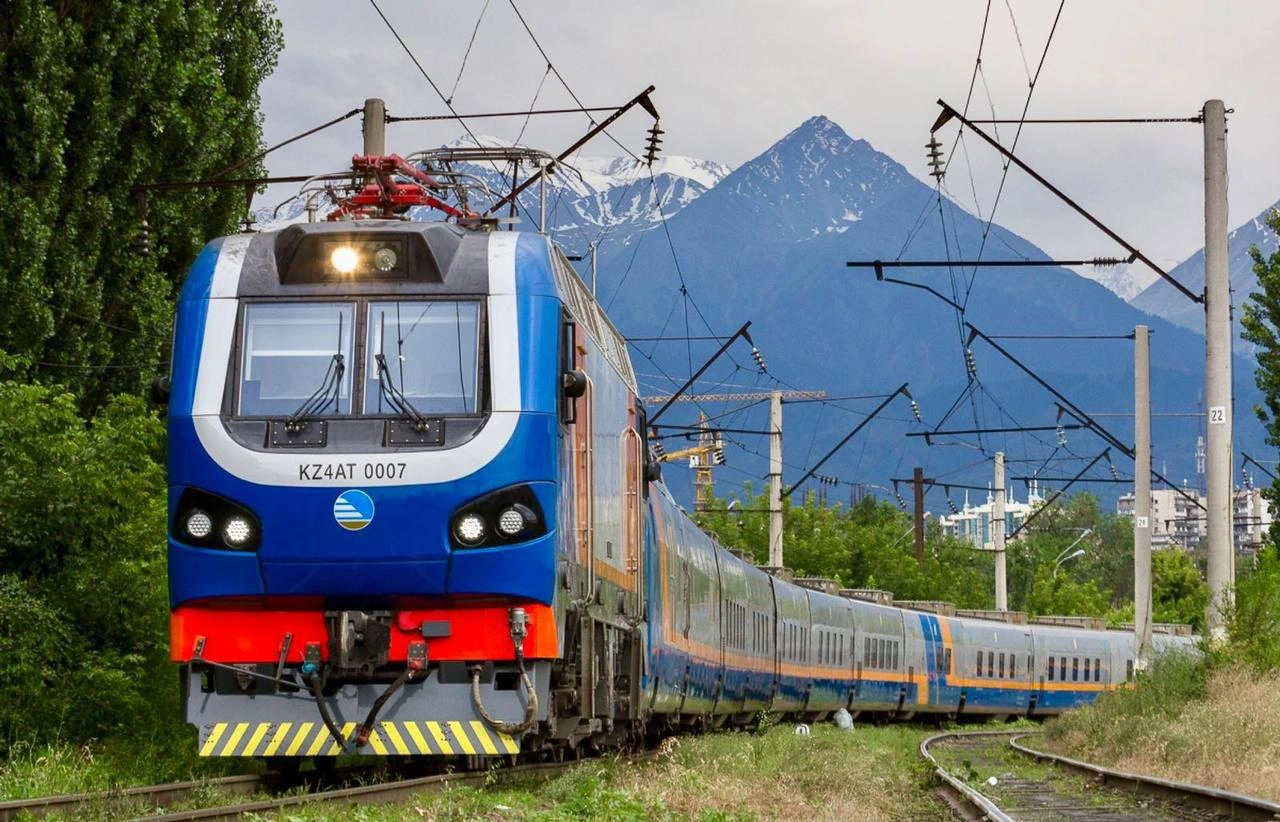
The Middle Corridor is a transport and trade route connecting
Asia and Europe, passing through a number of countries in the
region. It serves as an alternative to the traditional Northern and
Southern Corridors.
The route begins in China and passes through Central Asian
countries such as Kazakhstan, Uzbekistan, and Turkmenistan, across
the Caspian Sea, through Azerbaijan, Georgia, and Türkiye, before
reaching Europe. The Central Corridor is a land route connecting
the eastern regions of Asia, including China, with Europe,
bypassing the longer sea routes.