BAKU, Azerbaijan, September 8. Specific
projects are planned to be prepared and preliminary work
implemented this year within the framework of the UN Habitat's $10
million climate adaptation programme in Azerbaijan, a program
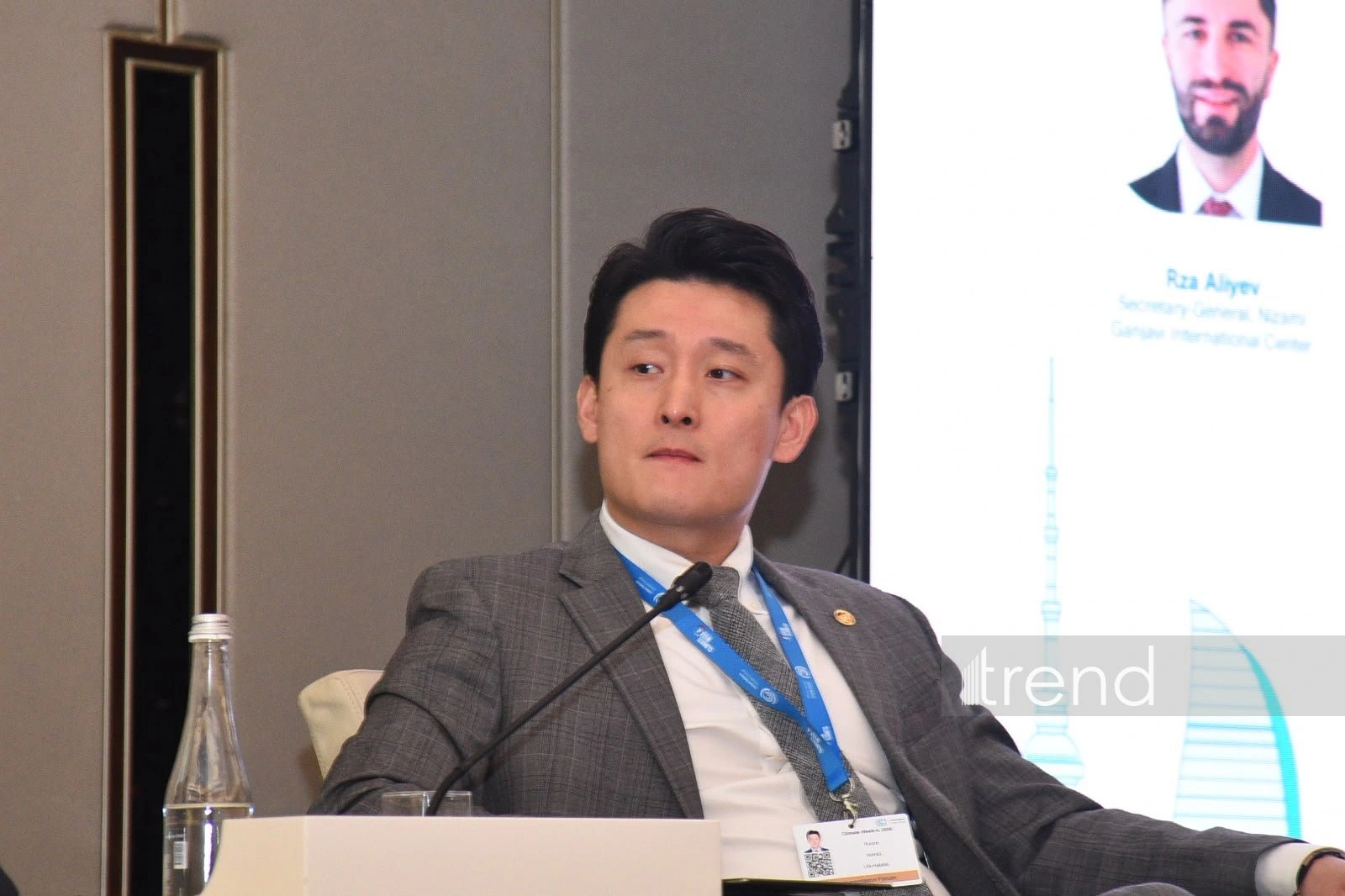
manager at the UN Habitat office in Azerbaijan, Runze Wang, told
Trend in an
interview.
According to him, the $10 million Adaptation Fund programme is a
four-year initiative implemented by UN-Habitat in partnership with
UNEP and IOM, under the leadership of Azerbaijan’s Ministry of
Ecology and Natural Resources.
"It combines national-level climate planning with three very
concrete local pilots in Greater Baku, Neftchala and Astara," he
said.
Wang noted that in Baku, we are preparing a climate-resilient
hybrid park combining urban greening and public space with
stormwater management and water-sensitive design.
"In Neftchala, the programme will develop an enhanced
early-warning system addressing risks including flooding, sea- and
river-level fluctuations and salinisation, with the objective of
improving timely information for more than 20,000 people," he
explained.
According to him, in Astara, the focus is on rainwater
harvesting and integrated water management. demonstrating how
rainfall can be captured and reused rather than simply becoming
runoff.
Wang pointed out that during this year, the emphasis will be on
preparatory work for projects.
"During 2026, the emphasis is on getting these investments
right: site assessments, baseline data, consultations, feasibility
work and technical preparation. These are the first results we
expect to see over the coming months. Physical installations and
construction will then follow in subsequent implementation stages,"
he clarified.
The programme manager stressed that for climate adaptation, good
preparation is itself a result.
"The objective is not simply to build quickly, but to make sure
that what we build remains useful under future climate conditions,"
Wang noted.
Changes in Caspian Sea level
Wang said that there is no single infrastructure solution to
protect people and urban infrastructure in coastal areas such as
Baku, Neftchala, and Astara, amid changes in the level of the
Caspian Sea and increasing climate risks.
"Our approach is to combine better climate data, risk-informed
spatial planning, nature-based solutions, early warning and smarter
water management.
According to him, urban infrastructure is designed for long-term
use, but environmental conditions change.
"A road, a port, a drainage outlet or a neighbourhood cannot
simply move when a shoreline changes. This is why cities
increasingly need adaptive and anticipatory spatial planning—using
different climate and water-level scenarios to understand how
settlements, infrastructure and ecosystems may interact in the
future," Wang mentioned.
He underscored that the three pilots will allow to apply this
approach in different directions.
"In Baku, the hybrid park will explore how public space can also
function as climate infrastructure—helping absorb and manage
stormwater, reduce heat and improve urban liveability," he
noted.
Indicating the intersection of river, coastal and salinity risks
in Neftchala, the programme manager said that early warning and
risk information can help authorities and communities act
earlier.
"In Astara, rainwater harvesting and improved water management
can turn heavy rainfall from a potential hazard into a usable
resource.
A useful way to think about this is: cities can face too little
water and too much water at the same time. The challenge is not
only how much water exists, but where it is, when it arrives, and
how the urban fabric responds to it," he emphasized.
Next priority after COP29 and WUF13
Wang said that after Azerbaijan hosted major international
events such as COP29 and WUF13, the main priority was to translate
the dynamics achieved at the international level into practical
results.
"I believe the next priority is implementation—turning the
international momentum created by COP29 and WUF13 into practical
changes in how cities are planned, financed and built," he pointed
out.
According to him, one of the important messages emerging from
WUF13 in Baku was the need to connect climate resilience with
integrated spatial planning, infrastructure, public space, housing,
data, local government capacity, and finance.
"The Caspian provides a very concrete context in which to apply
that thinking," Wang said.
He further pointed out that UN-Habitat's main advantage is at
the interface between climate evidence and urban
decision-making.
"We can support in translating climate and vulnerability data
into spatial plans, strengthening municipal and national planning
capacities, developing nature-based and water-sensitive urban
solutions," he noted.
According to Wang, UN-Habitat can also help to prepare
adaptation projects that are sufficiently robust and well-designed
to attract further public, private, and international climate
finance.
"The Adaptation Fund programme can serve as an important
demonstration platform for this. Working with MENR, UNEP, IOM,
local authorities and other partners, we want to generate practical
lessons that can be replicated beyond the three pilot locations,"
he concluded.