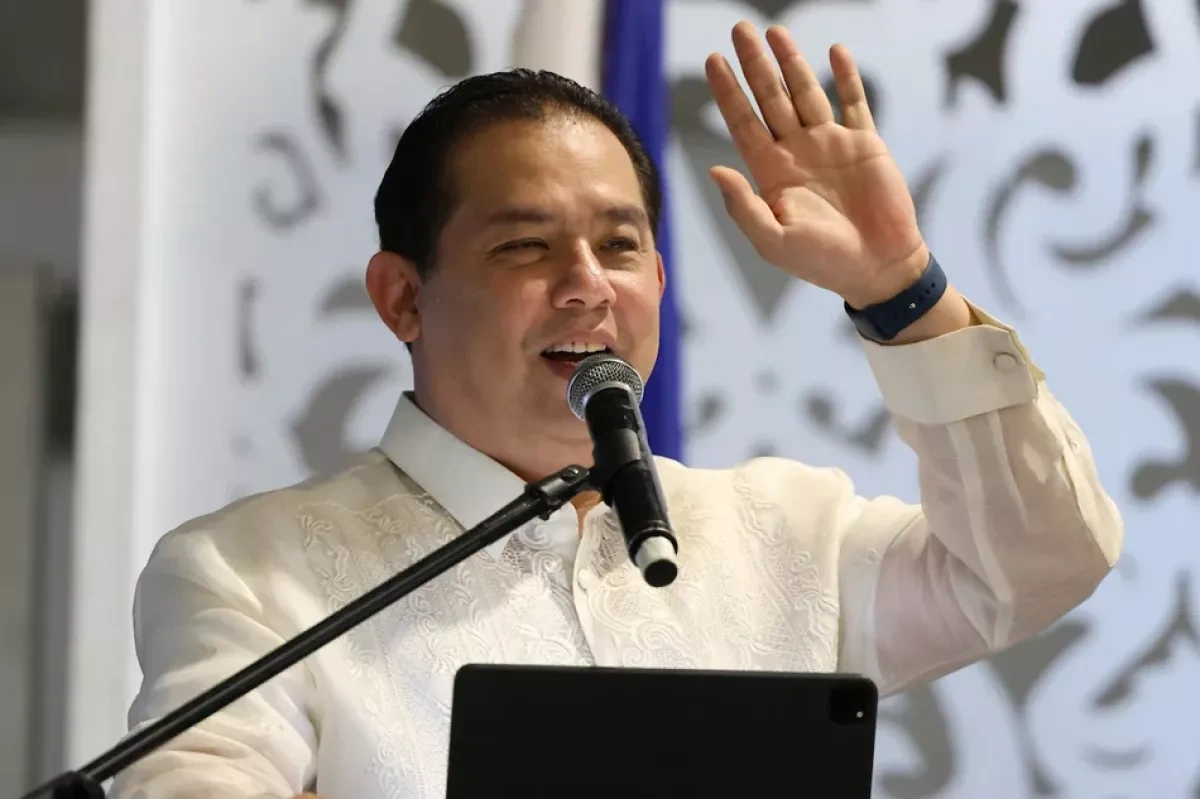
A Philippine anti-graft court ordered the arrest of former House Speaker Martin Romualdez, a cousin of President Ferdinand Marcos Jr., over allegations that he received about $118 million in kickbacks from government flood-control projects.
The arrest order comes two months after Marcos vowed in his State of the Nation Address to intensify his administration’s anti-corruption campaign, declaring that he was "not the president of my family" and "not the president of my friends".
The Office of the Ombudsman has accused Romualdez of amassing about 7.4 billion pesos ($118.21 million) through commissions, commitment fees, bribes and other illicit payments linked to flood-control projects awarded between 2022 and 2025.
Romualdez, who served as House speaker from 2022 to 2025 and was a key political ally of Marcos, has denied any wrongdoing.
His lawyer, Ade Fajardo, said Romualdez would face the allegations in court and was seeking no special treatment, asking only for "the same due process and fair hearing guaranteed to every Filipino".
The case comes as large parts of the disaster-prone Philippines are being inundated by monsoon rains, intensifying public scrutiny of alleged irregularities in flood-control projects and fueling widespread anger on social media.
The scandal has posed a major challenge for Marcos. Last year, he said 545 billion pesos ($8.71 billion) in flood-control spending between 2022 and 2025 had been affected by alleged irregularities and pledged a comprehensive investigation.
His executive secretary, as well as the budget and public works ministers, are among dozens of officials who have resigned or been dismissed over the scandal. Two sitting senators, a former senator and at least eight public works officials have also been detained.
"We are not singling out anyone. Everything is based on evidence," Ombudsman Jesus Crispin Remulla told reporters.
"This case proves that we do not take sides with anyone. We simply want those who are responsible to be held accountable."
Under Philippine law, plunder is generally a non-bailable offense.
Jean Encinas-Franco, a political science professor at the University of the Philippines, described the arrest order as "a step in the right direction", saying it could challenge perceptions that the Marcos administration had been selective in pursuing corruption cases.
By Vafa Guliyeva