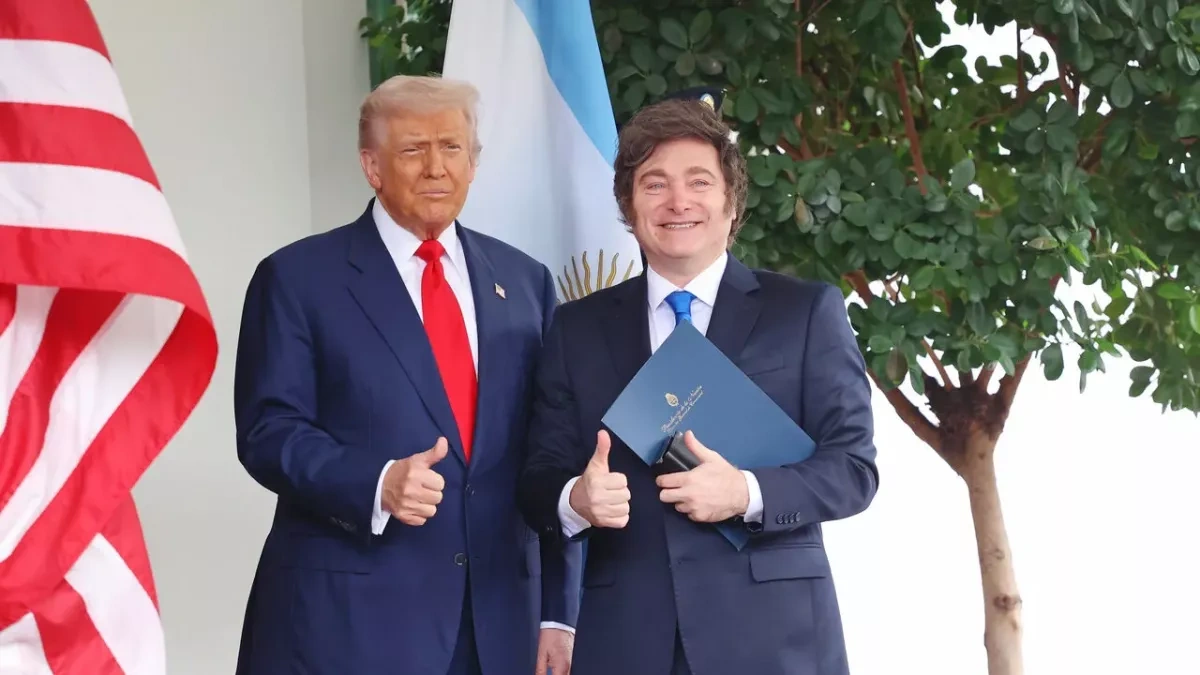
One could be forgiven for thinking that questions over sovereignty of the British overseas territory of the Falkland Islands had largely disappeared from the international agenda. Argentine President Javier Milei, however, has made clear that Buenos Aires has no intention of abandoning its claim, while recent comments by US President Donald Trump could push the long-running dispute back into the spotlight.
In a nationally televised speech on September 3, Milei reiterated Argentina’s position that the Falkland Islands, known in Argentina as the Malvinas, are part of its territory, as the Financial Times reports.
The comments came weeks after Argentina accused a British warship of making an “illegal journey” into waters it claims as its own. The incident occurred just hours after Argentina defeated England in a World Cup semi-final in July. The event prompted Argentina’s foreign minister to describe the Royal Navy's presence as a “military incursion” into Argentine waters.
During his latest, Milei also praised comments by Trump suggesting that the United States could revisit its largely neutral position on the Falklands dispute. The Argentine president linked the development to his close relationship with Trump.
Asked by British broadcaster GB News on September 3 whether the United States would assist Britain if an armed conflict erupted over the islands, Trump replied: “Your country was not there to help me,” referring to Britain’s decision not to take an active role in the joint US-Israeli campaign against Iran.
Previous US administrations have formally recognised Britain’s de facto administration of the islands but have not taken a formal position on the question of sovereignty.
Trump’s latest comments came following a response to a BBC reporter, asking whether he was reviewing the US position on the Falklands.
The US president replied: “I always review every position. That's just one of many.”
The islands have been settled and claimed by various European powers over the centuries, but the modern sovereignty dispute has involved Argentina and Britain, with both countries maintaining competing claims dating back to the 18th century.
Successive governments in Buenos Aires and London have continued to uphold their respective claims, although the issue has generally remained a secondary concern on their political agendas. Periodic developments, including the 1982 Falklands War and later disputes over territorial waters and oil exploration, have occasionally brought the issue back into public attention. The latest developments, however, could prove more consequential than being merely another round of diplomatic tensions.
Meanwhile, a spokesperson for British Prime Minister Andy Burnham said the UK's position on the islands remained “long-standing and unwavering.”
“Sovereignty rests with the UK, and the islanders' right to self-determination is paramount,” he said.
Any shift in Washington’s traditionally neutral position on the sovereignty dispute could represent a significant change in US foreign policy and further strain already complicated transatlantic relations.
As a British Overseas Territory, the Falkland Islands have internal self-government, while the United Kingdom remains responsible for their defence and foreign affairs.
Island's oil resources
In his September 3 speech, Milei also announced sweeping measures aimed at preventing development of the deep-sea Sea Lion oil project, located about 220 kilometres north of the islands. British Rockhopper Exploration and Israel's Navitas Petroleum plan to begin drilling in the coming months and aim to start producing oil in 2028.
Argentina considers the project an illegal exploitation of natural resources in waters it claims as its own.
Milei threatened tougher sanctions against companies involved in offshore drilling and announced additional funding for a naval base in Argentina’s southernmost province of Tierra del Fuego, aimed at strengthening the country's military presence near the islands.
“Argentina will not stand idly by,” Milei said. “Any further advance on the Malvinas Islands will be considered a violation of our national security.”
By Nazrin Sadigova