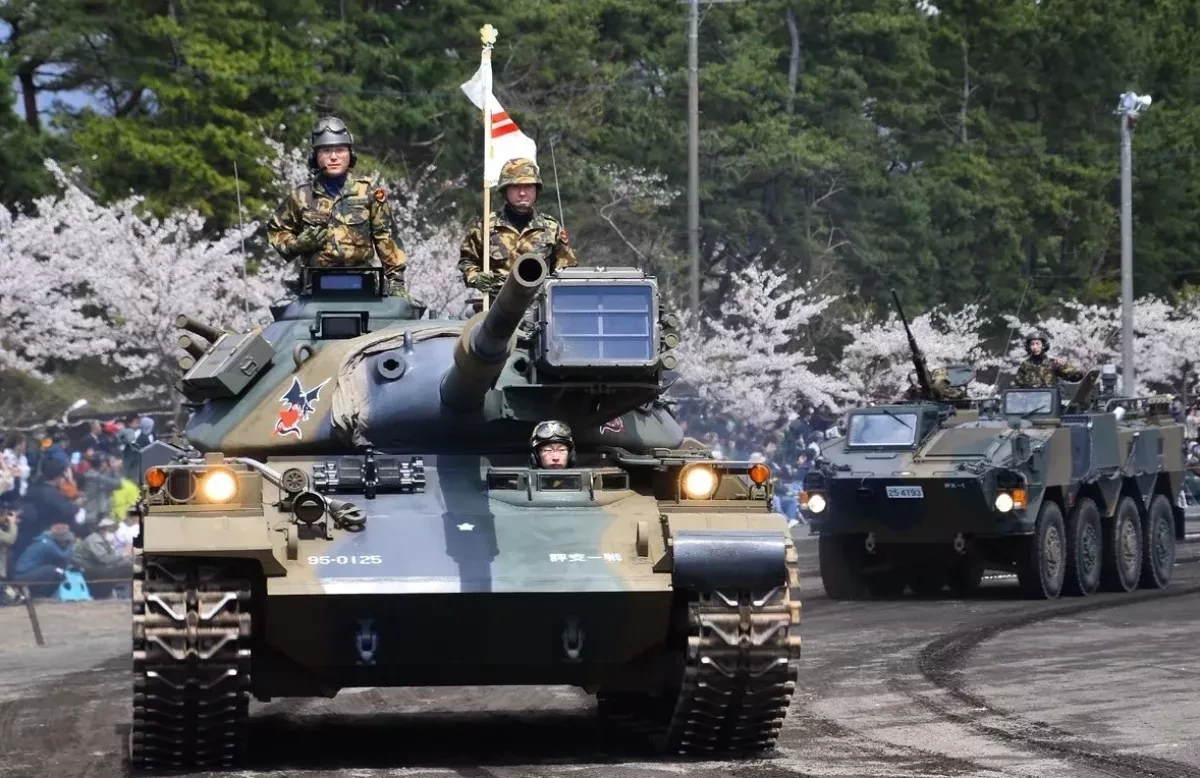
Japan’s Defence Ministry has requested a record ¥8.9 trillion ($56 billion) for the fiscal year beginning in April, as Prime Minister Sanae Takaichi prepares to unveil a new defence buildup plan later this year, Bloomberg reports.
The report said the proposed budget is 0.9% higher than the current fiscal year’s allocation.
Key priorities include unmanned air and maritime platforms, greater use of artificial intelligence in intelligence gathering and decision-making, and improved working conditions for military personnel.
The request covers only one year, but Japan is also expected to introduce a new medium-term defence spending plan by the end of 2026. The current five-year programme, adopted in 2022, envisaged around ¥43 trillion in defence spending.
As the upcoming review could significantly alter funding needs, the ministry has left costs unspecified for roughly 160 items. Any additional funding will be addressed during budget negotiations later this year.
The proposed budget includes ¥292 billion to acquire 17 MQ-9B drones for maritime surveillance, along with ¥167 billion for hypersonic missiles and related equipment. Funding is also planned for other long-range missiles capable of striking targets in enemy territory, reflecting Japan’s evolving strategy to deter potential attacks.
The next medium-term defence plan is expected to require greater spending as Japan responds to mounting regional security concerns, including increased Chinese military activity around the country and closer security ties between Russia and North Korea.
The government is expected to develop a more detailed defence blueprint by the end of the year, leaving Takaichi roughly three months to determine the size of the new spending programme. Finding ways to finance the expansion is likely to prove particularly difficult.
Former Prime Minister Fumio Kishida faced public opposition after announcing in 2022 that tax increases would help finance the defence buildup. An income tax increase included in the package was postponed several times and is now scheduled to take effect next year.
Japan’s existing five-year plan set a target of defence-related spending equivalent to 2% of GDP by fiscal 2027. After taking office last year, Takaichi pledged to reach that level two years ahead of schedule. The government achieved roughly 1.9% last fiscal year, or about ¥11 trillion, by including spending on areas such as the coast guard.
Maintaining a 2% target would nevertheless require substantially more funding because the original calculation was based on Japan’s 2022 GDP. Nominal GDP has since increased from an estimated ¥560 trillion to around ¥688 trillion, meaning spending equivalent to 2% of the current economy would amount to roughly ¥13.8 trillion.
A weaker yen has further increased the cost of purchasing military equipment from overseas. The ministry based its budget request on an exchange rate of ¥149 to the dollar, while the yen has traded near ¥160 in recent weeks.
Washington is also pressing Japan and other allies to increase defense spending towards 3.5% of GDP. For Japan, that would amount to approximately ¥24 trillion annually based on the current size of the economy.
A larger defense budget would add to pressure on Japan’s already strained public finances. Takaichi’s government has also announced expensive measures, including a two-year reduction in the consumption tax on food and a broad economic growth strategy, without fully explaining how the initiatives will be financed.
Concerns over Japan’s fiscal position have already pushed government bond yields higher. The benchmark 10-year yield reached its highest level in around three decades on Monday.
By Bakhtiyar Abbasov