BAKU, Azerbaijan, August 13. Turkmenistan and
the European Union have highlighted environmental protection and
preservation of the Caspian Sea ecosystem as areas for further
cooperation.
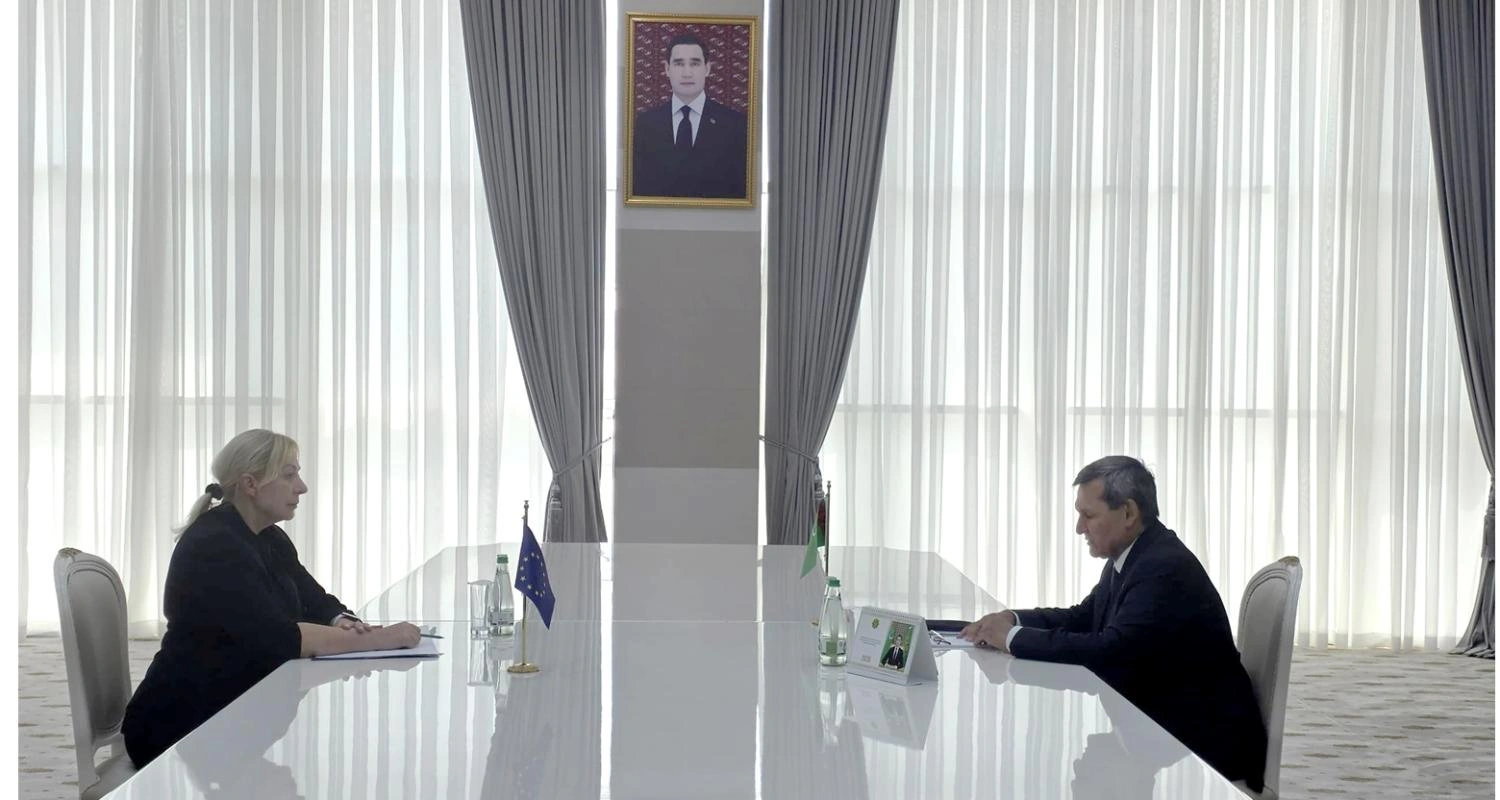
This was reported by the Turkmen MFA following the meeting
between Minister Rashid Meredov and EU Ambassador to Turkmenistan
Beata Peksa.
According to the ministry, the sides exchanged views on the
current state and prospects of Turkmenistan-EU cooperation, as well
as international and regional issues.
“Particular attention was paid to cooperation in environmental
protection and preservation of the ecosystem of the Caspian Sea,”
the ministry says.
The parties emphasized the importance of maintaining a
consistent political dialogue and constructive interaction to
strengthen and expand cooperation between Turkmenistan and the
EU.
Meanwhile, the EU-Turkmenistan environmental agenda is
increasingly linked to practical cooperation on water, energy and
climate resilience. Under its 2021-2027 cooperation framework, the
EU has allocated €18 million for bilateral cooperation with
Turkmenistan and supports initiatives focused on integrated water
and energy management, renewable energy, energy efficiency and
methane-emission reduction. The EU also works with Turkmenistan
through regional Team Europe programmes addressing water, energy
and climate change.
Environmental issues have also become part of the broader
economic cooperation agenda. In 2025, the EU and Turkmenistan
launched initiatives under the Global Gateway framework covering
energy and climate cooperation, while EU officials have highlighted
renewable energy, water management and climate resilience as areas
with potential for further engagement. In February 2026, EU
Ambassador Beata Peksa said that cooperation with Turkmenistan had
also included climate-change adaptation, environmental protection
and energy efficiency.
This agenda also corresponds with the areas identified by the
European Investment Bank (EIB) as potential fields for future
cooperation. In an interview with Trend, EIB Central Asia representative Olivier Kueny
said that, once a framework agreement enables operational
engagement, the bank could explore projects related to water and
clean energy in Turkmenistan under the Team Europe Initiative on
Water, Energy and Climate Change. He also pointed to the country's
solar and wind potential as an opportunity for developing more
diversified and sustainable energy systems.
For Turkmenistan, water management is particularly relevant
because environmental pressures intersect with agriculture, energy
use and infrastructure planning. The EU's approach therefore links
environmental cooperation with wider economic priorities rather
than treating it as a standalone area. This creates scope for
projects combining resource efficiency, renewable energy and
climate resilience with infrastructure development.