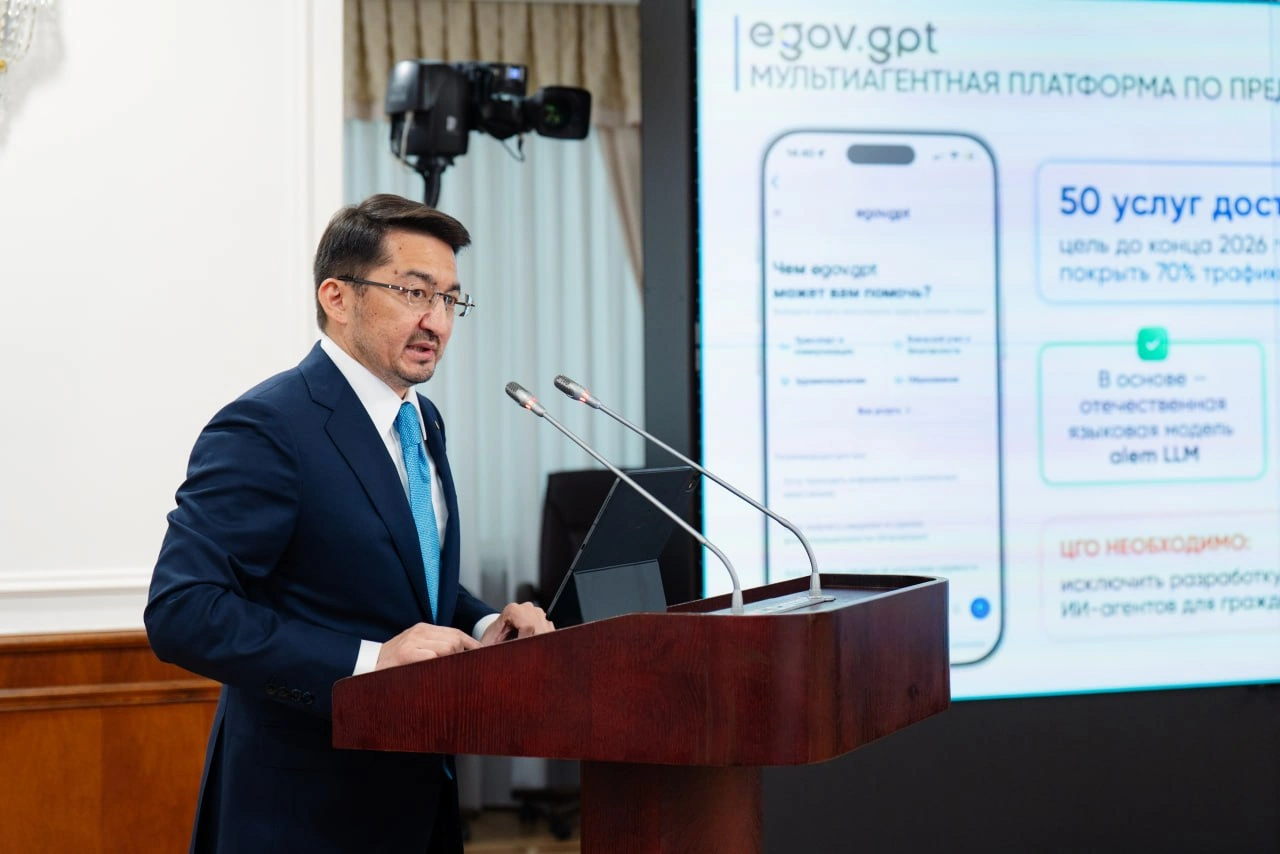
BAKU, Azerbaijan, August 11. All state bodies
in Kazakhstan have been transferred to the unified QazTech digital
development platform as part of efforts to accelerate the
introduction of artificial intelligence and transform public
services, Deputy Prime Minister and Minister of Artificial
Intelligence and Digital Development of Kazakhstan Zhaslan Madiyev
said at a government meeting.
This was reflected in the statement published by the government
of Kazakhstan.
The platform has been operational since April 1, 2026, and
enables the development and deployment of new digital services
within weeks instead of several years.
"The government has approved a two-year plan for migrating
existing systems to QazTech. This year, migration of 39 systems is
planned, with work on 36 of them nearing completion. Another 25
systems are at the migration and development stage outside the
plan, while 10 systems are already fully operational on the
platform. This means the work is progressing ahead of schedule, and
today all state bodies are already working with QazTech," Madiyev
said.
He added that a presidential decree introduced a moratorium on
the creation of state information systems outside the QazTech
platform.
The government meeting, chaired by Prime Minister Olzhas
Bektenov, focused on the development of a modern public services
ecosystem based on artificial intelligence as part of President
Kassym-Jomart Tokayev’s instructions to accelerate digital
transformation across the economy and society.
Bektenov highlighted the importance of digital development
within Kazakhstan’s national priorities. "The Head of State
constantly emphasizes that digital development is a strategic
choice of Kazakhstan. The Year of Digitalization and Artificial
Intelligence is becoming a starting point for achieving this goal.
In June this year, the national Digital Qazaqstan strategy was
approved, where digitalization of public services is identified as
one of the key areas," Bektenov said.
According to the government, the Digital Qazaqstan strategy is
aimed at further developing digital interaction between the
government, citizens and businesses and creating a more efficient
technology-based public administration system.